Retail pricing has become significantly more complex over the past few years. According to McKinsey, up to 30% of pricing decisions fail to achieve the optimal price, highlighting the growing need for more data-driven pricing strategies. At the same time, manually monitoring competitors, promotions, and market changes across thousands of products is no longer a scalable approach.
Pricing intelligence software for retail helps retailers collect and analyze competitor pricing data, identify pricing opportunities, and make more informed pricing decisions. This guide explains what pricing intelligence software is, how to evaluate different platforms, and compares ten picks for the best pricing intelligence software 2026 has to offer, so you can choose the platform that best fits your pricing strategy and long-term business goals.
TL;DR
Pricing intelligence software enables retailers to monitor competitor prices, analyze market trends, automate pricing insights, and make faster pricing decisions. The best pricing intelligence software solutions for retail in 2026 include:
- Yieldigo
- Skuuudle
- Price2Spy
- 42Signals
- PriceShape
- Minderest
- Omnia Retail
- Intelligence Node
- DataWeave
- Wiser Solutions
- Competera
- Prisync
What Is Pricing Intelligence Software?
Pricing intelligence software is a retail technology that automatically collects, monitors, and analyzes competitor and market pricing data to help businesses make more informed pricing decisions. Instead of relying on manual price checks or spreadsheets, retailers can continuously track pricing changes across competitors, marketplaces, and sales channels from a single price management platform.
Modern pricing intelligence software goes beyond competitor price monitoring. It combines automated data collection with AI-powered analytics to identify pricing opportunities, monitor market trends, generate pricing insights, and support price optimization strategies. As pricing becomes increasingly dynamic across retail and eCommerce, pricing intelligence has evolved into a core capability for organizations looking to improve competitiveness, protect margins, and respond quickly to market changes. The best competitive pricing intelligence software also feeds these insights directly into price optimization workflows.
How We Evaluated Pricing Intelligence Software
(Full Methodology)
Selecting the right pricing intelligence software requires more than comparing feature lists. Different retailers have different priorities depending on their industry, assortment size, pricing strategy, and operational complexity. Rather than ranking platforms based solely on popularity or market presence, we evaluated each solution according to its strengths, retail capabilities, and practical value. Our methodology also considered each platform’s analytics capabilities, including how effectively it supports promotion analytics alongside the following criteria:
- Retail pricing capabilities
- AI and automation
- Competitor monitoring accuracy
- Analytics and reporting
- Integration options
- Scalability
- Ease of use
- Overall value
- G2 ratings and customer feedback (where available)
Editorial note: The solutions below are categorized by their strongest use cases rather than ranked by company size, and the list mixes top pricing intelligence software companies with smaller specialists. The best pricing intelligence software depends on your business model, pricing objectives, and retail segment. We also cross-checked retail pricing intelligence software reviews on G2 and Capterra, since verified customer feedback often reveals gaps that feature lists hide.
Best Pricing Intelligence Software Solutions for Retail in 2026
The pricing intelligence software comparison table below provides a quick overview of the featured platforms before we explore each solution in more detail.
| Software | Best For | AI & Automation | Competitor Monitoring | Retail Focus | Price Optimization | Free Demo |
| Yieldigo | Grocery retail | Yes | Yes | Yes | Yes | Contact Sales |
| Skuuudle | Price data collection | No | Yes | Yes | No | Contact Sales |
| Price2Spy | SMB price monitoring | No | Yes | Yes | Limited | Yes |
| 42Signals | eCommerce market intelligence | Yes | Yes | Yes | Limited | Contact Sales |
| PriceShape | SMB pricing automation | Yes | Yes | Yes | Yes | Yes |
| Minderest | Competitor monitoring | Limited | Yes | Yes | Limited | Contact Sales |
| Omnia Retail | Dynamic pricing | Yes | Yes | Yes | Yes | Contact Sales |
| Intelligence Node | Enterprise catalog intelligence | Yes | Yes | Yes | No | Contact Sales |
| DataWeave | Digital shelf intelligence | Yes | Yes | Yes | Limited | Contact Sales |
| Wiser Solutions | Omnichannel retail intelligence | Yes | Yes | Yes | Limited | Contact Sales |
| Competera | AI pricing optimization | Yes | Yes | Yes | Yes | Contact Sales |
| Prisync | eCommerce competitor price tracking | Limited | Yes | Yes | Limited | Yes |
1. Yieldigo – Best for AI-Powered Pricing Intelligence for Grocery Retail
What It Is
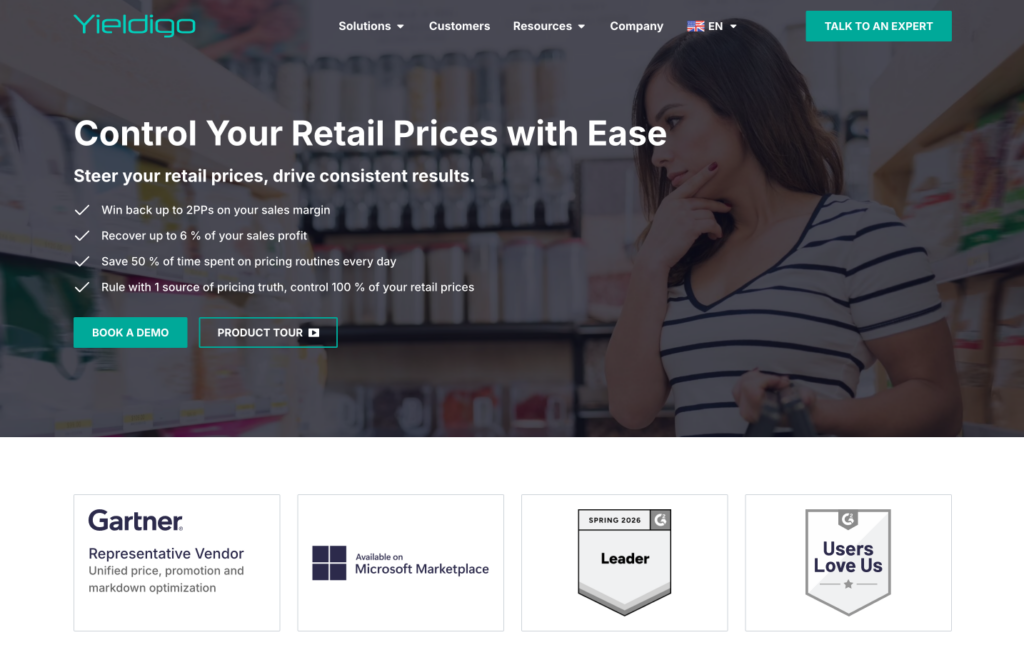
Yieldigo is an AI-powered retail pricing platform designed specifically for grocery retailers and FMCG businesses. The platform combines pricing intelligence with price optimization to help retailers make faster, data-driven commercial decisions.
Unlike traditional pricing intelligence software that focuses primarily on competitor price monitoring, Yieldigo analyzes pricing decisions within a broader retail context. Its AI models evaluate demand forecasts, customer behavior, product relationships, and price elasticity to recommend pricing strategies that balance competitiveness with profitability.
Best For: Enterprise grocery retailers and FMCG chains looking to combine pricing intelligence with AI-driven price optimization.
Key Features:
- AI-powered pricing intelligence
- Competitor price monitoring
- Price optimization
- Markdown optimization
- Promotion optimization
- Demand forecasting
- Price elasticity modeling
Key Integrations: Yieldigo integrates with existing retail technology ecosystems, including ERP systems, POS platforms, pricing engines, demand forecasting tools, and merchandising solutions, allowing retailers to incorporate pricing intelligence into day-to-day commercial operations.
Pricing: Custom pricing available upon request.
Pros & Cons:
| Pros | Cons |
| Purpose-built for grocery retail | Primarily designed for enterprise retailers |
| Combines pricing intelligence with AI optimization | Pricing is not publicly available |
| Supports pricing, markdowns, and promotions in one platform | Requires integration with existing retail systems |
| Advanced demand forecasting and elasticity modeling | Best suited for retailers managing large assortments |
Why We Picked It
Yieldigo stands out because it extends beyond traditional competitor price monitoring. Instead of simply tracking market prices, the platform helps retailers understand how pricing decisions influence demand, profitability, markdowns, and promotional performance. This integrated approach is particularly valuable for grocery retailers, where thousands of pricing decisions must be optimized simultaneously.
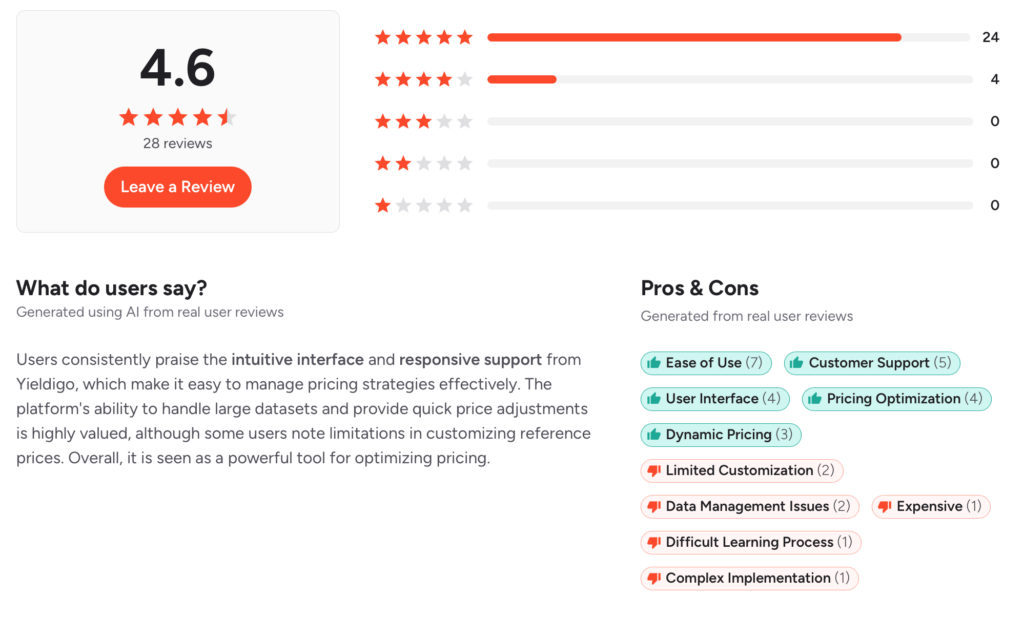
G2 Rating: 4.6 / 5
Customer Review:
2. Skuuudle – Best for Retail Price Data Collection
What It Is
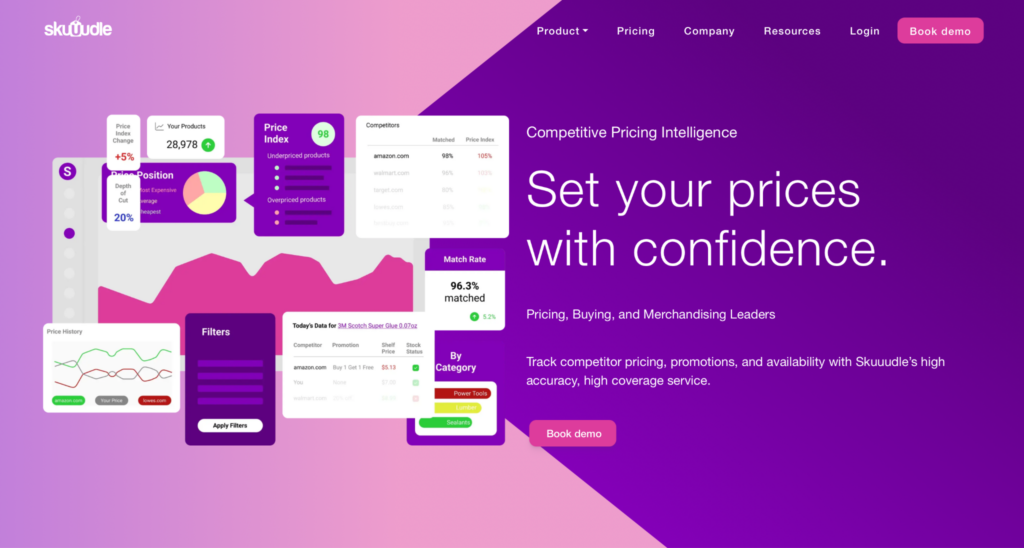
Skuuudle is a pricing intelligence platform focused on automated competitor price monitoring and large-scale retail data collection. The platform helps retailers gather accurate pricing information from online competitors, marketplaces, and retail websites without relying on manual research.
Its strength lies in collecting clean, structured pricing data that retailers can use for competitive analysis, pricing strategy development, and market monitoring. The platform also supports complex product matching, making it easier to compare equivalent products across different retailers.
Best For: Retailers looking for scalable competitor price monitoring and reliable pricing data collection.
Key Features:
- Competitor price scraping
- Automated pricing data collection
- Product matching
- Custom monitoring rules
- Historical pricing data
- Market trend tracking
Key Integrations: Supports API integrations and exports to BI platforms, pricing systems, and internal analytics environments.
Pricing: Custom pricing available upon request.
Pros & Cons:
| Pros | Cons |
| Strong competitor price collection capabilities | Limited built-in pricing optimization |
| Flexible monitoring options | No public pricing information |
| Accurate product matching | More focused on data collection than pricing recommendations |
| Suitable for large product catalogs | AI capabilities are more limited than some competitors |
Why We Picked It
Skuuudle specializes in one of the most important foundations of pricing intelligence: collecting accurate competitive pricing data at scale. For retailers that already have pricing decision workflows in place but need reliable market data, it offers a focused and practical solution.
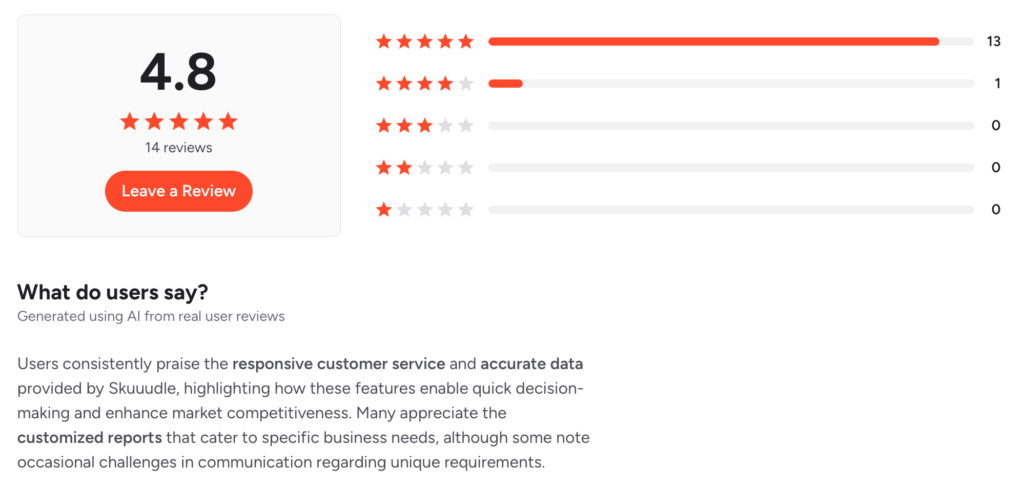
G2 Rating: 4.8 / 5
Customer Review:
3. Price2Spy – Best for SMB Price Monitoring
What It Is
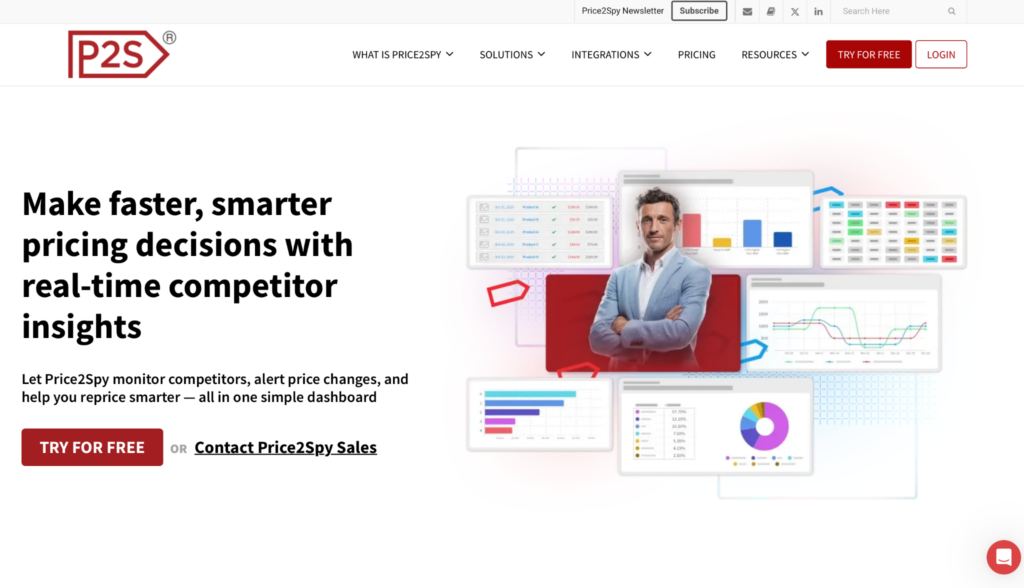
Price2Spy is a competitor price monitoring platform that helps retailers automatically track pricing changes across eCommerce websites, online marketplaces, and competitor stores. Instead of manually checking prices, businesses receive real-time updates whenever monitored products change.
The platform focuses on delivering actionable pricing intelligence through automated alerts, historical pricing data, and customizable reporting. This makes it particularly useful for retailers that need visibility into competitor pricing without investing in a complex enterprise pricing platform.
Best For: Small and mid-sized retailers looking for affordable competitor price monitoring.
Key Features:
- Competitor price monitoring
- Automated price alerts
- Historical price tracking
- Reporting dashboards
- Product matching
- Marketplace monitoring
Key Integrations: API integrations, data exports, and support for BI and analytics platforms.
Pricing: Subscription-based pricing with multiple plans available.
Pros & Cons:
| Pros | Cons |
| Easy to implement | Limited AI-powered recommendations |
| Real-time price alerts | Primarily focused on monitoring |
| Flexible reporting | Fewer advanced optimization capabilities |
| Suitable for SMB retailers | Enterprise features are more limited |
Why We Picked It
Price2Spy provides a strong balance between usability, monitoring capabilities, and affordability, making it an excellent choice for retailers beginning their pricing intelligence journey.
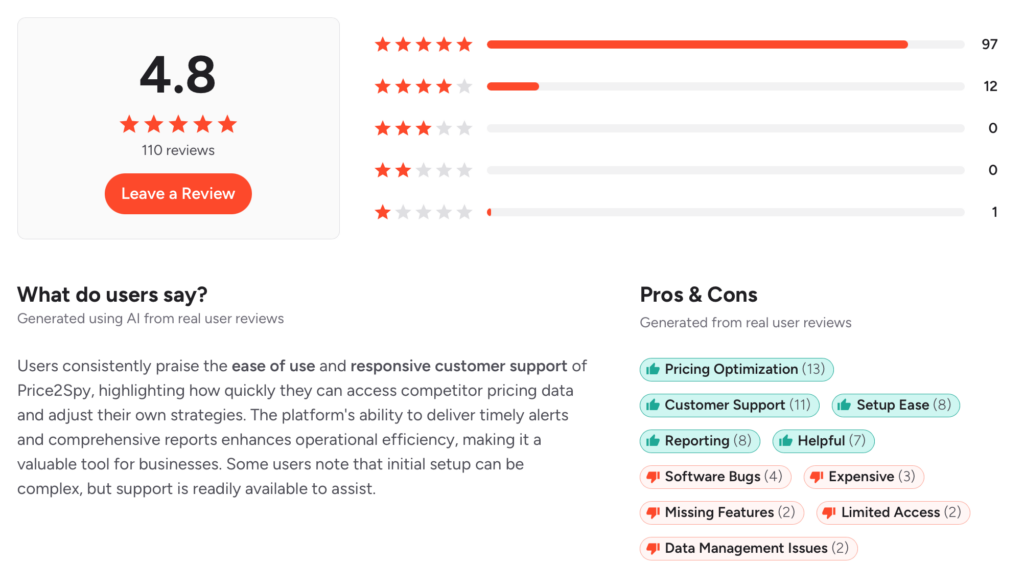
G2 Rating: 4.8 / 5
Customer Review:
4. 42Signals – Best for eCommerce Market Intelligence
What It Is
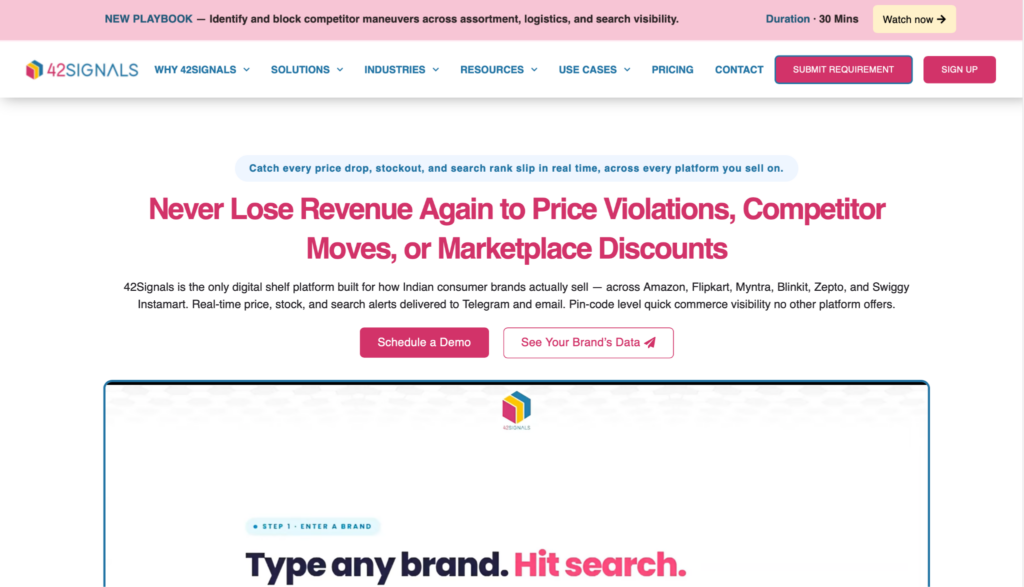
42Signals is an AI-powered digital commerce intelligence platform that helps retailers monitor competitor pricing, product availability, promotions, and digital shelf performance across online channels.
Beyond pricing intelligence, the platform provides broader visibility into eCommerce performance, helping retailers understand how pricing, assortment, and product content influence competitiveness. For teams that want eCommerce AI pricing intelligence software rather than a monitoring-only tool, it covers pricing, availability, and content in one place.
Best For: Retailers seeking AI-powered eCommerce market intelligence.
Key Features:
- AI-powered analytics
- Competitor price monitoring
- Digital shelf analytics
- Product availability tracking
- Promotion monitoring
- Market trend analysis
Key Integrations: Business intelligence platforms, APIs, retail analytics tools, and reporting systems.
Pricing: Custom pricing available upon request.
Pros & Cons:
| Pros | Cons |
| Comprehensive digital commerce insights | Pricing not publicly available |
| AI-powered analytics | More eCommerce-focused than grocery retail |
| Strong digital shelf capabilities | Advanced features may require onboarding |
| Competitive intelligence beyond pricing |
Why We Picked It
42Signals combines pricing intelligence with digital shelf analytics, giving retailers a broader understanding of market competitiveness rather than focusing solely on prices.
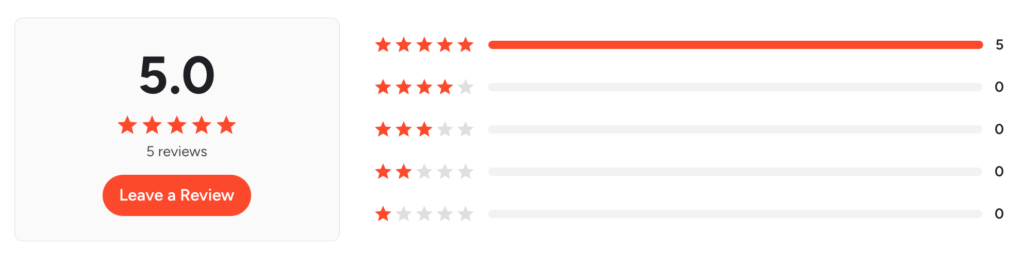
G2 Rating: 5 / 5
Customer Review:
5. PriceShape – Best for SMB Pricing Automation
What It Is
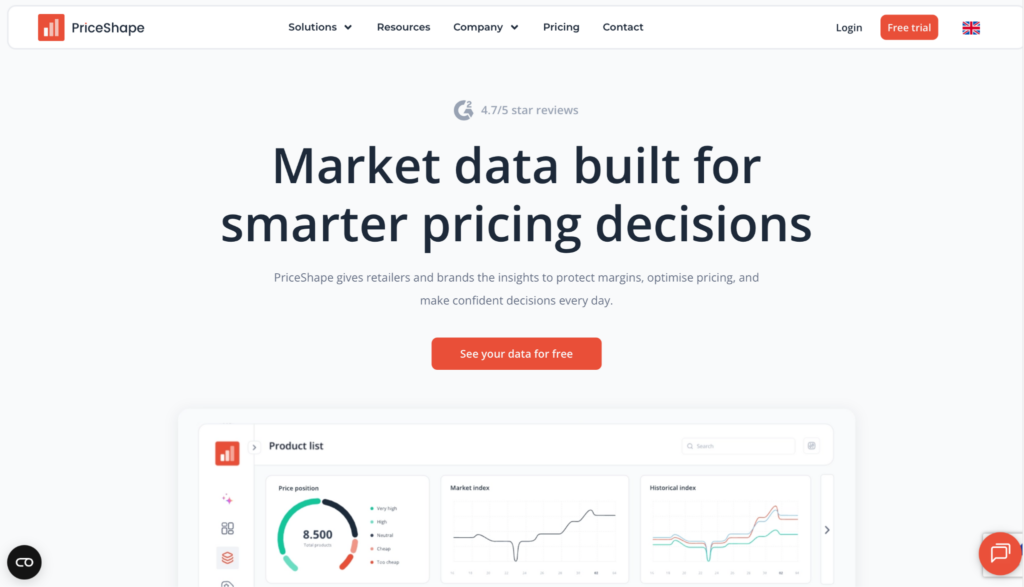
PriceShape is a pricing automation platform designed for retailers and brands that sell through eCommerce stores and online marketplaces. It combines competitor monitoring with automated pricing rules that help businesses remain competitive while protecting margins. Its intuitive interface makes pricing automation accessible without requiring complex enterprise implementations.
Best For: Small and medium-sized retailers automating competitive pricing.
Key Features:
- Pricing automation
- Competitor tracking
- Marketplace pricing
- Pricing rules
- Margin protection
- Performance dashboards
Key Integrations: Shopify, Magento, WooCommerce, APIs, and marketplace integrations.
Pricing: Available upon request.
Pros & Cons:
| Pros | Cons |
| Easy-to-use interface | Primarily focused on eCommerce |
| Pricing automation | Limited enterprise planning features |
| Marketplace integrations | Less suitable for grocery retail |
| Fast implementation |
Why We Picked It
PriceShape offers a practical combination of pricing automation and competitor monitoring that works particularly well for growing online retailers.
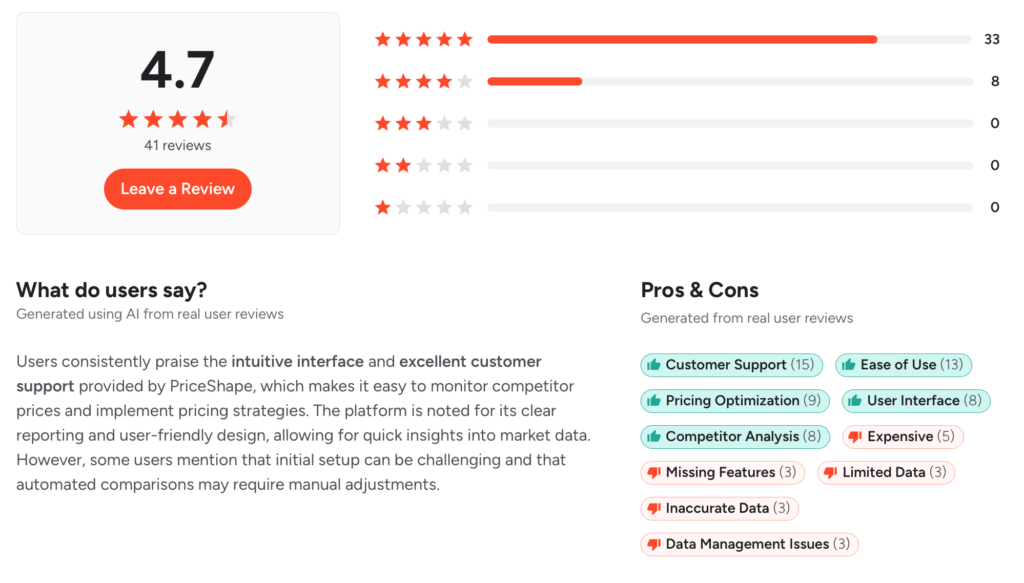
G2 Rating: 4.7 / 5
Customer Review:
6. Minderest – Best for Competitor Price Monitoring
What It Is
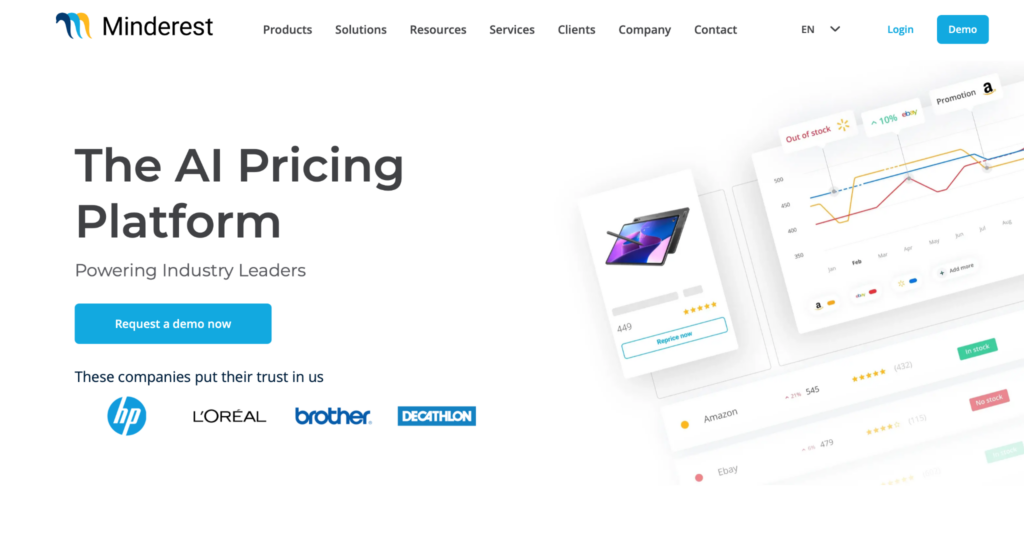
Minderest is a pricing intelligence platform that specializes in competitor monitoring across international retail markets. It enables retailers and brands to collect pricing information from thousands of competitors while maintaining high data accuracy through automated product matching. The platform also supports assortment monitoring, promotion tracking, and market analysis, helping retailers make more informed pricing decisions.
Best For: Retailers operating across multiple markets that require accurate competitor monitoring.
Key Features:
- Web price monitoring
- Competitor intelligence
- Promotion tracking
- Product matching
- Historical pricing analysis
- International retailer coverage
Key Integrations: APIs, BI platforms, ERP systems, and reporting tools.
Pricing: Custom pricing.
Pros & Cons:
| Pros | Cons |
| Strong international coverage | Pricing unavailable publicly |
| Reliable product matching | Limited pricing optimization capabilities |
| Accurate competitor monitoring | Enterprise onboarding required |
| Historical pricing insights |
Why We Picked It
Minderest is particularly strong at collecting accurate competitor pricing across multiple countries, making it valuable for retailers operating internationally.
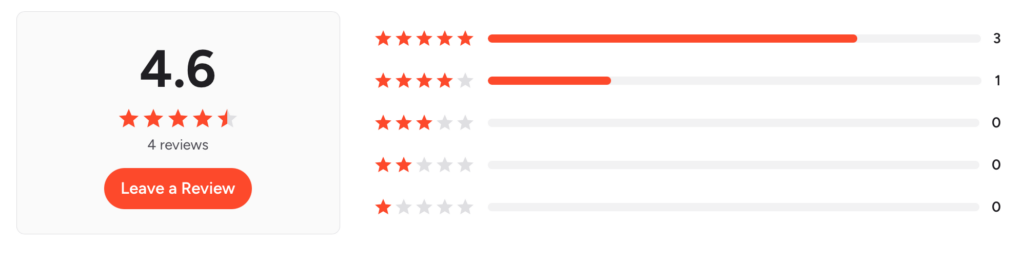
G2 Rating: 4.6 / 5
Customer Review:
7. Omnia Retail – Best for Dynamic Pricing Automation
What It Is
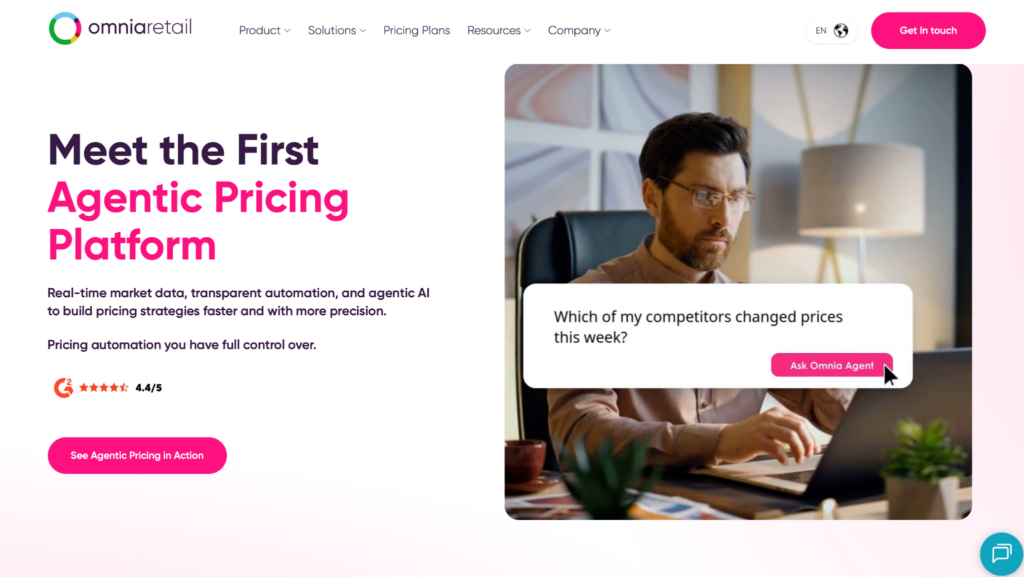
Omnia Retail provides pricing automation software that combines pricing intelligence with dynamic pricing and pricing rule management. The platform continuously monitors competitor prices and automatically recommends or applies pricing adjustments based on predefined business objectives. Its automation capabilities help retailers respond to changing market conditions while maintaining pricing consistency across channels.
Best For: Retailers looking to automate dynamic pricing strategies.
Key Features:
- Dynamic pricing automation
- Competitor monitoring
- Pricing strategy rules
- Omnichannel pricing
- Price recommendations
- Performance dashboards
Key Integrations: ERP systems, eCommerce platforms, APIs, and BI tools.
Pricing: Custom pricing.
Pros & Cons:
| Pros | Cons |
| Strong pricing automation | Focused primarily on eCommerce |
| Easy-to-configure pricing rules | Public pricing unavailable |
| Omnichannel capabilities | Enterprise implementation required |
| AI-assisted recommendations |
Why We Picked It
Omnia Retail bridges the gap between pricing intelligence and automated pricing execution, making it well suited for retailers managing dynamic pricing strategies.
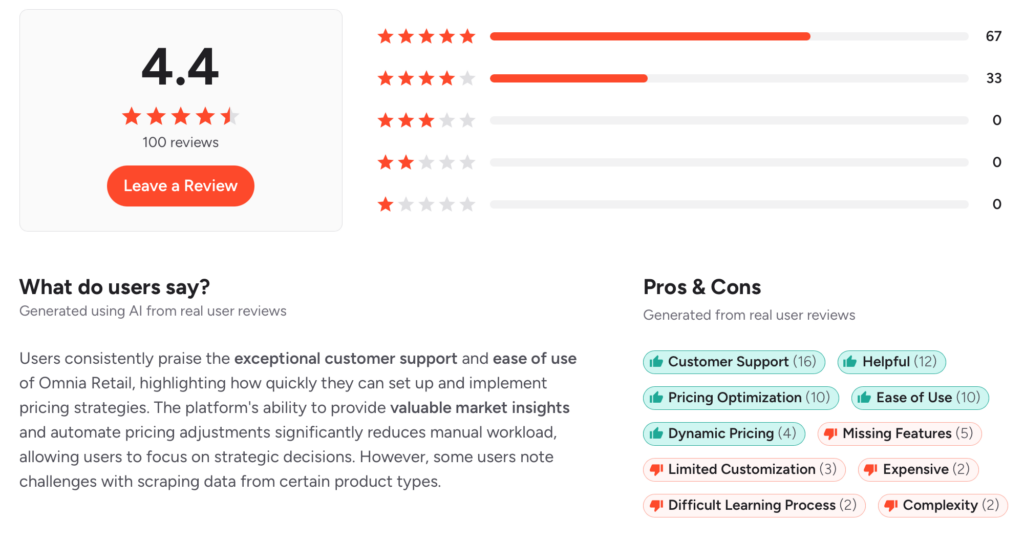
G2 Rating: 4.4 / 5
Customer Review:
8. Intelligence Node – Best for Large Product Catalogs
What It Is
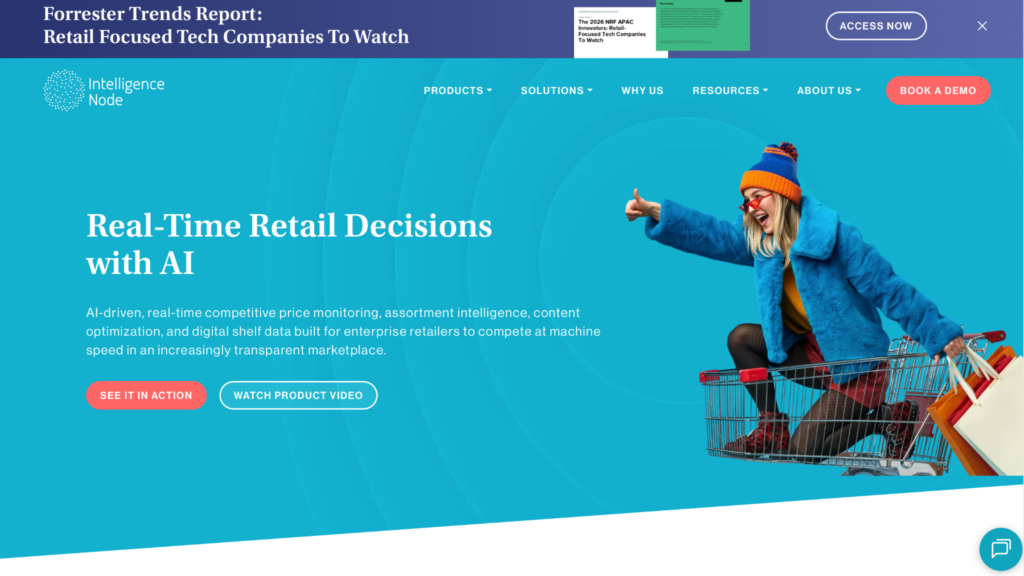
Intelligence Node is an AI-powered retail intelligence platform designed for businesses managing extensive product catalogs across multiple online channels. It combines pricing intelligence, assortment monitoring, and product matching to provide retailers with comprehensive competitive insights. Its AI capabilities help retailers identify pricing opportunities while maintaining accurate product comparisons across large assortments.
Best For: Enterprise retailers with complex product catalogs.
Key Features:
- AI product matching
- Competitor tracking
- Assortment intelligence
- Market analysis
- Digital shelf monitoring
- Pricing insights
Key Integrations: Enterprise APIs, ERP systems, BI tools, and analytics platforms.
Pricing: Available upon request.
Pros & Cons:
| Pros | Cons |
| Excellent AI product matching | Enterprise-focused |
| Handles large catalogs efficiently | Pricing not public |
| Broad retail intelligence capabilities | Longer implementation time |
| Strong analytics |
Why We Picked It
Intelligence Node excels at analyzing large product assortments while maintaining accurate product matching, making it particularly valuable for enterprise retailers.
G2 Rating: 4.5 .5
Customer Review:
9. DataWeave – Best for Digital Shelf & Market Intelligence
What It Is
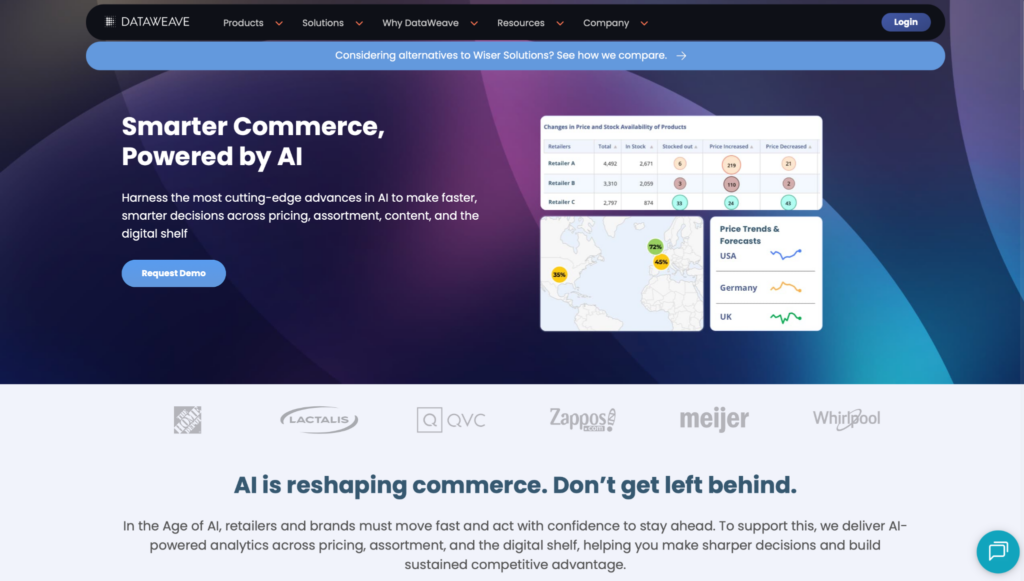
DataWeave helps retailers monitor pricing, digital shelf performance, product availability, and online merchandising across eCommerce channels. The platform combines pricing intelligence with broader market intelligence to improve commercial decision-making. Its analytics provide visibility into how pricing interacts with product content, promotions, and digital merchandising.
Best For: Retailers focused on digital shelf optimization and pricing intelligence.
Key Features:
- Digital shelf analytics
- Pricing intelligence
- Product content monitoring
- Promotion tracking
- Competitor analysis
- AI-powered reporting
Key Integrations: APIs, BI platforms, eCommerce systems, and enterprise reporting solutions.
Pricing: Custom pricing.
Pros & Cons:
| Pros | Cons |
| Comprehensive digital shelf visibility | Public pricing unavailable |
| Strong pricing analytics | Enterprise-oriented |
| Product content monitoring | Requires implementation resources |
| AI-powered reporting |
Why We Picked It
DataWeave provides retailers with valuable visibility into both pricing and digital shelf performance, helping businesses optimize overall online competitiveness.
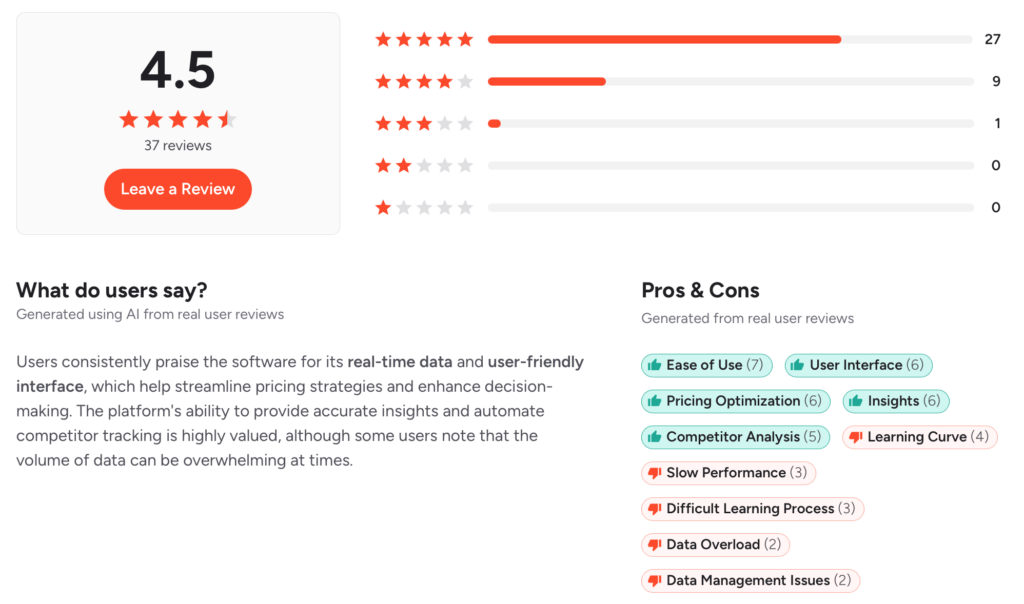
G2 Rating: 4.4 / 5
Customer Review:
10. Wiser Solutions – Best for Omnichannel Retail Intelligence
What It Is
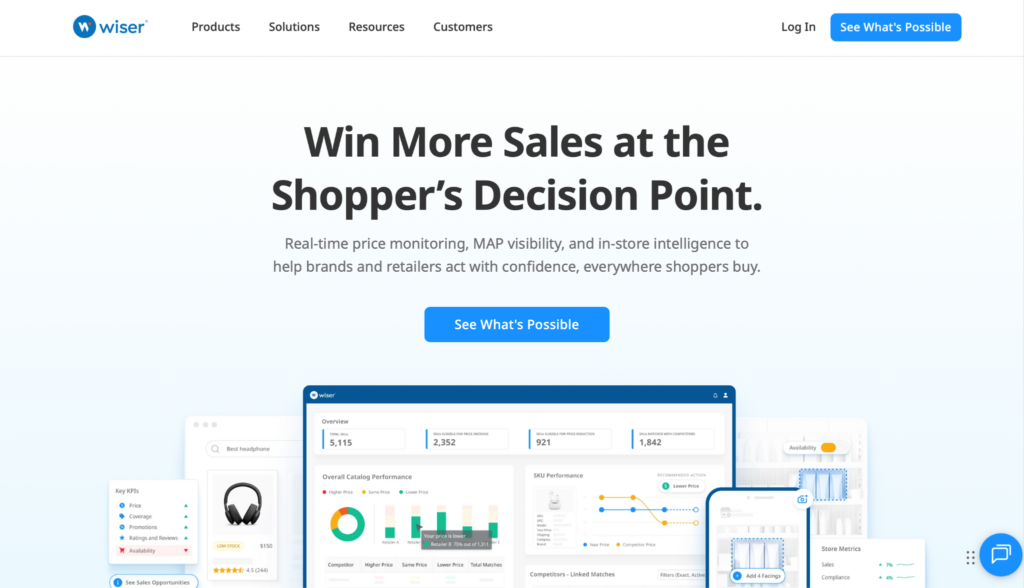
Wiser Solutions is a retail intelligence platform that combines competitor pricing, retail execution, digital shelf analytics, and assortment intelligence. The platform helps retailers understand market dynamics across both physical and digital channels. Its omnichannel approach allows businesses to evaluate pricing alongside merchandising, inventory, and in-store execution.
Best For: Retailers looking for comprehensive omnichannel retail intelligence.
Key Features:
- Pricing intelligence
- Retail execution analytics
- Digital shelf visibility
- Competitor monitoring
- Promotion tracking
- Market intelligence
Key Integrations: Enterprise retail platforms, APIs, ERP systems, and business intelligence solutions.
Pricing: Available upon request.
Pros & Cons:
| Pros | Cons |
| Broad omnichannel capabilities | Enterprise-focused implementation |
| Combines pricing with retail execution | Pricing unavailable publicly |
| Strong analytics | More comprehensive than some retailers require |
| Scalable platform |
Why We Picked It
Wiser Solutions extends beyond traditional pricing intelligence by combining pricing, merchandising, and retail execution into a single intelligence platform.
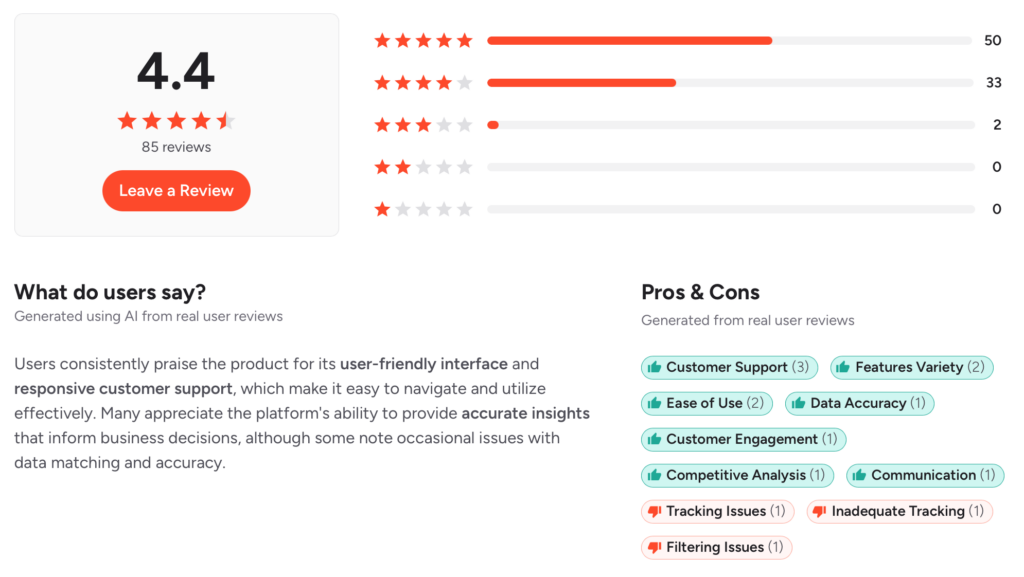
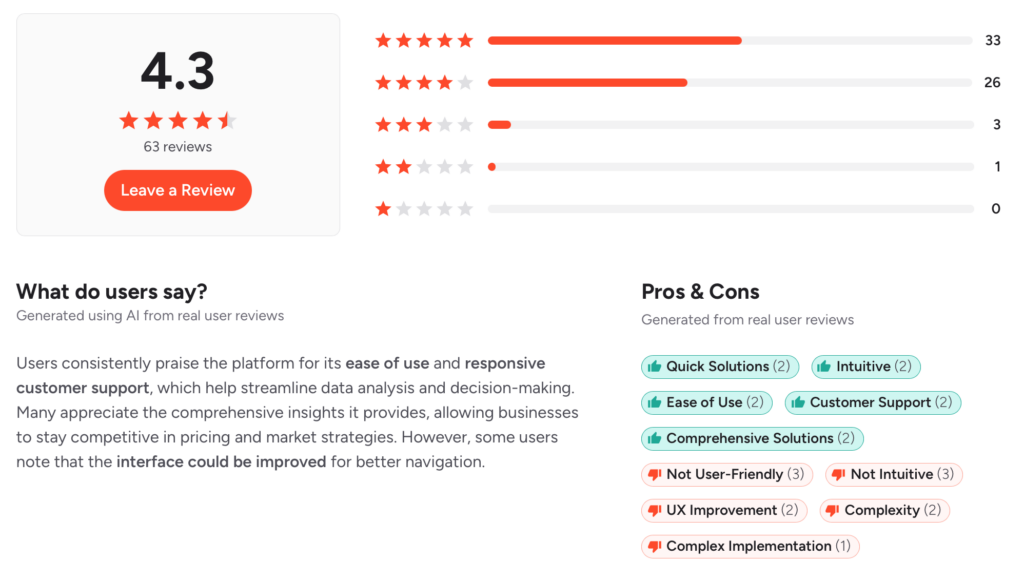
G2 Rating: 4.3 / 5
Customer Review:
11. Competera – Best for AI-Driven Price Optimization
What It Is
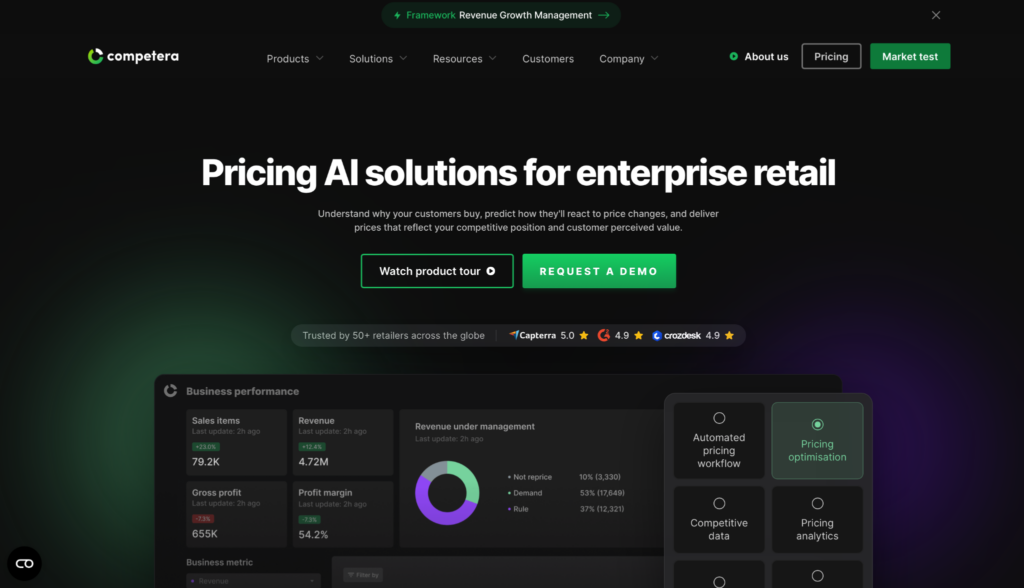
Competera is an AI-powered pricing platform that helps retailers optimize prices using machine learning, demand forecasting, and competitor intelligence. The platform enables retailers to automate pricing decisions across large product assortments while maintaining pricing rules and business objectives.
Unlike traditional competitor monitoring tools, Competera focuses on recommending optimal prices rather than simply collecting market data. Its pricing engine analyzes demand elasticity, competitive positioning, customer behavior, and pricing objectives to generate data-driven pricing recommendations.
Best For: Enterprise retailers looking for AI-powered price optimization and automated pricing decisions.
Key Features:
- AI-powered price optimization
- Competitor price monitoring
- Dynamic pricing recommendations
- Price elasticity modeling
- Demand forecasting
- Business rule management
- Scenario simulation
Key Integrations: Competera integrates with ERP systems, POS platforms, eCommerce platforms, pricing engines, merchandising software, and business intelligence tools to support enterprise pricing operations.
Pricing: Custom pricing available upon request.
Pros & Cons:
| Pros | Cons |
| Advanced AI pricing engine | Pricing is not publicly available |
| Strong price optimization capabilities | Designed primarily for enterprise retailers |
| Combines competitor data with AI recommendations | Requires quality historical sales data |
| Highly scalable for large assortments | Implementation may require integration support |
Why We Picked It
Competera is one of the strongest AI pricing optimization platforms available for enterprise retailers. It combines competitor monitoring with machine learning and demand forecasting to recommend prices that balance profitability and competitiveness rather than simply matching market prices.
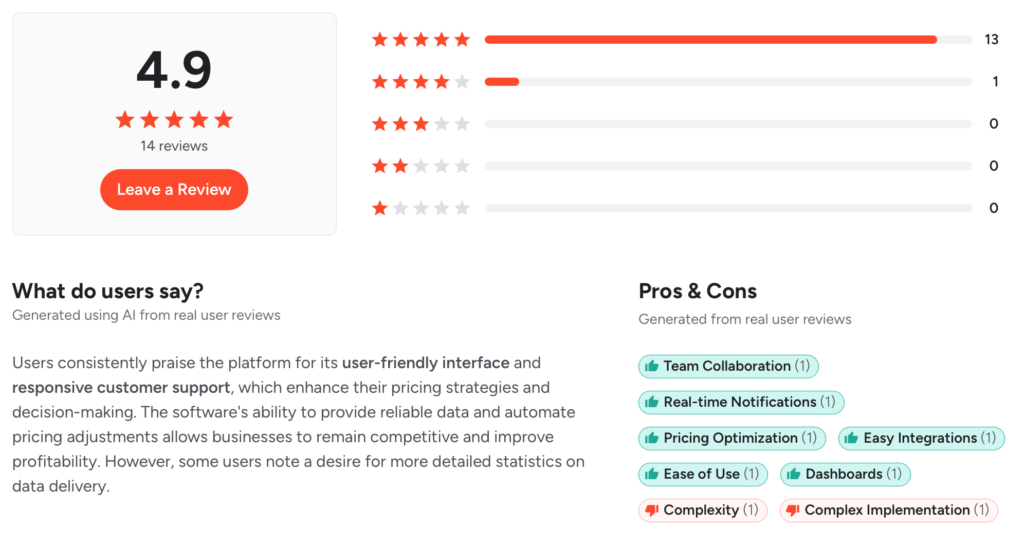
G2 Rating: 4.9 / 5
Customer Review:
12. Prisync – Best for eCommerce Competitor Price Tracking
What It Is
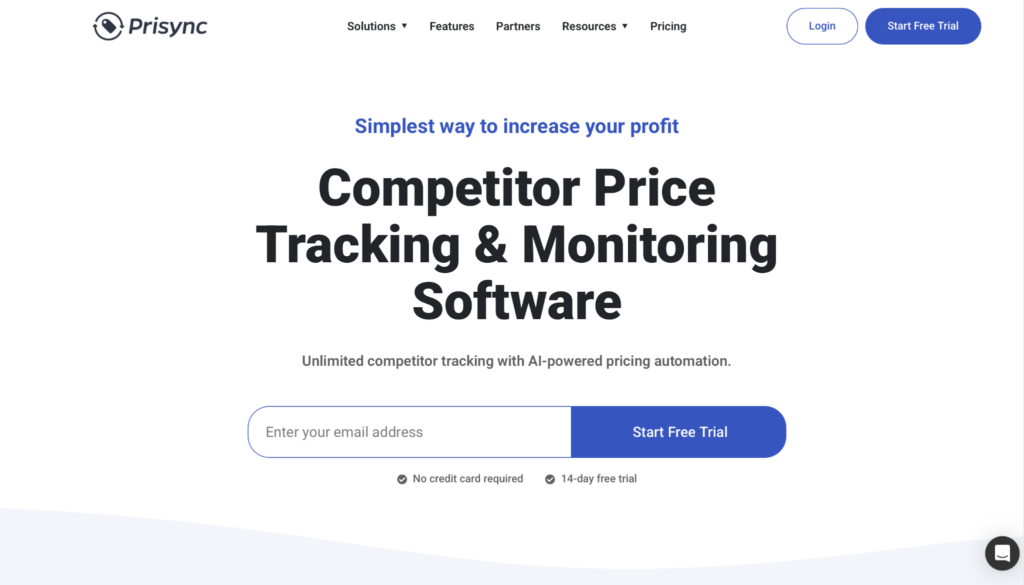
Prisync is a cloud-based competitor price tracking platform designed primarily for eCommerce businesses. It automatically monitors competitor prices and stock availability while providing pricing insights that help retailers react faster to market changes.
Rather than offering enterprise-level price optimization, Prisync focuses on making competitor monitoring simple and accessible. Retailers can automate price updates using predefined pricing rules and receive alerts whenever competitors change their prices.
Best For: Small and mid-sized eCommerce retailers looking for automated competitor price monitoring.
Key Features:
- Competitor price monitoring
- Dynamic pricing rules
- Stock availability tracking
- Price change alerts
- Pricing reports
- Historical pricing data
- Multi-store monitoring
Key Integrations: Prisync integrates with Shopify, WooCommerce, Magento, BigCommerce, Google Shopping, API integrations, and other major eCommerce platforms.
Pricing: Subscription plans are publicly available. A free trial is available.
Pros & Cons:
| Pros | Cons |
| Easy to set up and use | Limited AI capabilities |
| Affordable for SMB retailers | Less advanced than enterprise pricing platforms |
| Excellent competitor monitoring | Focuses mainly on eCommerce |
| Free trial available | Limited price optimization functionality |
Why We Picked It:
Prisync is one of the easiest competitor price monitoring solutions for online retailers. Its combination of automated tracking, pricing rules, and simple implementation makes it a strong choice for businesses that need competitive pricing visibility without the complexity of enterprise pricing software.
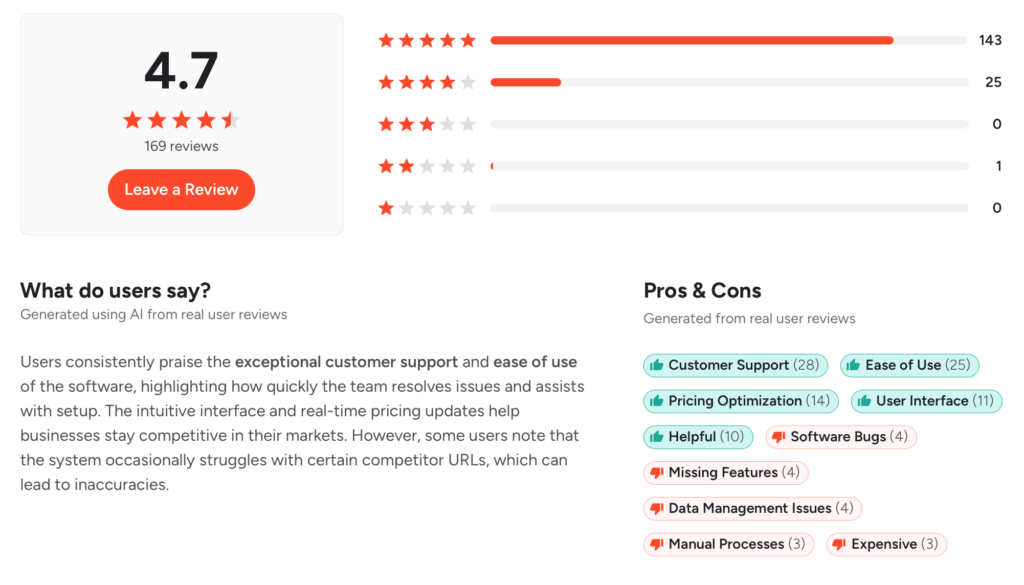
G2 Rating: 4.7 / 5
Customer Review:
Types of Competitive Pricing Intelligence Software
Not all pricing intelligence platforms are designed for the same use case. Some solutions specialize in competitor price monitoring, while others combine market intelligence with AI-driven pricing recommendations, digital shelf analytics, or pricing automation. Understanding these categories of competitive pricing intelligence software can help retailers choose software that aligns with their pricing strategy and business objectives.
Competitor Price Monitoring Software
These platforms automatically collect competitor pricing data across online stores and marketplaces. Their primary goal is to provide retailers with accurate, up-to-date pricing information to support competitive decision-making.
Best for: Retailers that need continuous visibility into competitor pricing.
Pricing Intelligence Platforms
Pricing intelligence platforms combine competitor monitoring with analytics, reporting, and pricing insights. Instead of simply collecting data, they help retailers understand pricing trends and identify opportunities to improve pricing strategies.
Best for: Retailers looking to make data-driven pricing decisions.
Dynamic Pricing Software
Dynamic pricing solutions automatically adjust prices based on predefined business rules, competitor activity, customer demand, or market conditions.
Best for: Retailers with rapidly changing inventories, marketplaces, or highly competitive product categories.
Digital Shelf Intelligence Platforms
These platforms monitor pricing alongside product availability, promotions, content quality, search visibility, and marketplace performance. They double as pricing intelligence software for brands, since manufacturers need the same shelf visibility as retailers.
Best for: Brands and retailers selling through eCommerce channels.
AI-Powered Retail Pricing Platforms
This artificial intelligence pricing software combines pricing intelligence with demand forecasting, price elasticity modeling, markdown optimization, multibuy management, and promotion planning to recommend optimal pricing strategies.
Best for: Enterprise retailers seeking advanced pricing optimization capabilities.
5 Benefits of Competitive Pricing Intelligence Software
- Faster Pricing Decisions. Instead of manually collecting competitor prices, retailers receive continuously updated market data that enables faster and more informed pricing decisions.
- Improved Competitive Visibility. Pricing intelligence platforms provide a comprehensive view of competitor pricing, helping retailers identify market trends, pricing gaps, and promotional activity.
- Better Margin Protection. Retailers can remain competitive without unnecessarily lowering prices by understanding when price changes are actually required.
- Greater Pricing Consistency. Centralized pricing intelligence helps organizations maintain consistent pricing strategies across online stores, marketplaces, and physical locations.
- More Effective Pricing Strategies. AI-powered pricing intelligence transforms raw pricing data into actionable insights, helping retailers optimize prices based on demand, competition, and profitability rather than assumptions.
Key Features to Look for in Competitive Pricing Intelligence Software
Choosing pricing intelligence software involves more than comparing monitoring capabilities. The best platforms combine accurate market data with analytics, automation, and integrations that support long-term pricing strategies.
- Competitor Price Monitoring. Automatically track competitor prices across multiple retailers, marketplaces, and channels.
- AI-Powered Analytics. Use artificial intelligence to identify pricing opportunities, detect market trends, and generate pricing insights.
- Product Matching. Ensure competitor prices are compared against equivalent products using accurate SKU or AI-powered product matching.
- Historical Pricing Data. Analyze pricing trends over time to understand competitor strategies and seasonal pricing patterns.
- Pricing Alerts. Receive automatic notifications when competitors change prices, while supporting promotion management workflows to launch and adjust campaigns more effectively.
- Reporting & Dashboards. Access customizable reports and visual dashboards that help pricing teams monitor performance and market dynamics.
- API & System Integrations. Integrate pricing intelligence with ERP, POS, BI, merchandising, and pricing optimization systems.
- Scalability. Choose a platform capable of supporting future assortment growth, additional markets, and expanding pricing strategies.
How to Choose Pricing Intelligence Software
Selecting the right pricing intelligence software depends on your retail model, pricing objectives, and operational complexity. Before comparing vendors, identify the business outcomes you want to achieve and evaluate whether each platform supports those goals. Treat this section as a short guide on how to choose pricing intelligence software for your segment and scale.
- Define Your Pricing Objectives. Determine whether your priority is competitor monitoring, pricing automation, AI-powered optimization, markdown optimization, or promotion planning before comparing vendors.
- Consider Your Retail Segment. Different industries have different pricing requirements. Grocery retailers, fashion brands, marketplaces, and consumer electronics retailers may require specialized pricing capabilities.
- Evaluate AI Capabilities. Look beyond basic automation. Advanced platforms should provide AI-powered recommendations, forecasting, and pricing insights rather than simply displaying competitor prices.
- Look Beyond Competitor Monitoring. The most valuable platforms combine pricing intelligence with analytics, reporting, demand forecasting, or optimization capabilities.
- Check Integration Requirements. Ensure the platform integrates with existing ERP, POS, eCommerce, merchandising, and business intelligence systems.
- Consider Long-Term Scalability. Select software that can support additional products, markets, pricing teams, and future business growth without requiring a complete platform replacement.
- Compare Pricing Models and Plans. Most pricing intelligence platforms use subscription pricing, but costs vary by factors like monitored SKUs, users, or custom enterprise quotes, so always request pricing in writing and compare plans carefully. Because most vendors don’t publish prices, reviews on G2 and Capterra are a useful way to validate quotes and negotiate a better deal.
Conclusion
Pricing intelligence is no longer just about monitoring competitor prices. It is about turning market data into better pricing decisions. As retail pricing becomes increasingly dynamic, businesses need tools that provide accurate market visibility, actionable insights, and AI-powered recommendations to remain competitive while protecting profitability.
The right pricing intelligence software depends on your pricing strategy, assortment complexity, and retail segment. Rather than defaulting to the pricing intelligence software market leaders, retailers should prioritize solutions that deliver reliable competitive data, meaningful pricing insights, and measurable business outcomes that support long-term growth.
Frequently Asked Questions
What is pricing intelligence software?
Pricing intelligence software automatically collects, monitors, and analyzes competitor and market pricing data to help retailers make informed pricing decisions. Many platforms also provide analytics, pricing insights, and AI-powered recommendations that support pricing optimization.
How is pricing intelligence different from price optimization?
Pricing intelligence focuses on collecting and analyzing market pricing data, while price optimization uses those insights, along with demand forecasts, price elasticity, and business objectives, to recommend or automate optimal prices.
Can pricing intelligence software improve retail margins?
Yes. By providing visibility into competitor pricing and market trends, pricing intelligence software helps retailers avoid unnecessary discounts, identify pricing opportunities, and make decisions that balance competitiveness with profitability.
Does pricing intelligence software use AI?
Many modern pricing intelligence platforms incorporate artificial intelligence to automate data analysis, identify pricing trends, improve product matching, generate pricing insights, and support better pricing decisions.
Is pricing intelligence software suitable for grocery retailers?
Yes. Grocery retailers often manage thousands of products with frequent price changes, promotions, and markdowns. Pricing intelligence software helps them monitor competitors, improve pricing consistency, and support AI-driven pricing strategies.
How do you choose pricing intelligence software?
Retailers should evaluate pricing intelligence platforms based on competitor monitoring accuracy, AI capabilities, reporting, integrations, scalability, pricing transparency, and how well the platform supports their specific pricing strategy.
How much does pricing intelligence software cost?
Pricing intelligence software cost varies depending on the platform, the number of monitored products, available features, integrations, and implementation requirements. While some SMB solutions offer subscription-based pricing, most enterprise pricing intelligence platforms provide custom quotes based on business needs.