
According to McKinsey’s 2025 AI in Pricing Survey, 65-85% of pricing leaders expect their organizations to adopt generative AI or agentic AI for pricing within the next one to three years, compared with just 10-30% today. This rapid shift reflects a growing recognition that traditional pricing methods can no longer keep pace with increasingly dynamic markets.
As pricing decisions become more complex, companies are replacing manual processes with dynamic pricing software powered by artificial intelligence, which continuously analyzes demand, competitor activity, inventory levels, customer behavior, and market conditions. Instead of simply automating price updates, leading platforms are trying to help organizations increase profitability, instantly respond to market changes, and independently make pricing decisions relying on real-time data.
Choosing the right dynamic pricing software is no longer just about automation, it’s about finding a solution that aligns with your business model, pricing strategy, and long-term growth objectives. This guide compares the best dynamic pricing software in 2026, explains how these platforms work, and highlights the features that matter most when evaluating a solution.
TL;DR
Dynamic pricing solution automatically adjusts prices based on real-time data such as competitor prices, customer demand, inventory availability, seasonality, and predefined business rules. Instead of relying on static price lists or manual updates, these platforms continuously analyze market conditions to recommend, or automatically apply, the most profitable price. The best dynamic pricing software in 2026 includes:
- Yieldigo
- Omnia Retail
- PriceLabs
- Wiser Solutions
- Prisync
- Repricer.com
- Competera
- PROS
- Revionics
- BlackCurve
While these platforms strive to keep the market dynamic, they also strive to meet key business needs. Some focus on corporate retail, others are focused on retail, and some specialize in e-commerce, hospitality, or marketplace sellers. The right choice depends on your industry, pricing strategy, catalog size, automation requirements, and the integration processes within your company.
What Is Dynamic Pricing Software?
Dynamic pricing software is a platform that automatically recommends or updates product and service prices based on real-time market data, demand signals, inventory levels, competitor activity, and predefined pricing rules.Instead of relying on manual spreadsheets or fixed price lists, it continuously evaluates changing conditions and identifies the price most likely to achieve a specific business objective, whether that’s maximizing revenue, protecting margins, or increasing sales volume.
Today, platforms that support dynamic pricing are trying to integrate data sources into a single pricing mechanism. They monitor and analyze prices of key competitors in the market, track popular trends, analyze historical sales data, account for seasonality, and use AI to predict how their potential customers will react to different price levels. These predictive capabilities are explored in more detail in Predictive Pricing Analytics, which explains how retailers use forecasting models and AI to improve pricing decisions.
Unlike traditional pricing management, dynamic pricing is designed to react to constant market changes. When a competitor launches a promotion, inventory starts running low, or demand suddenly increases, rather than waiting for a weekly pricing review, the software can detect these events and update prices within minutes or hours.
Most modern solutions also include reporting dashboards, pricing simulations, approval workflows, and integrations with ERP, POS, ecommerce, and inventory management systems, allowing pricing decisions to become part of a broader commercial strategy rather than an isolated task.
How dynamic pricing differs from traditional pricing
Traditionally, pricing relies on fixed prices that are established in advance and adjusted by analysts on a weekly, monthly, or seasonal basis. While this approach works well in stable markets, it can become ineffective when customer demand, competitor prices, or market conditions change rapidly.
Dynamic pricing addresses this limitation by treating pricing as a continuous process. Instead of adjusting prices periodically, dynamic pricing software continuously monitors market conditions and automatically adjusts prices accordingly. This allows businesses to respond to changes in real time, optimize pricing decisions, and better align prices with current market demand.
How We Evaluated Dynamic Pricing Software
Selecting the right pricing platform involves much more than comparing feature lists. Every business has different pricing objectives, industries, and operational requirements, so our evaluation focuses on the capabilities that have the greatest impact on long-term pricing performance. To compare the solutions fairly, we evaluated each platform across several criteria:
- Pricing capabilities. Support for rule-based pricing, AI-driven optimization, competitor monitoring, demand forecasting, and price recommendations.
- Artificial intelligence and automation.The depth of automation, predictive analytics, and machine learning used to improve pricing decisions.
- Market data quality. The ability to collect and process competitor prices, demand signals, inventory data, and other market inputs accurately.
- Industry specialization. Whether the software is designed for retail, ecommerce, hospitality, B2B pricing, or multiple industries.
- Scalability. How well the platform supports growing product catalogs, multiple markets, and high pricing volumes.
- Integration options. Compatibility with ERP systems, ecommerce platforms, POS solutions, inventory management software, and APIs.
- Analytics and reporting. Dashboards, pricing simulations, performance tracking, and decision support tools.
- Ease of implementation and usability. Overall user experience, onboarding requirements, and workflow flexibility.
- Customer reviews. Publicly available feedback from platforms such as G2 and Capterra, focusing on overall user satisfaction rather than isolated opinions.
This comparison helps us understand why these solutions deliver the best results, without focusing on picking a definitive “winner.” The main difference in how these platforms work is that some are suited for retail, while others are more suited for hospitality or micro-marketplace pricing. When choosing, you need to consider your business model, pricing strategies, and the operational complexity of your business.
What Are the Best Dynamic Pricing Software Solutions for Business in 2026?
According to Fortune Business Insights, the global price optimization software market is projected to grow from USD 1.68 billion in 2025 to USD 4.79 billion by 2032, representing a CAGR of 16.2%. This rapid growth reflects increasing demand for AI-powered pricing solutions across retail, ecommerce, hospitality, and B2B industries.
Some solutions focus on sellers in large retail environments managing millions of products, while others support e-commerce sellers, hotels, and companies selling on marketplaces. Before choosing the right platform, it’s essential to compare process automation capabilities, company reporting, scalability, and compliance with industry standards, not just pricing. In the table below, we’ve provided a brief comparison of the top platforms on the market that offer software for dynamic pricing in 2026.
| Software | Best For | Core Capability | Industries | Real-Time Pricing | Free Demo |
| Yieldigo | Grocery retailers | AI Pricing & Promotion Optimization | Grocery, FMCG | Yes | Demo |
| Omnia Retail | Omnichannel retail | Agentic AI & Pricing Automation | Retail | Yes | Demo |
| PriceLabs | Hospitality | Revenue Management & Demand Forecasting | Hospitality | Yes | Trial |
| Wiser Solutions | Enterprise retail | Price Intelligence & Retail Analytics | Retail | Yes | Demo |
| Prisync | Ecommerce | Competitor Price Tracking | Ecommerce | Yes | Trial |
| Repricer.com | Amazon sellers | Marketplace Repricing | Marketplace | Yes | Trial |
| Competera | Enterprise pricing | AI Price Optimization | Retail | Yes | Demo |
| PROS | B2B enterprises | AI Revenue Optimization | Manufacturing, B2B | Yes | Demo |
| Revionics | Large retailers | AI Retail Price Optimization | Retail | Yes | Demo |
| BlackCurve | SMEs | Automated Pricing | Retail, Ecommerce | Yes | Trial |
A Closer Look at the Best Dynamic Pricing Software
Below, we take a closer look at the leading dynamic pricing software platforms, highlighting their strengths, ideal use cases, pricing capabilities, and potential limitations.
Yieldigo
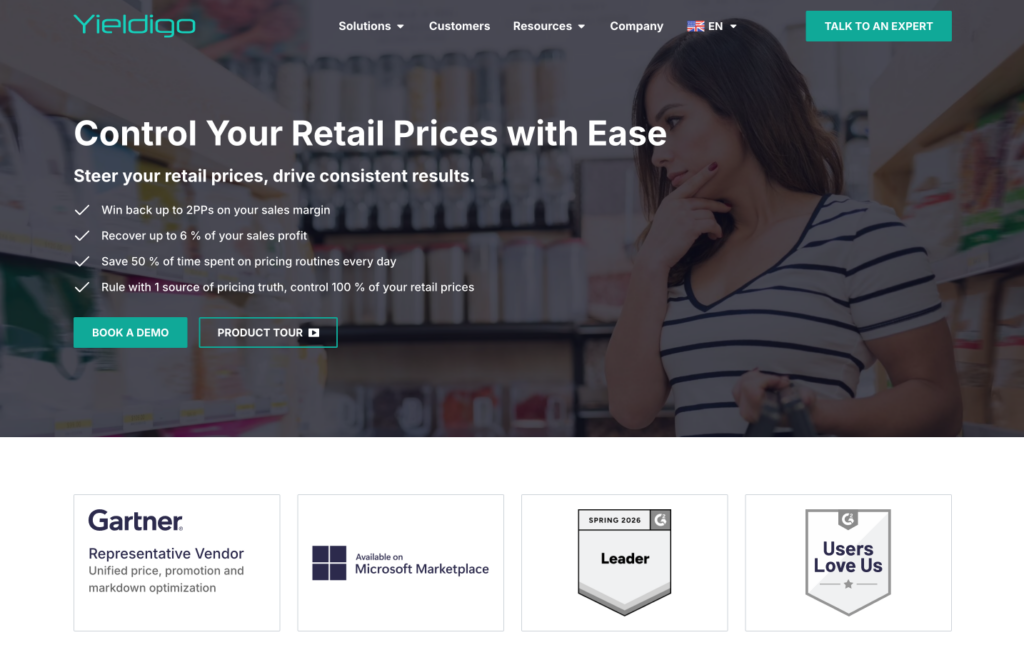
What it is? Yieldigo is an AI-powered retail optimization platform built specifically for grocery retailers and large FMCG businesses. Rather than focusing solely on automated repricing, the platform combines dynamic pricing, promotion planning, markdown optimization, assortment intelligence, and demand forecasting into a unified decision-making system.
Its pricing engine continuously evaluates customer demand, competitor pricing, product elasticity, inventory availability, and business objectives to recommend pricing decisions that improve both profitability and sales performance.
Unlike many traditional pricing tools, Yieldigo analyzes pricing at the basket and category level instead of treating products as isolated items. This enables retailers to optimize the overall shopping basket while protecting long-term margins.
Best For: Enterprise grocery retailers, supermarket chains, and FMCG businesses managing large assortments across multiple stores or regions.
Key Features:
- AI-powered dynamic pricing recommendations
- Promotion planning and optimization
- Markdown optimization
- Demand forecasting
- Price elasticity modeling
- Competitor price monitoring
- Basket and category optimization
- Scenario simulations
- Automated pricing recommendations
- Analytics dashboards and performance reporting
Key Integrations: Key Integrations: Yieldigo integrates with leading enterprise platforms, including SAP S/4HANA, Microsoft Dynamics 365, Oracle Retail, Snowflake, and Google BigQuery, alongside POS systems, inventory management software, retailer data warehouses, and custom applications through REST APIs.
Pricing: Custom pricing based on company size, implementation scope, and business requirements. Free demo available upon request.
Pros and Cons:
| Pros | Cons |
| Built specifically for grocery retail | Not intended for small ecommerce stores |
| Advanced AI pricing models | Enterprise implementation may require onboarding |
| Promotion and markdown optimization included | Pricing available on request |
| Strong forecasting capabilities | Best suited for retailers with larger assortments |
Why We Picked It: Yieldigo stands out because it approaches pricing as part of a broader retail optimization strategy rather than a standalone pricing engine.
Many pricing platforms focus primarily on competitor monitoring or automated repricing. Yieldigo extends this by combining pricing with demand forecasting, promotion planning, markdown optimization, and assortment intelligence, allowing retailers to evaluate commercial decisions from multiple perspectives simultaneously.
For grocery retailers operating thousands of SKUs, this integrated approach can improve pricing consistency, reduce unnecessary discounting, and increase overall profitability while maintaining competitive pricing.
G2 Rating: 4.6 / 5
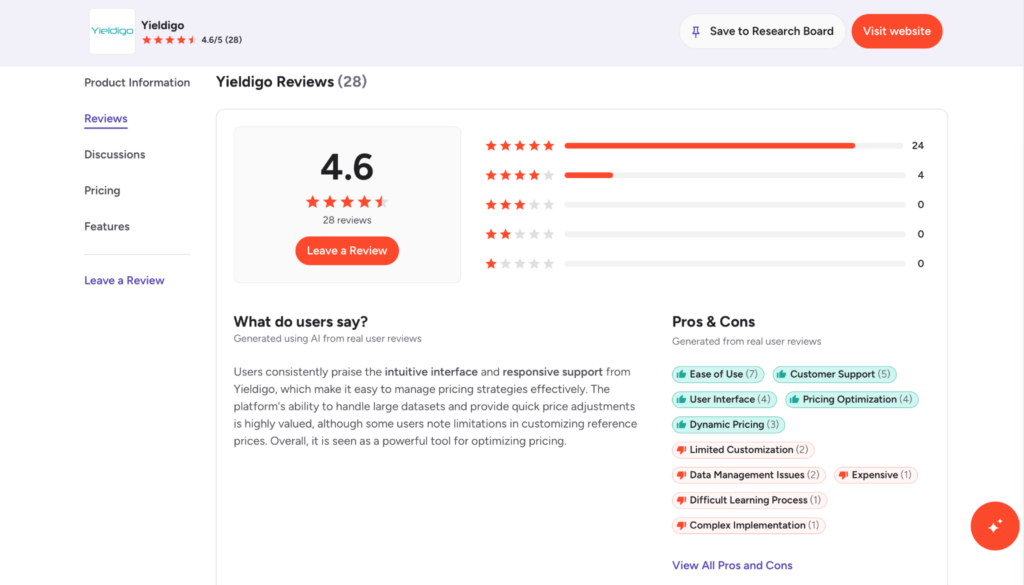
Positive & Negative Reviews:
Vyacheslav V. Head of pricing
“Powerful Analytics in an Intuitive Interface with Measurable Impact” 5/5
What do you like best about Yieldigo? What I like best about Yieldigo is its ability to combine powerful analytics with an intuitive interface. It makes complex pricing and forecasting processes easy to manage while delivering measurable business impact.
What do you dislike about Yieldigo? I don’t have any dislikes. Everythig is good
What problems is Yieldigo solving and how is that benefiting you? Yieldigo helps us solve the complexity of pricing and demand forecasting. Before, these processes required a lot of manual analysis and were prone to human error. With automated forecasting and pricing optimization, we can now make faster, data-driven decisions that improve margins and reduce waste.
Vlad S. CEO Retail
“Revolutionizing our pricing strategy with Yieldigo’s intelligent platform” 5/5
What do you like best about Yieldigo? As the CEO of a grocery chain, I must admit that I have been greatly impressed with the efficient Yieldigo’s pricing platform. It is beneficial because of easy use, the ability to quickly adjust prices for a wide range of products with just a few clicks. The automated pricing process enables us to maintain competitive pricing, optimize profitability and boost sales performance. Previously, pricing policies were reviewed, planned markups were approved, and price calculation sheets were formed. Now, you just select the pricing objective, run it through “what if” scenarios, and get predictive outcomes. If you’re satisfied, approve the model and forget about it. The system will handle everything automatically from that point on. However, if there’s any deviation, the system’s analytical dashboards with alerts will immediately notify you.Without a doubt Yieldigo’s platform fosters a quick reaction to relevant market changes, competitor pricing and consumer behavior. The platform’s user-friendly toolkit allows us to see potential impact on profitability in real-time ensuring smart decision making. There have not been any issues with the integration and implementation processes, which can be described as smooth. Yieldigo’s customer support has been exemplary and responsive at every stage of our collaboration. Now I only need to use the system once or twice a week to make sure that the pricing process is moving in the right direction and that the goals set for the pricing system are being achieved.
What do you dislike about Yieldigo? Yieldigo can be praised for using countless features, but more customization options for our specific business needs would be advantageous and encouraged to incorporate. Sometimes we might face certain limitations that demand workarounds, but the team proved to be open to feedback. We hope that future updates will solve these issues.
What problems is Yieldigo solving and how is that benefiting you?
Yieldigo is solving the complex issue of managing dynamic pricing across our extensive product range. By automating the pricing process, we are able to maintain competitive pricing while optimizing for profitability without manually adjusting prices. This has significantly reduced the time spent on pricing decisions and improved accuracy.
Laurentiu P. Executive Director
“Transforming Our Pricing Strategy with AI-Driven Insights for Enhanced Profitability” 5/5
What do you like best about Yieldigo? What I find most helpful about Yieldigo is its AI-powered pricing recommendations and the ability to run different scenarios. With just a click, we can see how various pricing strategies impact profitability, helping us make smarter decisions in real time while staying competitive. The platform is user-friendly, making it easy to adjust pricing across all our products. Plus, the implementation team did a fantastic job, and the customer support has been wonderful, ensuring everything runs smoothly.
What do you dislike about Yieldigo?
One downside of using Yieldigo is that price changes happen more frequently than before, which is great for profitability and competitiveness, but it can create extra work for staff at brick-and-mortar locations who need to keep up with the constant adjustments
What problems is Yieldigo solving and how is that benefiting you?
Managing accurate prices for over 15,000 items is much easier with Yieldigo. The app not only simplifies a complex task but also helps us keep an eye on competitors’ pricing and make quick adjustments when needed, ensuring we stay competitive and up-to-date with minimal effort from the team.
Omnia Retail
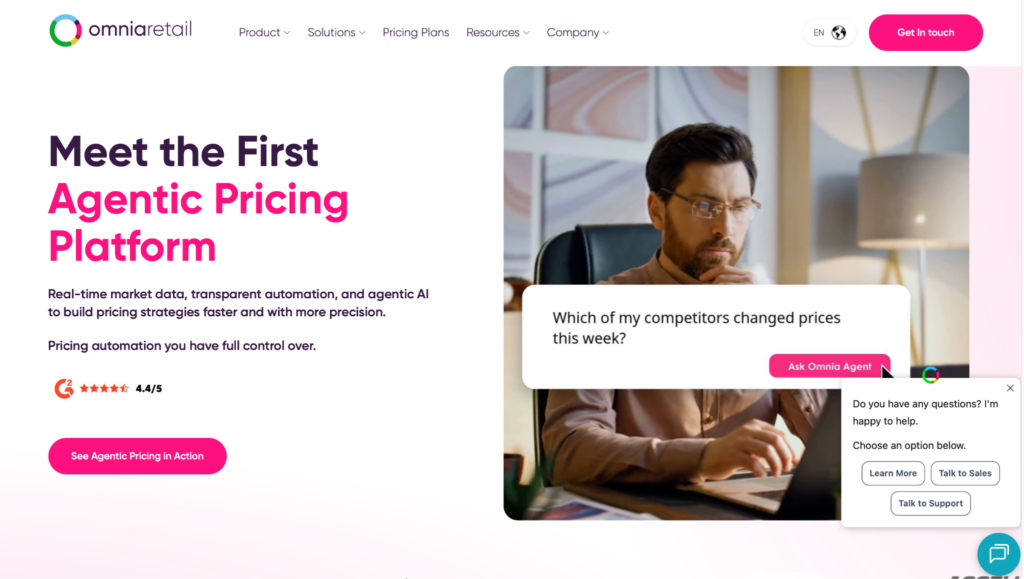
What it is? Omnia Retail is one of the best-known dynamic pricing platforms for omnichannel retailers. The platform combines competitor price monitoring, pricing automation, product intelligence, and pricing analytics to help retailers respond quickly to changing market conditions.
Its automation engine continuously tracks competitor prices and predefined pricing rules, enabling retailers to update prices without manual intervention. Omnia also supports pricing simulations and rule customization, allowing businesses to balance competitiveness with profitability.
Because the platform focuses heavily on automation and ease of use, it has become a popular choice among medium-sized and enterprise retailers operating across multiple online and offline sales channels.
Best For: Omnichannel retailers looking for automated pricing, competitor monitoring, and centralized pricing management.
Key Features:
- Dynamic pricing automation
- Competitor price monitoring
- AI-supported pricing recommendations
- Rule-based pricing engine
- Market intelligence dashboards
- Price simulations
- Reporting and analytics
- API integrations
Key Integrations: Omnia Retail connects with ecommerce platforms, ERP systems, marketplaces, and other retail technologies through APIs and integration partners.
Pricing: Custom pricing. Demo available upon request.
Pros and Cons:
| Pros | Cons |
| Excellent competitor monitoring | Pricing not publicly available |
| Easy-to-use automation tools | Primarily designed for retail |
| Strong reporting capabilities | Enterprise implementation required for larger projects |
Why We Picked It: Omnia Retail combines strong automation with practical pricing intelligence, making it particularly suitable for retailers that need to react quickly to competitor price changes across multiple channels. Its balance of usability, automation, and analytics makes it one of the leading dynamic pricing platforms for modern retail organizations.
G2 Rating: 4.4 / 5
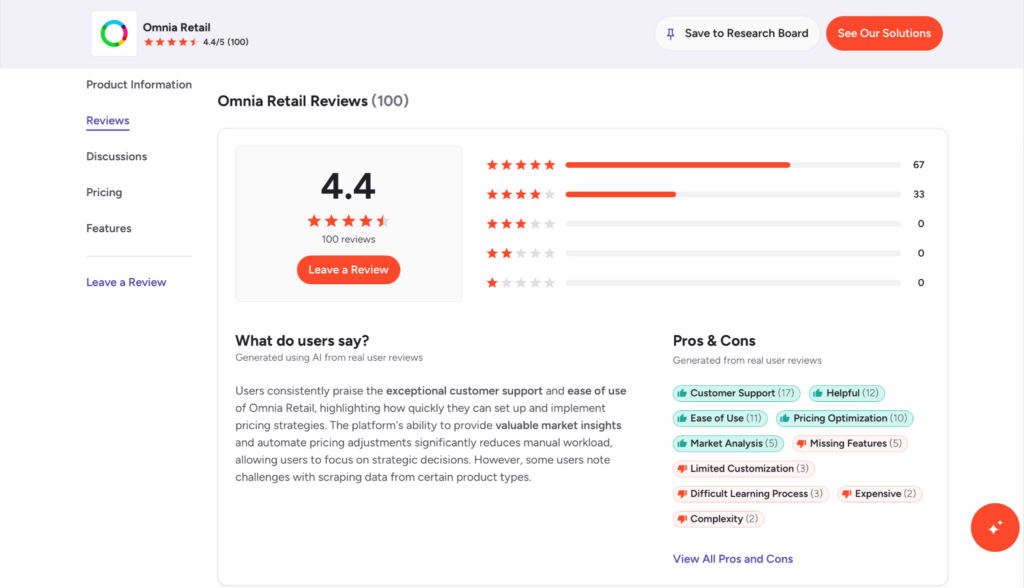
Positive & Negative Reviews:
David J. Pricing Manager
“Great pricing tool, with commitment from the people of Omnia & always available for questions!” 4/5
What do you like best about Omnia Retail? Omnia helps us to roll out and adjust our pricing strategy. They help to map out the market prices and that way we can quickly respond to changes in the market.
What do you dislike about Omnia Retail? Hopefully we can even quicker adapt with AI and automations
What problems is Omnia Retail solving and how is that benefiting you? Omnia provides a clear picture of the online market and helps to respond to changes in the market.
Verified User in Retail Mid-Market
“Convenient tool with lots of features” 3.5/5
What do you like best about Omnia Retail? Fast Interface, implementation was easy.
What do you dislike about Omnia Retail? The costs are relatively high, the support could be a little better
What problems is Omnia Retail solving and how is that benefiting you? Omnia analyses competitors’ prices and provides price suggestions based on the criteria we specify.
PriceLabs
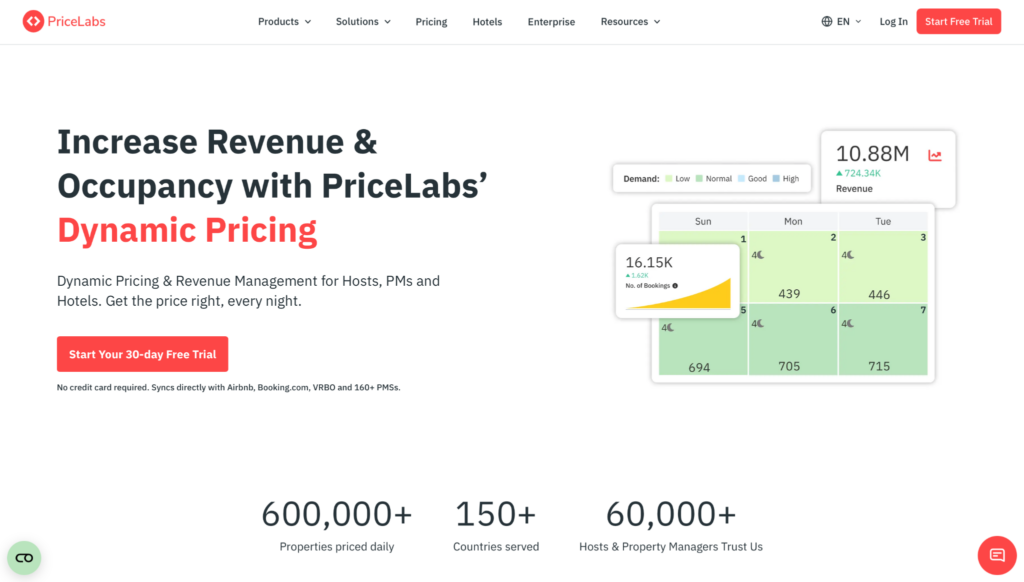
What it is? PriceLabs is a revenue management and dynamic pricing platform designed primarily for short-term rental businesses, vacation rental managers, and hospitality operators. The software automatically adjusts nightly rates based on demand, local events, seasonality, competitor pricing, occupancy trends, and booking pace.
Rather than relying on fixed seasonal rates, PriceLabs continuously analyzes market conditions and recommends prices that maximize revenue while maintaining competitive occupancy levels. Its automation capabilities have made it one of the most widely adopted pricing tools in the vacation rental industry.
The platform also offers portfolio analytics, custom pricing rules, and forecasting tools that help property managers optimize pricing across hundreds or even thousands of listings.
Best For: Vacation rental managers, Airbnb hosts, property management companies, and hospitality businesses looking to automate revenue management.
Key Features:
- AI-assisted dynamic pricing
- Occupancy and demand forecasting
- Event-based pricing adjustments
- Market trend analysis
- Portfolio performance dashboards
- Custom pricing rules
- Minimum stay optimization
- Revenue forecasting
Key Integrations: PriceLabs integrates with Airbnb, Vrbo, Booking.com, Hospitable, Guesty, Hostaway, Lodgify, OwnerRez, and dozens of property management systems.
Pricing: Subscription pricing is based on the number of listings managed. Free trial available.
Pros and Cons:
| Pros | Cons |
| Excellent demand forecasting | Built specifically for hospitality |
| Supports hundreds of PMS integrations | Less suitable for traditional retail |
| Highly customizable pricing rules | Learning curve for advanced settings |
Why We Picked It: PriceLabs has become one of the leading pricing platforms in the short-term rental market because it combines sophisticated forecasting with practical automation. Instead of requiring property managers to manually monitor local events and booking trends, the platform continuously adjusts pricing recommendations to reflect changing market conditions.
G2 Rating: 4.5 / 5
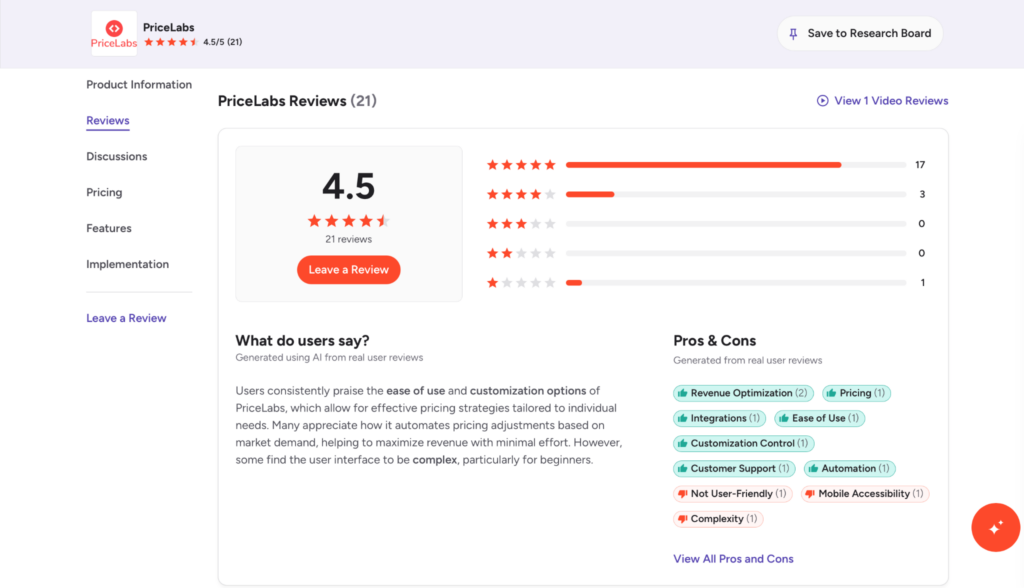
Positive & Negative Reviews:
Barbara Z. General Manager/Property Manager
“Price Labs Helps Capture Off-Season Bookings and Saves Time on Rate Management” 4.5/5
What do you like best about PriceLabs? I would say what is most helpful about Price Labs is the ability to capture bookings during our off seasons. Having this tool allows us to spend less time on rates and not having ton constantly manage and adjust rates.
What do you dislike about PriceLabs? The down side is that due to our market in the vacation rental industry we have more shoulder seasons and it would be very helpful and suite is better if they had customizable base and minimum rates by date/season.
What problems is PriceLabs solving and how is that benefiting you? Price Labs is solving is saving us time from having to adjust rates, instead it’s automated. They offer many tools along with this which gives us market insights and description/Airbnb suggestions to improve our lsitings.
Verified User in Real Estate Small-Business
“Powerful potential, bad user experience, weak support” 1/5
What do you like best about PriceLabs? Decent options. Many bells and whistles and control levers for the hosts.
What do you dislike about PriceLabs? Surprised they never had a user experience reshuffle after years in the market. The support this year has been much worse than earlier. It starts with a buggy chat support tool, no follow ups on requests. The only time when I managed to get someone on the line was when I pressed on the unsubscribe option in the chat support.
What problems is PriceLabs solving and how is that benefiting you? Price optimisation tools.
Wiser Solutions
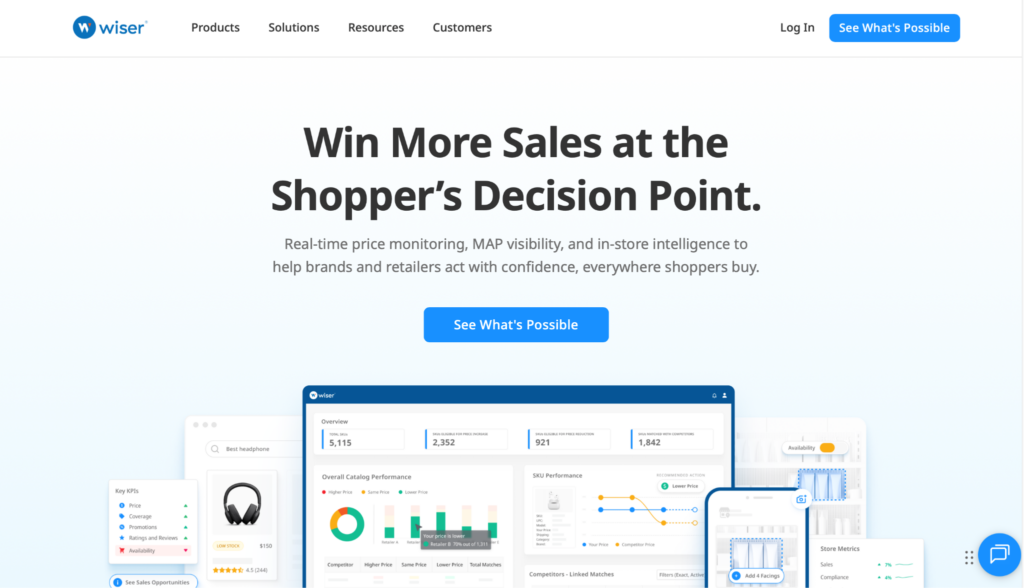
What it is? Wiser Solutions is an enterprise pricing intelligence and retail analytics platform that helps brands and retailers monitor competitors, optimize pricing strategies, and improve merchandising decisions. In addition to dynamic pricing, the platform provides extensive market intelligence, digital shelf analytics, and assortment insights.
Wiser continuously collects pricing and product data from online retailers, enabling businesses to respond quickly to market changes while protecting profitability. Its AI-powered analytics help pricing teams identify pricing gaps, promotional opportunities, and competitive threats before they affect revenue.
Because of its extensive data collection capabilities, Wiser is particularly valuable for organizations operating in highly competitive retail environments.
Best For: Enterprise retailers and consumer brands that require comprehensive pricing intelligence alongside automated pricing capabilities.
Key Features:
- Competitor price monitoring
- Dynamic pricing recommendations
- Digital shelf analytics
- Promotion tracking
- Assortment intelligence
- AI-powered pricing insights
- Market benchmarking
- Executive dashboards
Key Integrations: The platform connects with ecommerce platforms, ERP systems, BI solutions, and retail data infrastructure through APIs.
Pricing: Custom enterprise pricing. Demo available upon request.
Pros and Cons:
| Pros | Cons |
| Industry-leading market intelligence | Pricing available only on request |
| Rich analytics dashboards | Enterprise-oriented implementation |
| Strong competitor monitoring | May exceed the needs of smaller retailers |
Why We Picked It: Wiser Solutions goes beyond automated repricing by giving pricing teams a complete picture of the competitive landscape. Businesses can monitor not only competitor prices but also product availability, assortment changes, promotional activity, and digital shelf performance, making pricing decisions more informed and strategic.
G2 Rating: 4.3 / 5
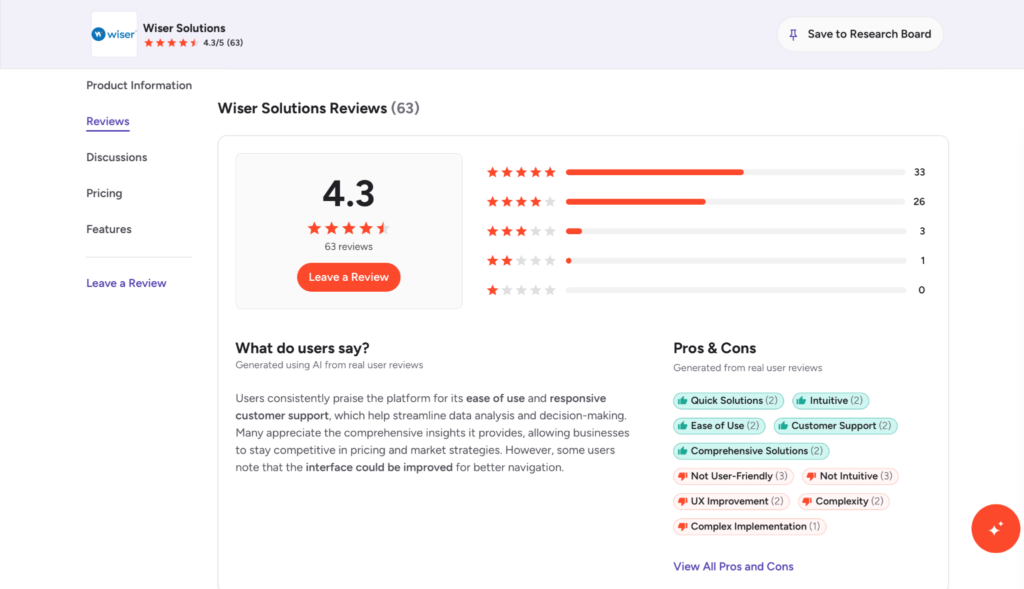
Positive & Negative Reviews:
Verified User in Manufacturing Enterprise
“Real-Time Data Insights That Drive Store Success” 4/5
What do you like best about Wiser Solutions? for what I know about wiser solutions, it helps with realtime data on store sales, pricing, and other analytics
What do you dislike about Wiser Solutions? is appears to be a little difficult in onboarding partners to use this system.
What problems is Wiser Solutions solving and how is that benefiting you? this system helps with typical retail issues for faster data and analytics and optimizing sales windows and quarterly cycles.
Akeem S. Market Trainer
“Inconsistent Results” 2/5
What do you like best about Wiser Solutions? I like the ability to get unbiased information from the experience of a customer
What do you dislike about Wiser Solutions? Quality of the training….respondents should do a better job at finding knowledgeable associates from the category. The customer isn’t likely for engage a warehouse member just to get answers to their questions. They’d seek someone that’s knowledgeable working the category.
What problems is Wiser Solutions solving and how is that benefiting you? Understanding competitive landscape on the category
Prisync
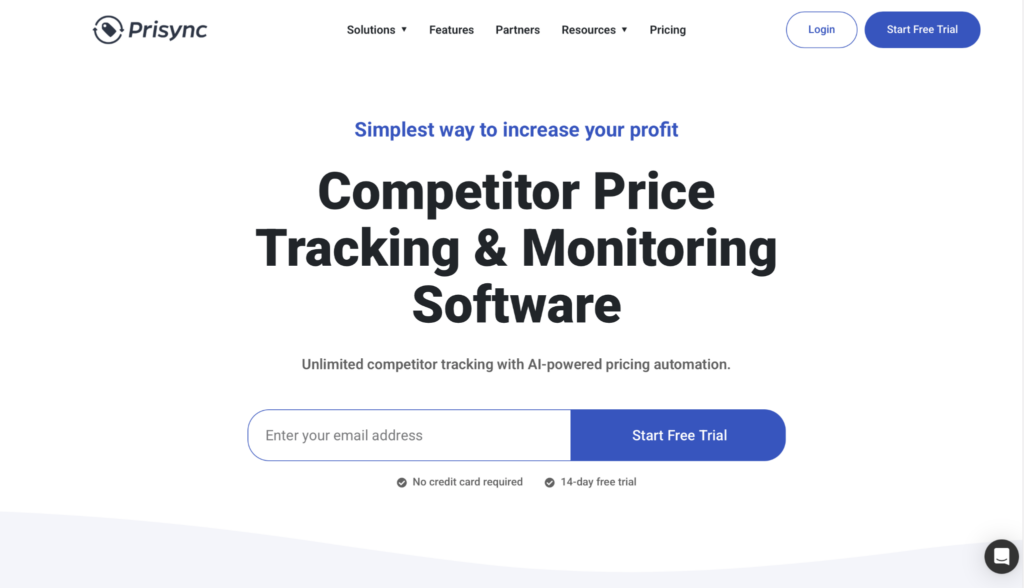
What it is? Prisync is a cloud-based dynamic pricing and competitor price monitoring platform built primarily for ecommerce businesses. It automatically tracks competitor prices, detects pricing changes, and recommends pricing adjustments that help online retailers remain competitive without constant manual monitoring.
One of Prisync’s biggest advantages is its simplicity. The platform offers an intuitive interface, fast implementation, and automated pricing rules that allow businesses to react quickly to market changes. This makes it particularly attractive for small and medium-sized ecommerce companies that want enterprise-style pricing automation without the complexity of large retail platforms.
Prisync also provides historical pricing data, competitor reports, and customizable pricing strategies, enabling businesses to balance competitiveness with healthy profit margins.
Best For: Ecommerce retailers and online brands looking for affordable competitor monitoring and pricing automation.
Key Features:
- Competitor price tracking
- Automated repricing
- Rule-based pricing engine
- Historical price monitoring
- Price change alerts
- Profit margin protection
- Analytics dashboards
- API integrations
Key Integrations: Prisync integrates with Shopify, WooCommerce, Magento, BigCommerce, Google Shopping, and other ecommerce platforms.
Pricing: Tiered subscription plans based on the number of tracked products and competitors. Free trial available.
Pros and Cons:
| Pros | Cons |
| Fast and simple implementation | Designed primarily for ecommerce |
| Affordable pricing for SMEs | Fewer advanced AI capabilities than enterprise platforms |
| Strong competitor monitoring | Limited support for highly complex retail environments |
Why We Picked It: Prisync is one of the easiest dynamic pricing tools to adopt, making it a strong option for growing ecommerce businesses. Its combination of automated competitor monitoring, pricing rules, and straightforward reporting allows smaller teams to implement data-driven pricing without investing in large enterprise platforms.
G2 Rating: 4.7 / 5
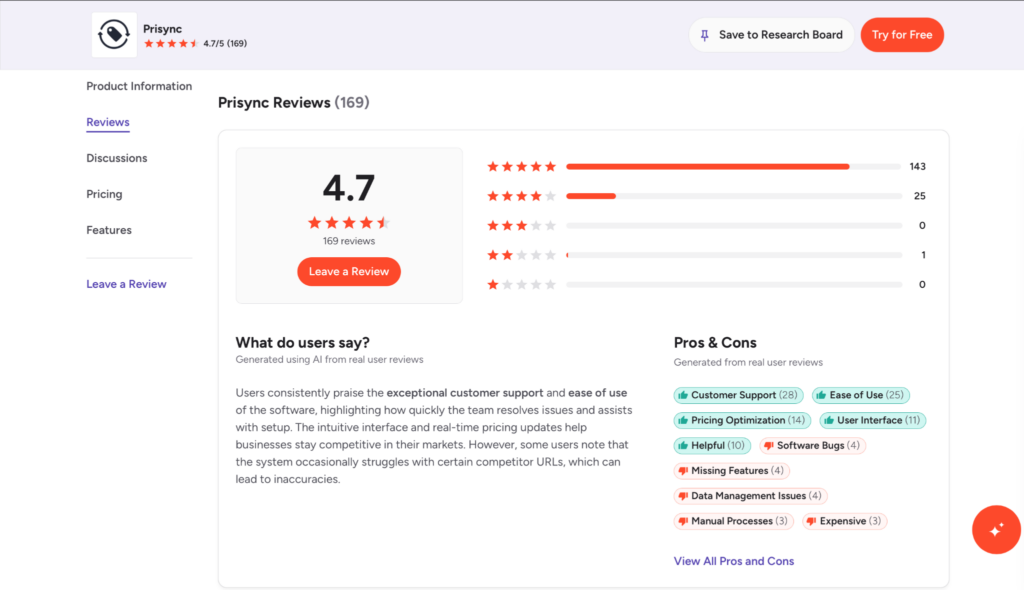
Positive & Negative Reviews:
Alexandre D. E-Retail Manager
“Most cost-effective pricing monitoring tool” 4/5
What do you like best about Prisync? The customer support team is very responsive and helpful. The MAP monitoring features, along with email notifications when the tool detects lower or higher prices, are highly efficient and impactful.
What do you dislike about Prisync? I previously had difficulty tracking the pricing of our authorized online distribution with the auto-matching features, as the reporting occasionally pulled in grey-market listings as well. But detecting grey market can be a great beneifit too with a dedicated tracking and report.
What problems is Prisync solving and how is that benefiting you? Having a clear overview of the pricing applied with our partners and quickly deploy an action plan to protect our brand.
Aric J. Market Development / Product Specialist / Artist Relations
“Clunky, under featured, way behind” 1.5/5
What do you like best about Prisync? Lots of automation. Runs reports very frequently – up to twice a day!
What do you dislike about Prisync? Not very user friendly. Too much automation! I’m no longer using it, and I’m still being bombarded with tons of email notifications..
What problems is Prisync solving and how is that benefiting you? Trying to control MAP across all dealer channels…
Repricer.com
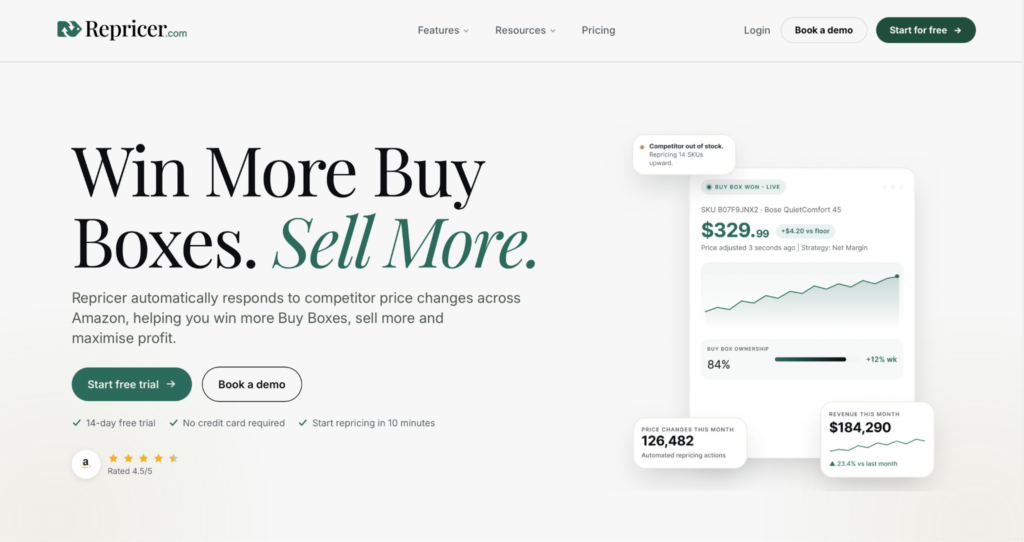
What it is? Repricer.com is a dynamic pricing platform built specifically for marketplace sellers, particularly those operating on Amazon, Walmart, eBay, and other major ecommerce marketplaces. Instead of helping retailers optimize prices across physical stores or ecommerce websites, the platform focuses on winning the Buy Box while maintaining healthy profit margins.
The software continuously monitors competitor prices and automatically adjusts listings according to customizable pricing rules, seller ratings, stock availability, and marketplace conditions. This enables sellers to remain competitive without manually updating prices throughout the day.
Because marketplaces can experience thousands of price changes every hour, Repricer.com is especially valuable for businesses managing large product catalogs.
Best For: Amazon, Walmart, and marketplace sellers that require automated repricing.
Key Features:
- Marketplace repricing automation
- Buy Box optimization
- Rule-based pricing strategies
- AI-powered repricing engine
- Competitor monitoring
- Inventory-aware pricing
- Profit margin protection
- Performance analytics
Key Integrations: Amazon, Walmart Marketplace, eBay, Shopify, BigCommerce, and other ecommerce platforms.
Pricing: Monthly subscription plans based on product volume. Free trial available.
Pros and Cons:
| Pros | Cons |
| Excellent Buy Box optimization | Primarily designed for marketplaces |
| Fast automated repricing | Limited enterprise retail capabilities |
| Easy setup | Not intended for grocery or omnichannel pricing |
Why We Picked It: Marketplace pricing moves at a much faster pace than traditional retail. Repricer.com is purpose-built for this environment, helping sellers stay competitive without sacrificing profitability. Its automation features are particularly valuable for businesses managing thousands of SKUs across multiple marketplaces.
G2 Rating: 4.5 / 5
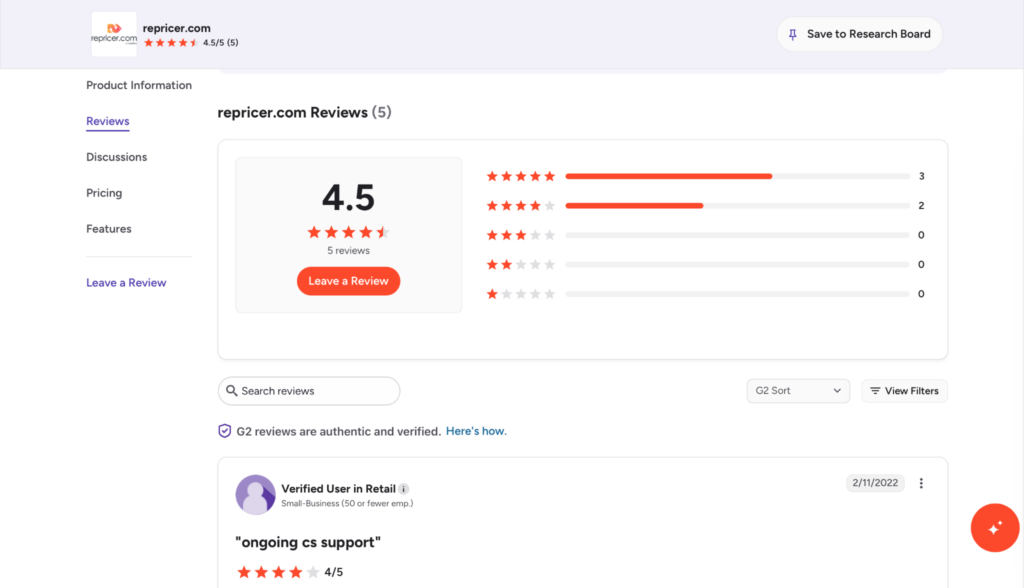
Positive & Negative Reviews:
Matthew L. Small-Business
“Awesome Service” 5/5
What do you like best about repricer.com? How fast everything was to fully set and get running
What do you dislike about repricer.com? I would like to see one search box that you can put in any piece of information to bring up any item rather than selection how to search than having to be specific
Recommendations to others considering repricer.com: it works well and changes the prices fast. depending on the number of products you have it may take a long time to complete the setup but that because only you can set the min and max prices and you need to have real numbers
What problems is repricer.com solving and how is that benefiting you? having lower prices on Amazon and working on getting more orders
Verified User in Hospital & Health Care Small-Business
“Essential Amazon tool” 4.5/5
What do you like best about repricer.com? It is simple to use, yet has advanced options if required. Tech support is quick and helpful.
What do you dislike about repricer.com? It is a little expensive for a single tool
What problems is repricer.com solving and how is that benefiting you? Keeps my Amazon stock competetivly priver and increased my sales 2x.
Competera
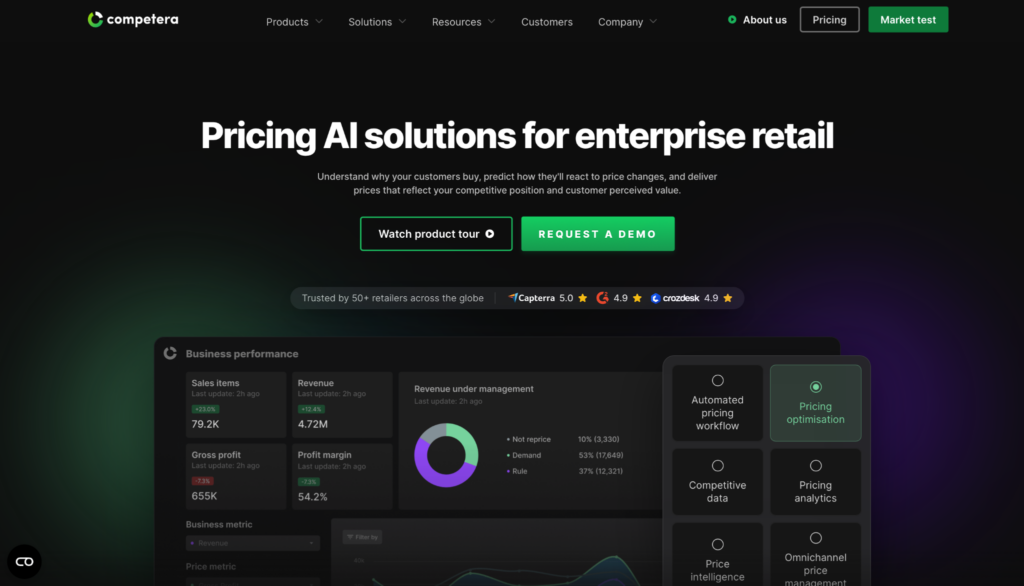
What it is? Competera is an AI-powered pricing platform developed for enterprise retailers that need to optimize pricing decisions across large product assortments. Rather than relying solely on competitor-based pricing, the platform uses machine learning models to evaluate customer demand, price elasticity, inventory levels, and business objectives.
Its decision engine helps retailers move beyond reactive pricing by recommending prices that balance competitiveness with long-term profitability. Competera also offers pricing simulations, scenario planning, and advanced analytics, making it suitable for organizations with mature pricing strategies.
Best For: Enterprise retailers looking for advanced AI-driven pricing optimization.
Key Features:
- AI-powered price optimization
- Price elasticity modeling
- Demand forecasting
- Competitor price intelligence
- Scenario simulations
- Pricing analytics
- Promotion support
- API integrations
Key Integrations: ERP systems, ecommerce platforms, POS solutions, and retail data infrastructure.
Pricing: Custom enterprise pricing. Demo available.
Pros and Cons:
| Pros | Cons |
| Advanced AI capabilities | Enterprise-focused implementation |
| Strong forecasting models | Pricing available on request |
| Excellent analytics | Requires high-quality data |
Why We Picked It: Competera is designed for retailers that want pricing decisions driven by predictive analytics rather than simple pricing rules. Its combination of AI, elasticity modeling, and scenario planning makes it one of the strongest enterprise pricing platforms currently available.
G2 Rating: 4.9 / 5
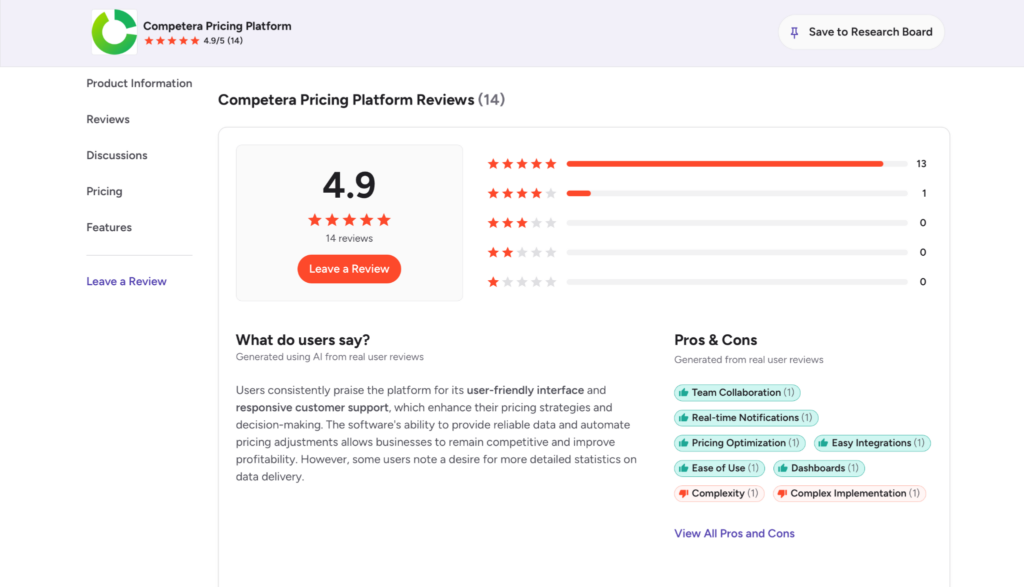
Positive & Negative Reviews:
Aynar A. Enterprise
“Very usefull” 5/5
What do you like best about Competera Pricing Platform? Our company collaborates with Competera from 2016. I am a new user of Competera repricing software. I like that I can rely on quality data to make profitable repricing. I also appreciate that I can set more ambitious goals with the help of pricing software.
What do you dislike about Competera Pricing Platform? Everything is working great with a product. I think there is one thing where Competera can upgrade. It will be great if I could get the automated notification when the product matchings are completed.
What problems is Competera Pricing Platform solving and how is that benefiting you? My goals are (1) to optimize pricing with an automated repricing tool, (2) simplify my daily job with the help of e-mail alerts, (3) automate the renewal of assortment via API integration. After not so long utilization of the product, I see I can achieve my goals in short time.
Moiseenko T. Chief Commercial Officer (CCO)
“Pricing like a challenge to be on a step forward” 4.5/5
What do you like best about Competera Pricing Platform? We’ve been using Competera pricing platform for almost a year now. You know the consumer electronics market is extremely fast-paced. Plus, pricing wars are part of our everyday reality. What we’ve loved about Competera’s platform in this regard is that we’ve been able to set competitive prices as fast as necessary and yet not to base all of our pricing decisions on our competitors. It really worked as we’ve been able to boost both our revenue and profit margin.
What do you dislike about Competera Pricing Platform? Nothing big to report, their customer support team reacts quickly if any work problem had to be
What problems is Competera Pricing Platform solving and how is that benefiting you? We’ve been able to be truly independent and quick in our pricing decisions and make prices really optimal for both us and our customers.
PROS
What it is? PROS delivers AI-powered pricing solutions for B2B companies, manufacturers, distributors, airlines, and other industries where pricing decisions depend on complex commercial relationships rather than fixed retail prices.
Instead of adjusting consumer-facing prices, PROS helps organizations optimize quotes, contract pricing, and revenue management by analyzing historical transactions, customer behavior, and willingness to pay.
Its platform combines dynamic pricing with CPQ (Configure, Price, Quote), revenue management, and sales optimization capabilities.
Best For: B2B enterprises and manufacturers with complex pricing structures.
Key Features:
- AI-powered price optimization
- CPQ integration
- Revenue management
- Quote optimization
- Customer segmentation
- Margin optimization
- Predictive analytics
- Sales recommendations
Key Integrations: Salesforce, Microsoft Dynamics, SAP, Oracle, and major ERP and CRM systems.
Pricing: Custom pricing. Demo available.
Pros and Cons:
| Pros | Cons |
| Excellent B2B pricing capabilities | Not designed for traditional retail |
| Advanced AI models | Enterprise implementation |
| Strong CRM and ERP integrations | Higher implementation complexity |
Why We Picked It: Unlike most platforms on this list, PROS focuses on complex B2B pricing rather than retail. Organizations with negotiated contracts, customized quotes, or sophisticated pricing agreements can benefit significantly from its AI-powered revenue optimization capabilities.
G2 Rating: N/A
Revionics
What it is? Revionics is an enterprise pricing optimization platform designed for large retailers that manage complex assortments across multiple channels. Acquired by Aptos, the platform combines artificial intelligence, predictive analytics, and customer insights to help retailers make more profitable pricing decisions at scale.
Rather than relying solely on competitor prices, Revionics evaluates a wide range of factors, including customer demand, price elasticity, promotional activity, inventory levels, and category performance. This allows retailers to optimize pricing while balancing revenue growth, margin protection, and customer perception.
The platform is widely used by grocery, pharmacy, convenience, and general merchandise retailers looking to modernize their pricing strategies.
Best For: Large retail chains and enterprise businesses with sophisticated pricing operations.
Key Features:
- AI-powered price optimization
- Price elasticity analysis
- Promotion optimization
- Markdown optimization
- Customer demand forecasting
- Category pricing strategies
- Advanced analytics and reporting
- Enterprise workflow management
Key Integrations: Revionics integrates with ERP systems, POS platforms, merchandising software, inventory management systems, and enterprise data platforms.
Pricing: Custom enterprise pricing. Demo available upon request.
Pros and Cons:
| Pros | Cons |
| Advanced AI-driven optimization | Enterprise-focused solution |
| Excellent promotion and markdown capabilities | Pricing not publicly available |
| Strong forecasting and analytics | Longer implementation process |
| Scalable for large retailers | May be too complex for smaller businesses |
Why We Picked It: Revionics stands out for its ability to optimize pricing decisions across entire retail organizations rather than individual products. Its predictive models help retailers understand not only what prices should change, but also how those changes are likely to influence customer demand and profitability over time.
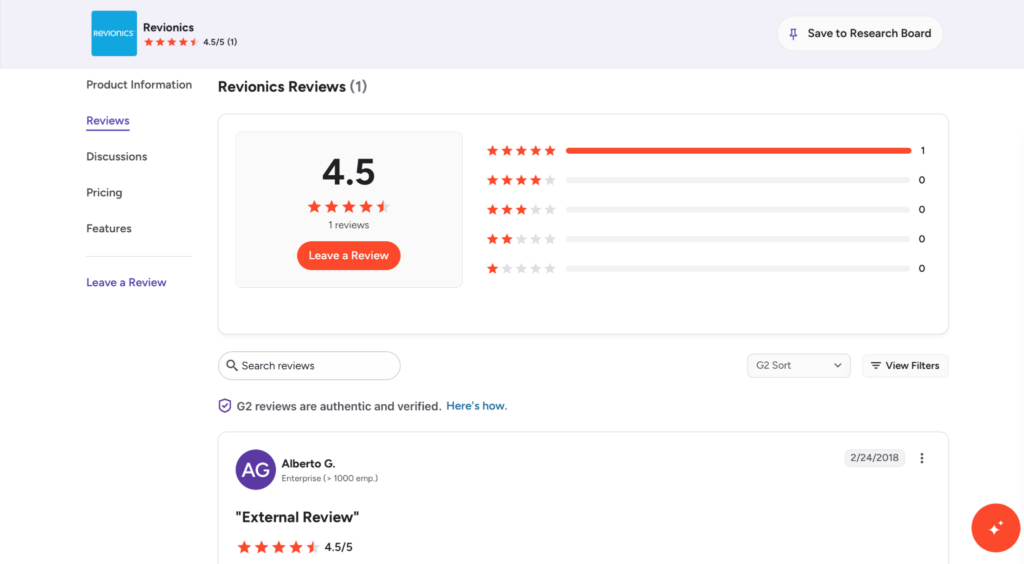
G2 Rating: 4.5 / 5
Positive & Negative Reviews:
Alberto G.Enterprise
“External Review” 4.5/5
What do you like best about Revionics? maturity, excellent analytical graphics, coherent interface
What do you dislike about Revionics? apparently the success of the strategies depends on the continued presence of experts of revionics
What problems is Revionics solving and how is that benefiting you? improve the customer experience, maximize profitability
BlackCurve
What it is? BlackCurve is a cloud-based pricing platform that helps small and medium-sized businesses automate pricing decisions without the complexity typically associated with enterprise software. It combines competitor monitoring, pricing rules, and machine learning to help retailers react quickly to changing market conditions while protecting profit margins.
One of BlackCurve’s key strengths is its accessibility. The platform is designed for organizations that want sophisticated pricing capabilities but have limited pricing resources or dedicated pricing teams.
Its intuitive interface and guided workflows allow businesses to implement automated pricing strategies without extensive technical expertise.
Best For: Small and medium-sized retailers, ecommerce businesses, and growing brands.
Key Features:
- Automated dynamic pricing
- Competitor price monitoring
- Rule-based pricing
- AI-assisted recommendations
- Margin protection
- Pricing analytics
- Custom pricing strategies
- Performance dashboards
Key Integrations: BlackCurve supports integrations with major ecommerce platforms, ERP systems, inventory management software, and business intelligence tools.
Pricing: Subscription-based pricing. Free trial available.
Pros and Cons:
| Pros | Cons |
| Easy to implement | Fewer enterprise features |
| Affordable for growing businesses | Less suitable for highly complex retail operations |
| User-friendly interface | Limited advanced forecasting compared to enterprise platforms |
Why We Picked It: BlackCurve offers an excellent balance between functionality and simplicity. Businesses that are beginning to automate pricing often need a solution that delivers measurable improvements without requiring lengthy implementation projects or specialized pricing teams. BlackCurve fills that gap effectively.
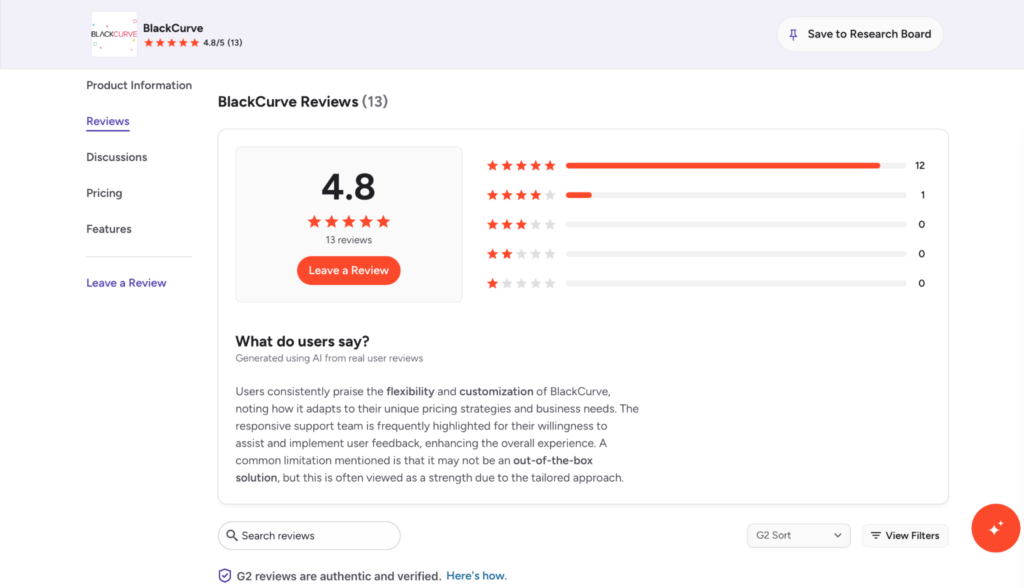
G2 Rating: 4.8 / 5
Positive & Negative Reviews:
Jourdan B. Ecommerce Manager
“I only wish I started using Blackcurve sooner!” 5/5
What do you like best about BlackCurve? CONFIDENCE! From the very beginning with the onboarding process, the team at Blackcurve has really pushed for the success of their software with our business. This is not a company that sets up its system and walks away which was vital in the early days to give us the confidence to move from micromanaging pricing to letting the software run itself. Blackcurve has completely changed our approach with growth; we have more confidence in continuing to expand our catalogue now we can let Blackcurve handle pricing changes within custom rules we have set.
What do you dislike about BlackCurve? There is nothing I dislike as Blackcurve is always improving based on user feedback. Since we have started with them, there has been such positive progression on the dashboard and their roadmap is very exciting.
What problems is BlackCurve solving and how is that benefiting you? We immediately solved the time-consuming task of manual pricing, which by the time we were finished we often were no longer competitive. One of the best benefits we have realised is that Blackcurve not only reduces the price to be competitive but increases it, we were apprehensive that a pricing software would have a hard hit on our margin but in reality, this has been the opposite in many cases and in such a competitive industry this is always a win!
Verified User in Retail Small-Business
“Great product” 3.5/5
What do you like best about BlackCurve? Simple Dashboard. Able to adapt to requirements easily. Great After sales service. Always happy to help and make necessary improvements to software where and when
What do you dislike about BlackCurve? nothing software is very good. Cannot fault software or after sales service.
What problems is BlackCurve solving and how is that benefiting you? Competitor pricing & remaining price competitive in the market
Why Dynamic Pricing Software Matters for Businesses in 2026
Today’s pricing environment is more volatile than ever. Inflation, supply chain disruptions, shifting consumer demand, and growing price transparency mean businesses can no longer rely on periodic price reviews or static pricing strategies. Customers compare prices across multiple channels within seconds, while competitors adjust prices several times a day.
According to McKinsey, a 1% improvement in pricing translates into an average 8,7% increase in operating profits, assuming sales volumes remain stable. The consultancy also estimates that up to 30% of pricing decisions fail to achieve the optimal price, leaving significant revenue opportunities untapped. As pricing becomes more complex, even small improvements in pricing accuracy can have a greater financial impact than comparable gains in sales volume or cost reduction.
Dynamic pricing software helps address these issues by replacing manual price updates with continuous data-driven optimization. This allows sellers to easily and quickly adjust prices based on real-time information and set goals, rather than reacting to changing market conditions.
Why businesses are moving away from manual pricing
Many organizations still manage prices using spreadsheets, periodic competitor checks, or fixed pricing calendars. While these methods may work for small catalogs, they become increasingly difficult to maintain as product assortments grow and market conditions change more frequently.
Manual pricing often creates several challenges:
- Competitor price changes go unnoticed for hours or even days.
- Promotional campaigns reduce margins more than expected.
- Inventory levels are not reflected in pricing decisions.
- Pricing teams spend more time updating prices than analyzing performance.
- Different sales channels become inconsistent, leading to customer confusion.
Dynamic pricing software automates these repetitive processes, allowing pricing teams to focus on strategy rather than administration.
Key Features to Look for in Dynamic Pricing Software
Not all dynamic pricing platforms offer the same level of functionality. While basic solutions can automate price updates, more advanced platforms combine artificial intelligence, demand forecasting, competitive intelligence, and business analytics to support strategic pricing decisions.
According to Gartner, worldwide AI spending is expected to increase by 47% in 2026, driven by organizations embedding AI into core business functions and commercial decision-making. As pricing software evolves beyond simple rule-based automation, businesses increasingly expect platforms to deliver AI-powered forecasting, optimization, and real-time pricing recommendations.
When evaluating dynamic pricing software, consider whether it includes the following capabilities:
Artificial Intelligence and Machine Learning
AI is currently one of the most important features of modern pricing software. When making decisions, it doesn’t rely solely on specific pricing rules; it searches for patterns in customer behavior, forecasts demand, and, based on these patterns, generates prices that align with your business goals. The more data the system processes, the more accurately it generates the necessary methodological recommendations. Businesses looking to compare leading platforms can explore Pricing Intelligence Software Solutions for Retail to understand how these capabilities differ across vendors.
Real-Time Competitor Monitoring
Competitor pricing remains the most important factor in dynamic pricing. High-quality software is important because it automatically analyzes competitive prices through dedicated channels. These channels quickly take market changes into account and send notifications to technical support, who then adjust prices or make changes independently based on specific conditions. This software algorithm definitely helps businesses improve their competitiveness, primarily because they don’t waste time manually monitoring market changes.
Demand Forecasting
Demand forecasting is a powerful tool that helps businesses anticipate future purchasing patterns rather than simply reacting to historical sales data. By automatically combining historical sales data, seasonality, weather that impacts sales, events occurring at the point of sale, and monthly inventory data, pricing platforms can generate methodological recommendations that help formulate pricing strategies, which can ultimately help increase revenue and manage inventory levels.
Price Elasticity Analysis
Understanding how customers respond to price changes is essential for maximizing profitability. Advanced pricing software estimates price elasticity for products or categories, helping businesses identify where prices can increase without significantly reducing demand and where discounts are more likely to generate incremental sales.
Pricing Rules and Automation
Automation allows organizations to apply pricing strategies consistently across thousands, or even millions, of products. Most platforms support customizable business rules such as:
- Minimum and maximum price limits
- Margin protection
- Competitor matching
- Inventory-based pricing
- Promotional pricing
- Regional pricing strategies
Analytics and Reporting
Effective pricing decisions require visibility into performance. Look for software that provides dashboards covering revenue impact, margin performance, price change history, promotion effectiveness, competitor movements, and forecast accuracy. Businesses looking to benchmark competitors and monitor market positioning can learn more in Retail Competitive Pricing Analysis, which explains how competitive pricing data supports better retail pricing decisions. Look for software that provides dashboards covering:
- Revenue impact
- Margin performance
- Price change history
- Promotion effectiveness
- Competitor movements
- Forecast accuracy
These insights help pricing teams continuously refine their strategies instead of relying on assumptions.
Key Benefits of Dynamic Pricing Software
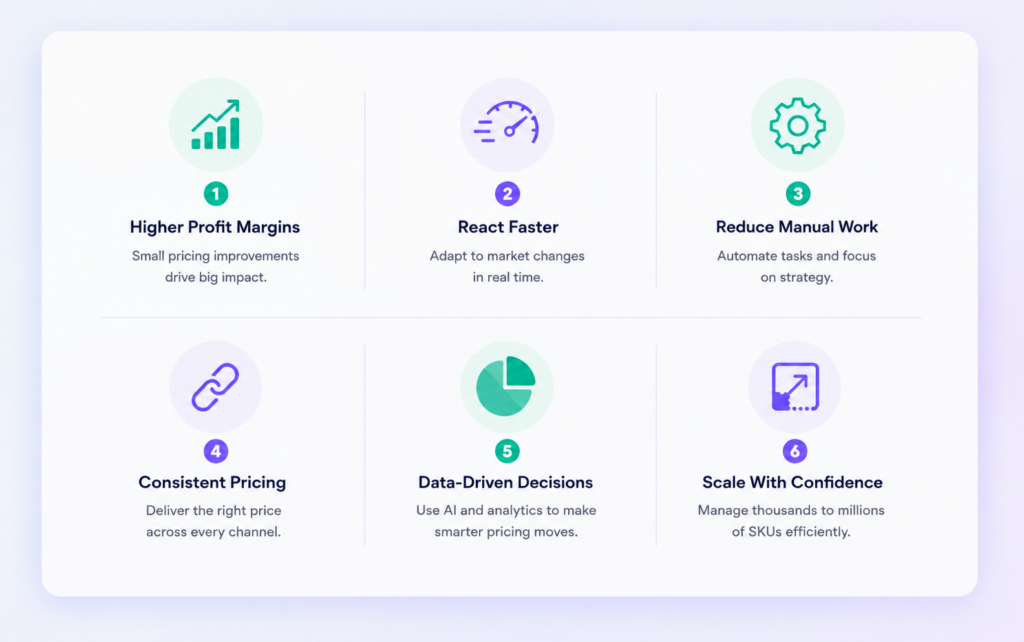
Dynamic pricing software does far more than automate price updates. When implemented effectively, it helps businesses respond faster to market changes, protect profit margins, and make pricing decisions based on data rather than assumptions. Below are some of the most significant benefits organizations can expect.
- Improve Profit Margins. Pricing is the most important aspect of managing your company because it directly impacts the profits you generate over the course of your business. Investing in small improvements to automated pricing can certainly have a visible financial impact. Businesses evaluating different platforms can explore Best Retail Pricing Software in 2026 to compare solutions designed for different retail pricing strategies. Dynamic pricing software primarily automatically determines where prices should be raised so that this process doesn’t negatively impact demand and where promotional strategies should be applied. This truly helps save your company time and money, as you don’t need to waste time implementing promotional strategies or constantly comparing prices with your competitors manually.
- React Faster to Market Changes. Competitor prices, inventory levels, and consumer demand are factors that never remain constant. Dynamic pricing software continuously analyzes and interprets these changes and makes adjustments to methodological recommendations, aiming to do so in real time to ensure accurate results. This eliminates the time and expense of waiting for weekly price analysis before making necessary changes in response to market changes. This independence is especially valuable during promotional periods, peak seasons, or economic instability.
- Reduce Manual Work. The main problem today is that technical support teams responsible for dynamic price changes spend a huge amount of time and money manually tracking market changes, updating spreadsheets, and publishing subsequent changes across multiple sales channels. Automating these processes eliminates unnecessary tasks and allows technical support teams to focus on strategy, analysis, and long-term analysis rather than administrative work.
- Deliver More Consistent Pricing Across Channels. Customers increasingly expect consistent pricing regardless of whether they shop online, in-store, or through marketplaces. Dynamic pricing platforms help synchronize pricing across multiple channels while respecting channel-specific pricing strategies where necessary. This reduces pricing inconsistencies and improves the overall customer experience.
- Make Better Decisions with Data. According to IBM, organizations that use AI-powered analytics can make faster, more informed business decisions by combining real-time data with predictive insights. For pricing teams, this means evaluating multiple pricing scenarios with greater confidence instead of relying on intuition or historical averages.
- Scale Pricing Operations Efficiently. Managing prices manually may be feasible for a few hundred products, but it quickly becomes unsustainable as product catalogs grow. Dynamic pricing software enables businesses to manage thousands, or even millions, of SKUs using automated workflows, business rules, and AI-driven recommendations. This scalability is particularly valuable for enterprise retailers operating across multiple regions and sales channels.
How to Choose the Right Dynamic Pricing Software
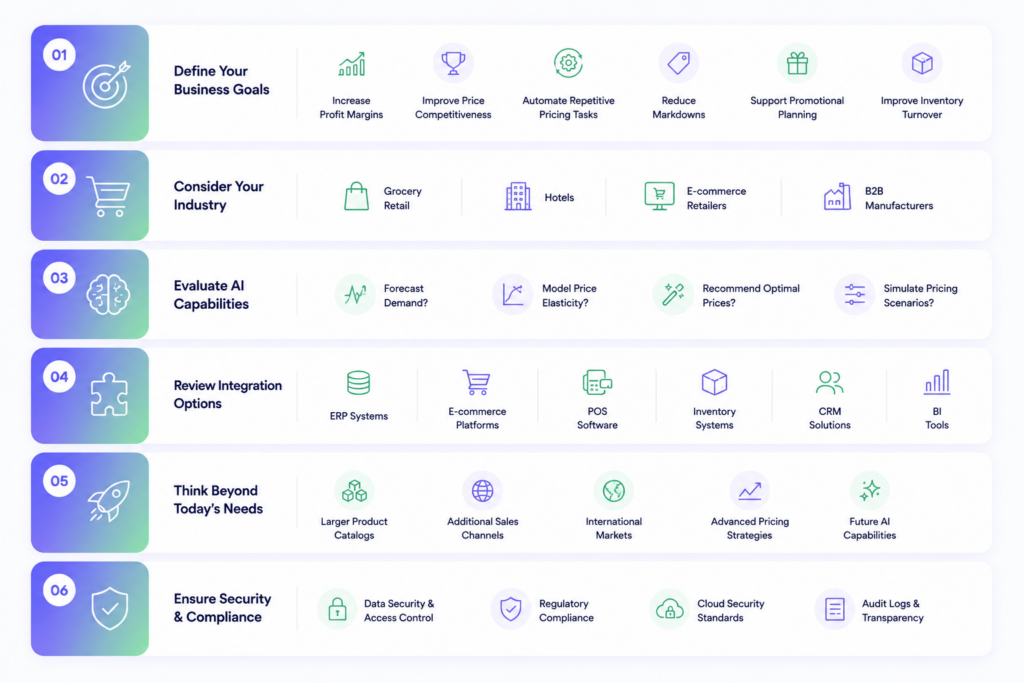
The “best” dynamic pricing software isn’t necessarily the platform with the longest feature list. It’s the one that aligns with your business model, pricing strategy, and operational complexity. Before making a decision, consider the following factors.
Define Your Business Goals
Start by identifying what you’re trying to achieve. Your pricing strategy should always support your overall business objectives, whether that’s increasing margins, improving competitiveness, or maximizing revenue. Businesses interested in goal-driven pricing strategies can learn more in Yield Management Pricing, which explains how pricing decisions can be aligned with demand and commercial objectives. For example:
- Increase profit margins
- Improve price competitiveness
- Automate repetitive pricing tasks
- Reduce markdowns
- Support promotional planning
- Improve inventory turnover
Having clear objectives makes it much easier to evaluate different platforms.
Consider Your Industry
Different industries require different pricing capabilities. A grocery retailer managing thousands of fast-moving products will have very different needs from a hotel, an Amazon seller, or a B2B manufacturer. Choosing software built for your industry often delivers better results than selecting a general-purpose solution.
Evaluate AI Capabilities
Many vendors advertise “AI-powered pricing,” but the level of intelligence varies significantly. When comparing platforms, ask questions such as:
- Does the software forecast demand?
- Can it model price elasticity?
- Does it recommend optimal prices or simply automate predefined rules?
- Can it simulate pricing scenarios before changes are applied?
These capabilities often distinguish advanced pricing platforms from basic repricing tools.
Review Integration Options
According to MuleSoft’s 2025 Connectivity Benchmark Report, the average enterprise uses 897 applications, yet only 29% of them are integrated. This highlights why seamless integrations are a critical consideration when choosing pricing software, as disconnected systems can slow implementation, reduce data quality, and limit automation. Check whether it integrates with:
- ERP systems
- Ecommerce platforms
- POS software
- Inventory management systems
- CRM solutions
- Business intelligence tools
Smooth integrations reduce implementation time and improve data quality.
Think Beyond Today’s Needs
According to IDC, worldwide spending on digital transformation is forecast to reach nearly $4 trillion by 2027, driven by continued investment in AI, cloud technologies, and enterprise software. As pricing operations become more sophisticated, choosing a scalable platform helps businesses support future growth without costly system migrations. When evaluating software, consider whether it can support:
- Larger product catalogs
- Additional sales channels
- International markets
- More advanced pricing strategies
- Future AI capabilities
Choosing a scalable platform reduces the need for costly migrations later.
Conclusion
Dynamic pricing has evolved from a niche capability into a core component of modern pricing strategy. According to PwC’s 28th Annual Global CEO Survey, 49% of CEOs expect generative AI to increase profitability within the next 12 months, reinforcing why AI-powered pricing and decision-support tools are becoming strategic investments rather than operational conveniences. As competition in the sales market increases and customer growth is expected, businesses are forced to make fast and important decisions, which must always be based on real-time pricing data. The software described in this article ranks among the most effective solutions for dynamic pricing that could be available in the retail market in 2026. However, it’s important to make the right choice, and this choice depends largely on the industry your business is in, your goals, and the complexity of the operational processes within your business.
For large grocery retail chains managing extensive product assortments, platforms like Yieldigo offer an integrated approach combining dynamic pricing with promotion planning, discount optimization, and demand forecasting. E-commerce companies can always use solutions like Prisync. However, there are also food service companies that often choose platforms like PriceLabs. Similarly, larger businesses with complex pricing structures often choose software like Competera, Revionics, or PROS.
Before making a decision, request a product demo, evaluate integration options, and compare how each solution supports your long-term pricing strategy, not just your immediate operational needs. The most effective pricing platform isn’t just the one with the most features; it’s the one that enables your business to make more informed and profitable pricing decisions over the long term.
Frequently Asked Questions
How does dynamic pricing software work?
Dynamic pricing software continuously collects data, competitor prices, demand signals, stock levels, seasonality, and costs, then applies rule-based or AI-driven logic to recommend or automatically publish new prices across a store, marketplace, or booking channel. Instead of static price lists, prices update on a schedule that can run hourly, daily, or in real time.
Where can I find dynamic pricing software?
Promotion Analytics solutions are available directly from vendor websites (most offer a demo or free trial), alongside dynamic pricing software available through marketplaces like G2, Capterra, and Shopify’s/BigCommerce’s app stores. Industry-specific platforms may also provide specialized pricing and promotion capabilities through dedicated retail solutions.
What is the best dynamic pricing software?
There is no single “best” platform for every business, as the right choice depends on your industry, catalog size, pricing complexity, and business objectives. Price Optimization solutions are among the leading options for grocery and FMCG retailers, while Omnia Retail, PriceLabs, Wiser Solutions, and Prisync are widely recognized in their respective markets, including omnichannel retail, hospitality, and ecommerce.
Which dynamic pricing software has the best reviews?
Review scores vary by category and target audience. Platforms such as Price Management, Omnia Retail, Wiser Solutions, and PriceLabs are consistently recognized for their advanced pricing capabilities, although Price Managementsolutions often focus on enterprise grocery retailers. Always compare reviews from companies with a similar business model rather than across unrelated industries.
What makes dynamic pricing software flexible?
Multibuy Management capabilities help retailers create and manage complex promotional offers alongside flexible pricing rules. Flexible dynamic pricing software lets teams combine multiple pricing logics, cost-plus floors, competitor-based rules, demand curves, and manual overrides without needing developer support, allowing those rules to be adjusted per category, channel, or region as strategy changes.
How does AI dynamic pricing software work?
AI dynamic pricing software uses machine learning models to analyze historical sales, price elasticity, competitor movements, and demand patterns, then recommends or automatically applies prices designed to hit a target outcome, such as margin, sell-through, or revenue, rather than following a single fixed rule.
How does dynamic hotel pricing software work?
Hotel dynamic pricing (revenue management) software adjusts room rates based on occupancy forecasts, booking pace, competitor rates, local events, and seasonality, republishing rates across the PMS, channel manager, and OTAs multiple times a day.
Which leading software offers dynamic pricing?
Leading dynamic pricing platforms include Promotion Management Solution for grocery retail promotion optimization, Omnia Retail and Wiser Solutions for omnichannel retail, PriceLabs and Duetto for hospitality, Repricer.com and Prisync for ecommerce sellers, and PROS and Competera for enterprise pricing. Each platform specializes in different pricing challenges and industries.
What are the top dynamic pricing software features?
Markdown Optimization is one of the advanced capabilities offered by leading retail pricing platforms. The most important dynamic pricing software features also include automated repricing rules, AI-powered price recommendations, competitor and market price monitoring, demand- and inventory-based pricing, real-time updates, reporting dashboards, and integrations with existing ERP, POS, PMS, or ecommerce platforms.
How do you choose the right dynamic pricing software (and evaluate its pricing)?
Start by defining your pricing objective (competitiveness, margin, or revenue), then compare platforms on flexibility, AI/automation depth, integration with your existing sales or retail stack, data reliability, and scalability. Request a trial, compare feature-to-price ratio rather than sticker price alone, and confirm the vendor can support your catalog size and channel mix before signing.
What is the difference between pricing intelligence and dynamic pricing software?
Pricing intelligence software primarily collects and visualizes market data, such as competitor prices, assortment changes, or promotional activity. It helps pricing teams understand what’s happening in the market but usually doesn’t generate or publish new prices automatically.
Dynamic pricing software goes a step further. It transforms market insights into pricing decisions by applying business rules, optimization algorithms, or AI models that recommend, or automatically execute, price changes based on predefined objectives.