
Choosing the right retail pricing software is becoming increasingly important as retailers face growing competition, changing consumer behavior, and pressure to protect profit margins. While Competera is a well-known AI-powered pricing optimization platform, it is not the only solution available. Several Competera alternatives offer advanced capabilities, from price elasticity analysis and automated repricing to competitor price monitoring and AI-driven retail pricing optimization.
In this guide, we will explore 12 of the best alternatives and competitors to Competera in 2026. Whether you manage a chain of grocery stores, an FMCG retail network, or an online store, this guide will help you build a pricing strategy tailored to the specific nature of your business, your long-term profitability goals, and the complexity of your operational processes.
TL;DR
- Yieldigo – AI-powered pricing and promotion optimization platform for grocery and FMCG retailers, with an emphasis on profitability, elasticity, and category-level decisions.
- Pricefx – Enterprise pricing platform supporting price management, analytics, and optimization across complex business environments.
- Revionics – AI-powered retail price optimization software designed for large retailers managing extensive product assortments.
- RELEX Solutions – Unified retail planning platform combining pricing and promotions with demand forecasting and inventory optimization.
- Blue Yonder – Enterprise retail and supply chain software with pricing, markdown, and merchandising optimization capabilities.
- Pricemoov – AI-supported pricing platform for managing and optimizing prices across multiple products, markets, and channels.
- Omnia Retail – Retail pricing automation software combining competitor intelligence with dynamic pricing rules.
- Price2Spy – Competitor price monitoring and repricing platform for retailers and e-commerce businesses.
- Dealavo – Price intelligence and dynamic pricing solution focused on competitor monitoring and e-commerce pricing decisions.
- Minderest – Price and assortment intelligence platform supporting competitive pricing analysis for retailers and brands.
- Skuudle – Competitive price intelligence platform specializing in product matching, market monitoring, and pricing insights.
- Intelligence Node – Retail pricing intelligence platform offering product matching, competitor monitoring, and pricing analytics.
How We Evaluated the Best Competera Alternatives for 2026
Selecting a Competera alternative requires examining more than feature lists or vendor positioning. Retailers differ significantly in assortment complexity, pricing objectives, operational resources, and available data. A platform suited to enterprise grocery optimization may not address the immediate requirements of an online retailer seeking competitor monitoring and automated repricing.
In our document, we examine six practical evaluation criteria that help distinguish comprehensive price optimization platforms from more specialized price analysis tools. These criteria can assist your company in assessing functional capabilities, implementation requirements, compatibility with other platforms, and long-term commercial value.
- AI and Pricing Optimization Capabilities. Assess whether software supports predictive recommendations, demand forecasting, price elasticity modeling, and scenario simulations. Distinguish economically informed optimization from predefined pricing adjustments.
- Competitor Price Intelligence. Evaluate competitor monitoring, product matching, market coverage, and data reliability. Consider whether external intelligence directly informs pricing recommendations or primarily supports reporting.
- Retail-Specific Functionality. Examine support for extensive assortments, grocery categories, promotions, markdowns, and category strategies. Differentiate enterprise retail requirements from smaller e-commerce workflows.
- Automation and Workflow Efficiency. Review automated recommendations, approval processes, and price execution. Determine how effectively the platform reduces repetitive manual work while preserving commercial oversight.
- Integration and Scalability. Assess compatibility with ERP, POS, e-commerce, and analytical systems. Consider support for multiple stores, channels, countries, and growing product catalogs.
- Pricing Transparency and Customer Feedback. Compare publicly available licensing information, implementation considerations, and verified customer reviews. G2 ratings should be interpreted alongside review counts, product categories, and verification dates.
Best Competera Alternatives for Retail Pricing Optimization in 2026
| Software | Best For | G2 Rating |
| Yieldigo | AI-Powered Pricing Optimization | 4.6 / 5 |
| Pricefx | Enterprise Pricing Management | 4.4 / 5 |
| Revionics | AI-Driven Retail Optimization | 4.5 / 5 |
| RELEX Solutions | Integrated Retail Planning | 4.6 / 5 |
| Blue Yonder | Enterprise Retail Optimization | 4.2 / 5 |
| Pricemoov | Flexible Pricing Strategies | N/A |
| Omnia Retail | Automated Competitive Pricing | 4.4 / 5 |
| Price2Spy | Competitor Price Monitoring | 4.8 / 5 |
| Dealavo | E-commerce Price Intelligence | 4.3 / 5 |
| Minderest | Price and Assortment Intelligence | 4.6 / 5 |
| Skuudle | Product Matching and Market Intelligence | 4.8 / 5 |
| Intelligence Node | AI-Driven Competitive Intelligence | 4.5 / 5 |
1. Yieldigo – Best for AI-Powered Retail Pricing Optimization
What It Is?
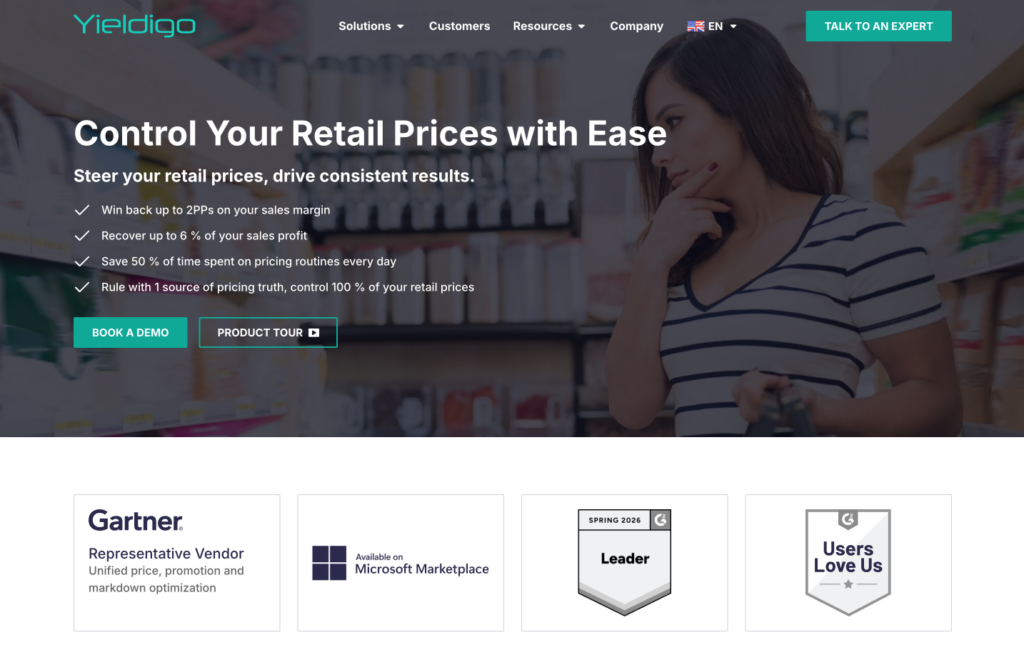
Yieldigo is an AI-powered retail pricing and optimization platform designed to help businesses manage complex pricing strategies across extensive product assortments. Its approach combines data-driven recommendations with commercial objectives, helping retailers balance profitability, competitive positioning, and customer price perception.
The platform uses machine learning, price elasticity analysis, configurable pricing rules, and scenario simulations to support everyday decisions. These capabilities are particularly relevant to grocery and FMCG operations, where thousands of SKUs, frequent price changes, and relationships between categories create substantial operational complexity.
Best For:
The Yieldigo solution is well-suited for grocery chains, retail companies, and supermarkets that sell everyday goods, specifically those managing an extensive product assortment with varying degrees of price sensitivity. For these companies, it is crucial to protect their margins while remaining competitive on items that significantly influence customers’ purchasing decisions.
Its typical users include pricing managers, category managers, retail analysts, and commercial directors. Teams transitioning from spreadsheets to structured pricing workflows can use analytical recommendations and automation to improve consistency, coordination, and control.
Key Capabilities:
- AI-Powered Price Optimization. Machine learning models generate pricing recommendations aligned with profitability, competitiveness, and commercial priorities.
- Price Elasticity Analysis. Evaluates customer sensitivity to price changes, helping identify products requiring particularly competitive positioning.
- Scenario Simulation. Allows teams to assess alternative pricing strategies and their potential commercial consequences before implementation.
- Rule-Based Price Management. Configurable rules and constraints help maintain pricing consistency across products, brands, and categories.
- Competitor Price Intelligence. Incorporates relevant external market information to support competitive positioning and informed price management.
- Category-Level Pricing Strategies. Supports coordinated pricing decisions across categories, product families, and different customer purchasing patterns.
- Pricing Workflow Automation. Reduces repetitive tasks and helps teams manage extensive assortments through more consistent processes.
Strategic Strengths:
Yieldigo combines AI-supported recommendations with business-controlled pricing rules, making it relevant to retailers seeking both analytical sophistication and operational flexibility. Its retail-specific approach supports category-level decisions rather than treating every product independently. For grocery businesses managing high SKU volumes, this combination helps connect competitive pricing with broader profitability objectives. Teams can also evaluate promotion analytics to understand campaign performance.
Considerations:
Effective implementation depends on reliable product, sales, and pricing data, appropriate integrations, and organizational readiness. Retailers should evaluate whether Yieldigo’s capabilities match their assortment complexity, pricing processes, and available analytical resources.
Pricing: Custom pricing; contact Yieldigo for a quote based on required modules, business scope, and implementation needs.
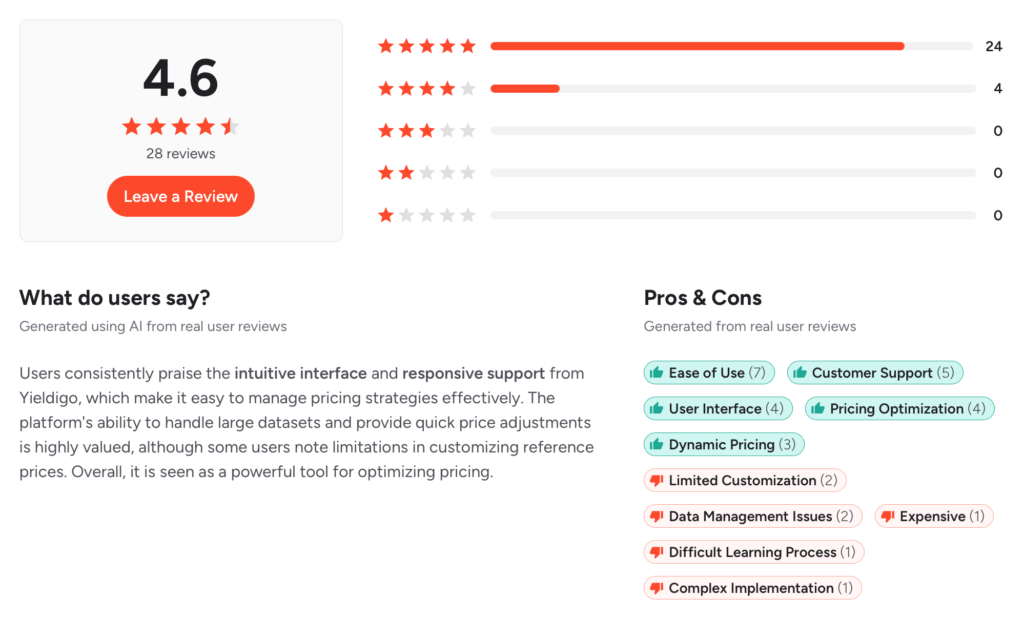
G2 Rating: 4.6 / 5 based on 28 reviews, verified October 2026.
2. Pricefx – Best for Enterprise Pricing Management

What It Is?
Pricefx is a cloud-based enterprise pricing platform supporting price management, optimization, analytics, and commercial workflows. It helps organizations centralize pricing information and establish consistent processes across products, business units, and markets.
The platform combines configurable pricing logic with analytical tools, approval workflows, and integration capabilities. Its broader commercial functionality makes it relevant to organizations requiring structured price governance alongside optimization, particularly in complex enterprise environments.
Best For:
Pricefx is well-suited for companies that manage a multitude of pricing strategies, complex approval workflows, and extensive product portfolios. Organizations looking to standardize their pricing processes across all business units will benefit from the platform’s highly flexible and customizable architecture.
Typical users include pricing directors, revenue managers, commercial analysts, and enterprise technology teams. Businesses requiring connections between pricing decisions, quotations, customer agreements, and operational systems may find its wider capabilities particularly useful.
Key Capabilities:
- Enterprise Price Management. Centralizes pricing policies, calculations, and administration across business units.
- Price Optimization. Supports analytical approaches to improving pricing decisions and commercial outcomes.
- Pricing Analytics. Provides dashboards and reporting for evaluating performance, margins, and pricing opportunities.
- Workflow Configuration. Enables structured approval processes and business-specific pricing controls.
- Scenario Modeling. Supports evaluation of alternative pricing decisions and their potential effects.
Strategic Strengths:
Pricefx emphasizes configurability and enterprise-wide pricing governance. Its combination of analytics, workflow management, and integration capabilities supports businesses that require coordinated pricing processes across departments. The platform is particularly relevant when pricing optimization must operate alongside broader commercial activities rather than functioning as an isolated retail application.
Considerations:
Implementation may require substantial configuration, technical expertise, and clearly defined business processes. Retailers should verify whether the platform’s specific modules address their requirements for grocery pricing, category optimization, and consumer-facing retail operations.
Pricing: Custom enterprise pricing; request a quote based on selected functionality, integrations, and implementation scope.
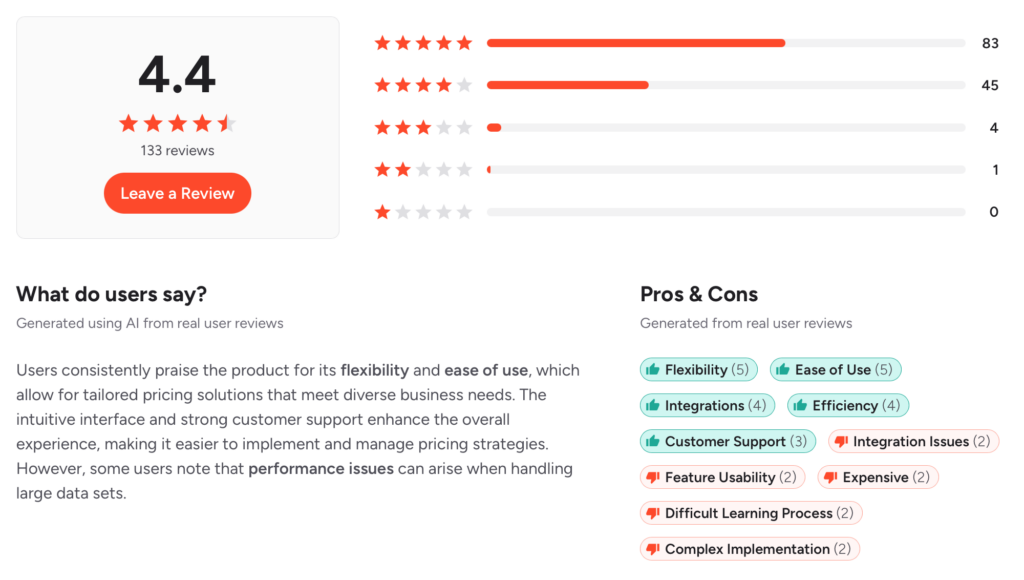
G2 Rating: 4.4 / 5 based on 133 reviews, verified October 2026.
3. Revionics – Best for AI-Driven Retail Price Optimization
What It Is?
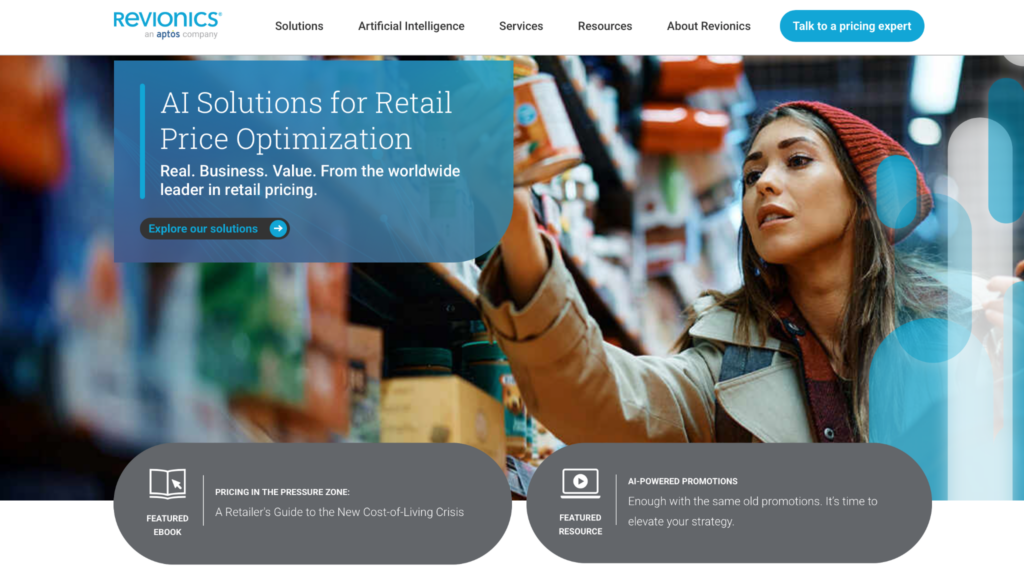
Revionics provides retail price, promotion, and markdown optimization software. Its solutions focus on supporting pricing decisions through analytical modeling, helping retailers evaluate demand behavior and commercial trade-offs. The platform is designed for retail environments where pricing decisions affect large assortments and multiple operational objectives. By connecting pricing analysis with promotional and markdown activities, it supports more coordinated retail revenue management.
Best For:
The Revionics solution is well-suited for established retail chains that require specialized optimization tools, tools that go beyond simply tracking competitors’ prices. A broad product assortment and the need for frequent pricing decisions create opportunities to apply more systematic, analytical approaches. Pricing managers, retail executives, and merchandising specialists can leverage this platform to ensure price consistency, manage promotions, and optimize markdown decisions. Features designed specifically for the retail sector make this system particularly valuable for organizations that manage complex product portfolios.
Key Capabilities:
- Retail Price Optimization. Supports analytically informed pricing recommendations across retail assortments.
- Price Elasticity Modeling. Evaluates demand sensitivity to different pricing decisions.
- Promotion Optimization. Helps retailers analyze promotional opportunities and commercial objectives.
- Markdown Optimization. Supports structured decisions about discounting and inventory clearance.
- Pricing Analytics. Provides information for understanding pricing performance and commercial trade-offs.
Strategic Strengths:
Revionics specializes in retail optimization rather than treating pricing as a generic enterprise process. Its coverage of everyday prices, promotions, and markdowns supports coordinated commercial decision-making. Retailers evaluating sophisticated optimization models may find this specialization valuable when balancing customer demand, competitive positioning, and profitability. Retailers planning bundled offers may also consider multibuy management as a related requirement.
Considerations:
Successful deployment requires appropriate historical data, analytical readiness, and integration with existing retail processes. Businesses should confirm which optimization capabilities are included in their proposed implementation and assess the resources required to maintain effective models.
Pricing: Enterprise pricing is available through vendor consultation; public standardized subscription rates are not confirmed.
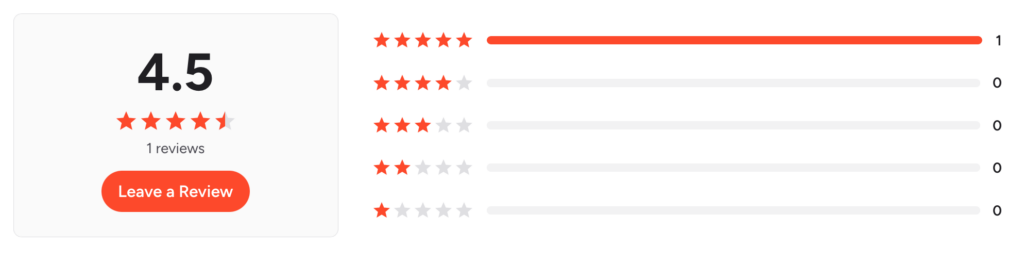
G2 Rating: 4.5 / 5 based on 1 review, verified October 2026.
4. RELEX Solutions – Best for Integrated Retail Planning
What It Is?
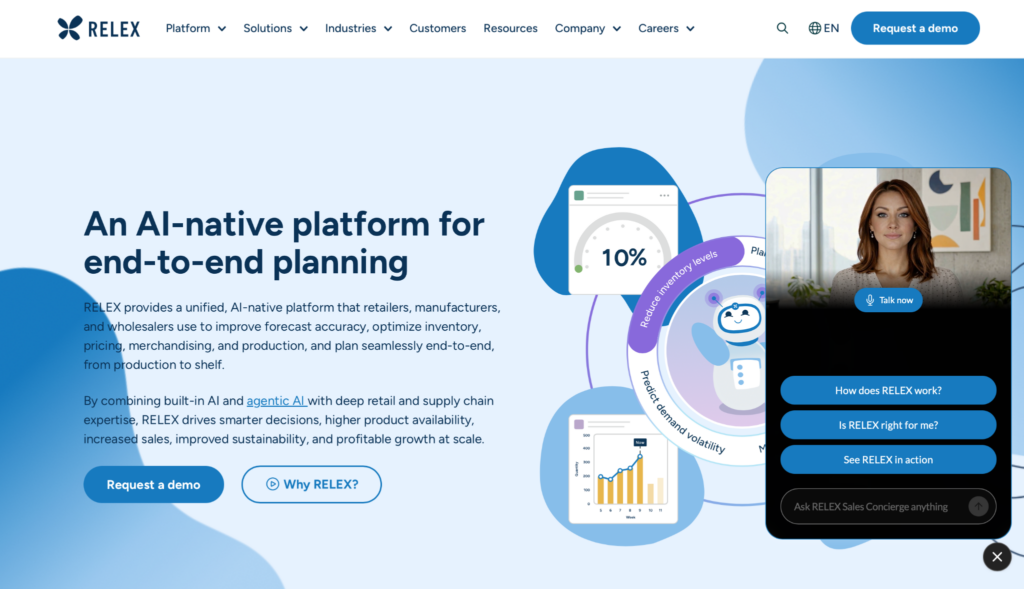
RELEX Solutions provides integrated retail planning software connecting demand forecasting, inventory management, promotions, and related operational decisions. Its approach helps retailers coordinate commercial plans with product availability and supply chain requirements. Rather than treating pricing as an entirely separate activity, RELEX emphasizes connections between demand, inventory, and retail planning. Businesses should evaluate the specific pricing functionality available within their proposed product configuration.
Best For:
RELEX is particularly relevant to retailers seeking coordination between commercial planning and operational execution. Grocery businesses managing frequent promotions, changing demand, and inventory constraints may benefit from integrated planning. Demand planners, merchandising managers, supply chain teams, and commercial directors are typical stakeholders. Organizations seeking cross-functional visibility can evaluate RELEX when disconnected planning processes create operational inefficiencies. Teams may also review promotion management tools when comparing planning workflows.
Key Capabilities:
- Demand Forecasting. Uses demand information to support planning across products and locations.
- Promotion Planning. Connects promotional activities with expected demand and operational requirements.
- Inventory Optimization. Helps coordinate inventory availability with commercial plans.
- Retail Planning Analytics. Provides visibility into operational and commercial planning decisions.
- Scenario Planning. Supports evaluation of alternative demand and inventory assumptions.
Strategic Strengths:
RELEX’s strength lies in connecting retail planning decisions that are frequently managed separately. This integrated approach may help businesses coordinate promotional activity with inventory availability and expected demand. Retailers prioritizing operational alignment alongside pricing strategy can assess its broader planning capabilities.
Considerations:
Organizations that require specialized price elasticity modeling or automated price optimization should explore the capabilities of the relevant RELEX products and modules. Implementation may involve multiple departments and necessitate extensive data preparation, as well as adjustments to established planning processes.
Pricing: Custom enterprise pricing; request a proposal covering the relevant modules and implementation requirements.
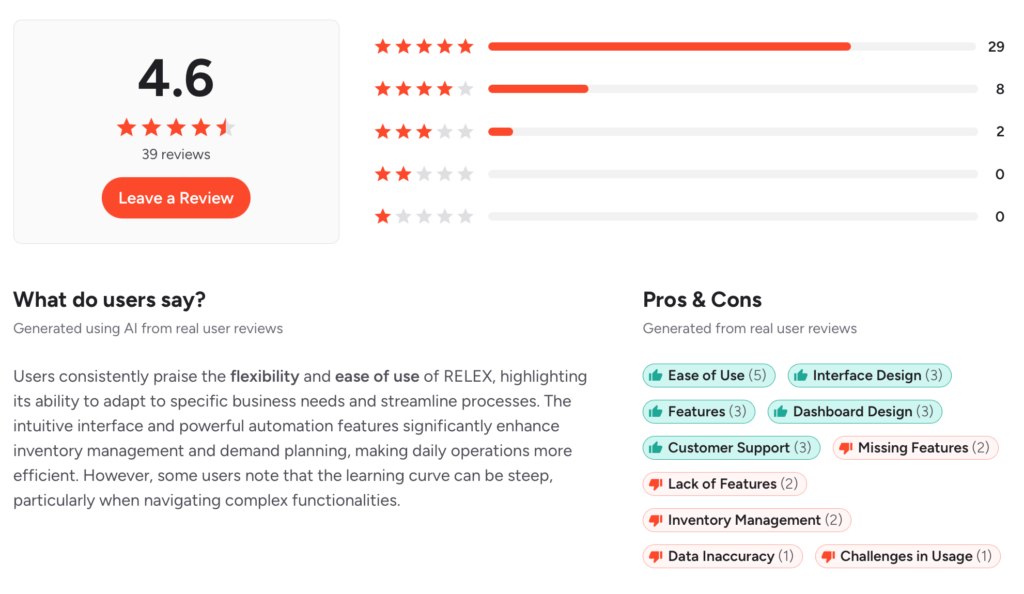
G2 Rating: 4.6 / 5 based on 39 reviews, verified October 2026.
5. Blue Yonder – Best for Enterprise Retail Optimization

What It Is?
Blue Yonder provides enterprise software supporting retail merchandising, supply chain planning, and operational optimization. Its portfolio includes capabilities relevant to pricing, markdown decisions, inventory management, and broader retail execution. The platform focuses on coordinating large-scale retail operations through connected planning and analytical processes. Pricing functionality should be evaluated within the relevant product offering because capabilities vary across its enterprise software portfolio.
Best For:
Blue Yonder is relevant to large retail organizations managing extensive assortments, complex merchandising requirements, and multiple operational systems. Enterprises seeking coordination between pricing-related decisions and inventory planning may find its broader capabilities useful. Merchandising executives, supply chain leaders, pricing teams, and enterprise technology departments are potential stakeholders. Organizations already investing in integrated retail planning may benefit from evaluating its portfolio. Businesses with complex pack structures should also account for multiple unit pricing requirements.
Key Capabilities:
- Retail Merchandising. Supports structured merchandise planning and operational management.
- Markdown Optimization. Helps businesses evaluate discounting and inventory clearance decisions.
- Demand Forecasting. Provides analytical support for anticipating changing product demand.
- Inventory Planning. Connects merchandise availability with broader operational requirements.
- Enterprise Analytics. Supports evaluation of commercial and operational performance.
Strategic Strengths:
Blue Yonder offers a comprehensive approach to retail optimization across the entire enterprise. The value of this solution lies in its integration of merchandising and supply chain management tasks with business decision-making processes. For large organizations aiming for coordinated planning across various departments, this approach may prove preferable to using standalone tools for price monitoring.
Considerations:
Its extensive product portfolio can increase selection and implementation complexity. Buyers should verify which modules provide the required pricing capabilities and assess integration costs, organizational resources, and operational dependencies before committing.
Pricing: Custom pricing based on selected enterprise products, deployment scope, and implementation requirements.
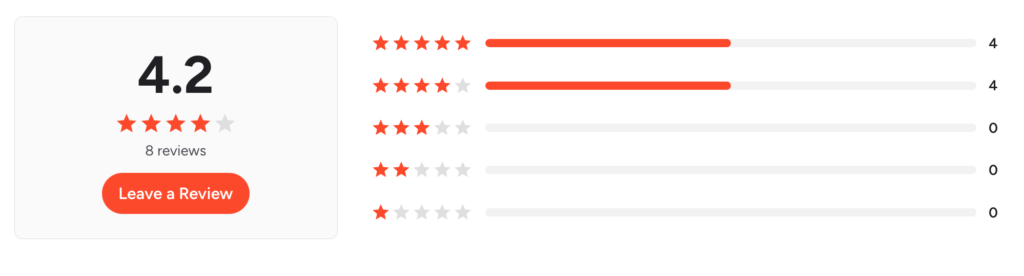
G2 Rating: 4.2 / 5 based on 8 reviews, verified October 2026.
6. Pricemoov – Best for Flexible Pricing Strategy Management

What It Is?
Pricemoov is a pricing management and optimization platform supporting businesses that need adaptable pricing strategies across products, markets, and channels. Its approach combines pricing data, business rules, and analytical functionality. The software helps organizations structure pricing decisions while maintaining flexibility over commercial objectives. Its capabilities are relevant to businesses managing multiple pricing conditions rather than relying exclusively on simple competitor-based adjustments.
Best For:
Pricemoov suits businesses seeking greater control over pricing strategies across varied products and commercial environments. Organizations with different regional requirements or channel-specific pricing objectives may benefit from configurable management processes. Pricing managers, commercial teams, and revenue specialists can evaluate the platform when replacing fragmented manual workflows. It is particularly relevant where centralized oversight must coexist with different operational pricing requirements.
Key Capabilities:
- Pricing Strategy Management. Supports structured approaches to pricing policies and commercial objectives.
- Price Optimization. Provides analytical functionality for evaluating pricing decisions.
- Configurable Pricing Rules. Allows businesses to establish constraints and pricing conditions.
- Multi-Channel Management. Supports pricing activities across different commercial channels.
- Pricing Analytics. Helps teams examine performance and identify improvement opportunities.
Strategic Strengths:
Pricemoov emphasizes adaptable pricing management across different business environments. Its combination of analytical functionality and configurable strategies may appeal to organizations that require flexibility without abandoning centralized oversight. Buyers can evaluate its ability to accommodate varying commercial rules and pricing objectives.
Considerations:
Retailers need to verify the presence of industry-specific functionality, as well as compatibility with existing systems and available models. Companies that specifically require specialized analysis of their product categories, particularly within the food industry, should begin by evaluating potential solutions through demonstrations based on representative data.
Pricing: Pricing is provided through vendor consultation and depends on the selected implementation scope.
G2 Rating: NA
7. Omnia Retail – Best for Automated Competitive Pricing

What It Is?
Omnia Retail provides dynamic pricing and competitive intelligence software for retailers and e-commerce businesses. It combines market information with configurable pricing strategies to support automated price adjustments. The platform helps pricing teams respond to competitor movements while maintaining control over their own commercial rules. Its focus on dynamic pricing makes it relevant to retailers operating in competitive markets with frequently changing prices.
Best For:
Omnia Retail is suitable for retailers seeking automated repricing supported by competitor intelligence. Businesses managing substantial online catalogs may benefit from reducing manual price monitoring and adjustment tasks. E-commerce managers, pricing specialists, and commercial teams can use its functionality to maintain pricing consistency across competitive environments. It is particularly relevant when rapid market responses are an important operational requirement.
Key Capabilities:
- Dynamic Pricing. Supports automated price adjustments based on configured strategies.
- Competitor Monitoring. Tracks relevant competitor prices and market movements.
- Pricing Rules. Allows businesses to establish constraints governing automated decisions.
- Market Intelligence. Provides information about competitive pricing conditions.
- Pricing Analytics. Supports evaluation of pricing performance and market positioning.
Strategic Strengths:
Omnia Retail combines competitive intelligence with automated price execution. This approach can reduce repetitive manual work while allowing pricing teams to establish strategic rules. Its focus on dynamic repricing makes it particularly relevant to businesses where competitor movements frequently influence commercial decisions.
Considerations:
Retailers need to distinguish between automated competitive repricing and broader, demand-based optimization. Companies with complex interdependencies between product categories should always assess whether they possess sufficient analytical capabilities to address challenges related to profitability, category-level objectives, and demand elasticity.
Pricing: Contact Omnia Retail for current pricing and implementation details.
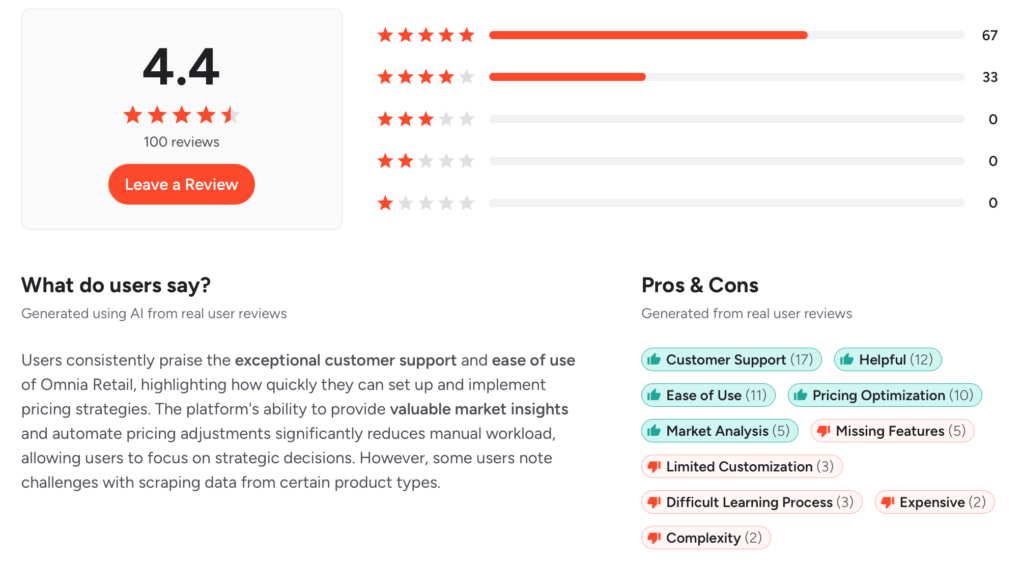
G2 Rating: 4.4 / 5 based on 100 reviews, verified October, 2026.
8. Price2Spy – Best for Competitor Price Monitoring
What It Is?
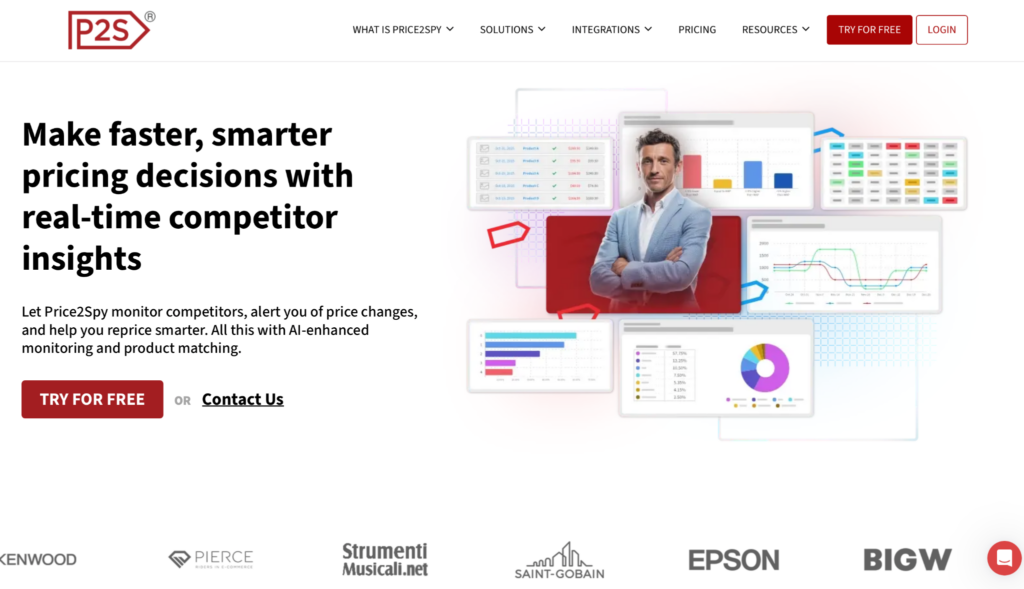
Price2Spy is competitor price monitoring and repricing software designed for retailers, online sellers, and businesses tracking competitive markets. Its functionality centers on collecting pricing information and helping users identify relevant market changes. The platform supports pricing decisions through competitor visibility, reporting, alerts, and repricing functionality. This makes it relevant to businesses prioritizing market awareness and operational pricing responses.
Best For:
Price2Spy is suitable for e-commerce businesses and retailers that need systematic competitor price tracking. Companies monitoring many competing products may benefit from automated data collection rather than manual website checks. E-commerce specialists, pricing analysts, and category managers can evaluate the platform when competitor visibility is their primary requirement. Businesses with relatively straightforward repricing strategies may prefer dedicated monitoring functionality over comprehensive enterprise optimization suites.
Key Capabilities:
- Competitor Price Monitoring. Tracks competitor pricing across selected products and websites.
- Price Change Alerts. Helps teams identify important changes in competitive conditions.
- Historical Price Tracking. Supports analysis of competitor pricing developments.
- Product Matching. Helps associate comparable products across monitored sources.
- Repricing Functionality. Supports price adjustments using relevant competitive information.
Strategic Strengths:
Price2Spy focuses on practical competitor monitoring and actionable pricing intelligence. Its specialized functionality may be attractive to retailers that primarily need visibility into market movements and structured repricing processes. This narrower focus can simplify evaluation for businesses without extensive optimization requirements.
Considerations:
Monitoring competitors does not automatically determine the optimal selling price. Retailers engaged in demand forecasting should prioritize complex elasticity modeling or company-wide product category optimization; they should also evaluate whether they require additional software features.
Pricing: Subscription options and applicable monitoring limits should be confirmed through current vendor pricing information.
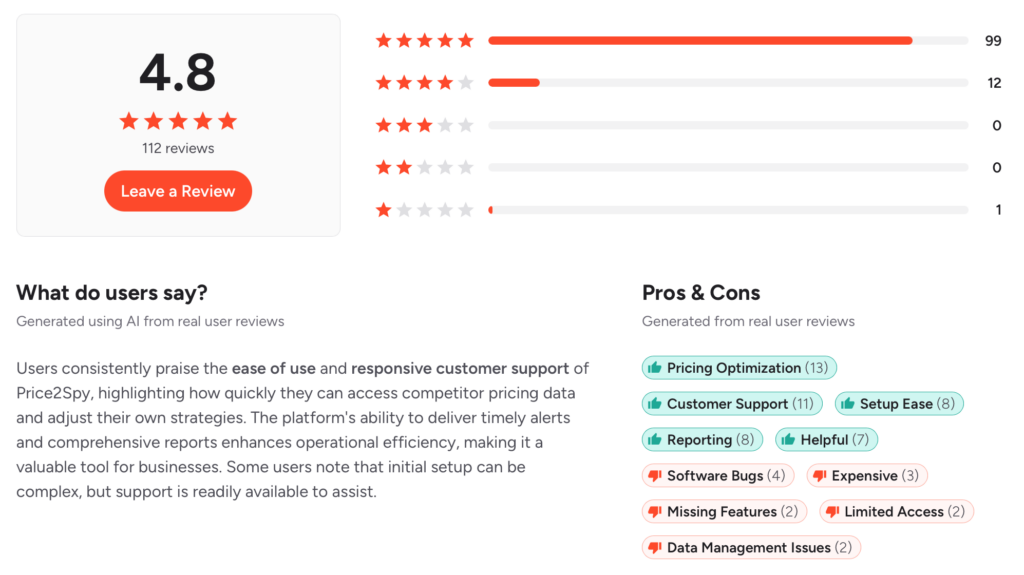
G2 Rating: 4.8 / 5 based on 112 reviews, verified October, 2026.
9. Dealavo – Best for E-commerce Price Intelligence
What It Is?
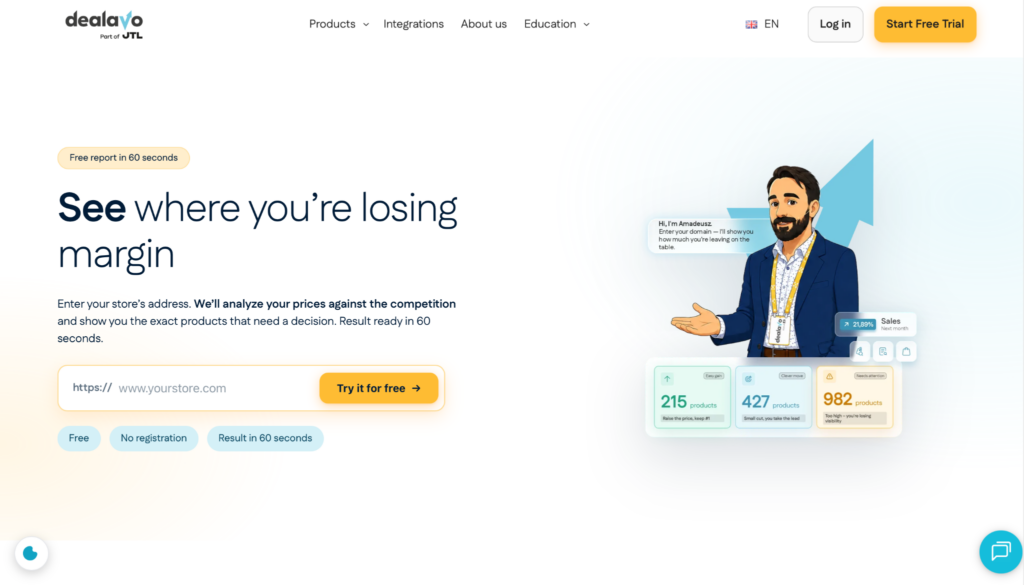
Dealavo provides price intelligence and dynamic pricing solutions focused on competitive e-commerce environments. It helps businesses monitor market prices and use collected information to support commercial pricing decisions. Its functionality addresses the challenges of maintaining visibility across online competitors and marketplaces. By combining monitoring with pricing automation capabilities, the platform supports more structured responses to changing market conditions.
Best For:
Dealavo is relevant to online retailers and brands seeking competitor intelligence across digital sales channels. Businesses operating in markets with frequent pricing changes may benefit from continuous monitoring. E-commerce managers, marketplace specialists, and pricing analysts can evaluate Dealavo when competitive visibility is central to their pricing strategy. Its functionality is particularly relevant to organizations comparing many similar products across online sellers.
Key Capabilities:
- Competitor Monitoring. Collects pricing information from relevant online competitors.
- Marketplace Intelligence. Supports visibility into competitive marketplace conditions.
- Dynamic Pricing. Helps businesses manage pricing responses to changing market data.
- Price Change Analysis. Identifies developments in competitor pricing behavior.
- Product Comparison. Supports comparisons between relevant competing offers.
Strategic Strengths:
Dealavo focuses on the practical connection between competitive price intelligence and e-commerce pricing decisions. Its monitoring-oriented approach can help businesses respond more systematically to changing market conditions. Retailers seeking visibility across online sales environments may find this specialization relevant.
Considerations:
Companies that require advanced, demand-based optimization should always distinguish between repricing and monitoring functionality, on the one hand, and predictive economic modeling, on the other. In these markets, it is essential to evaluate parameters such as monitoring frequency, integration requirements, product coverage, and product matching.
Pricing: Request current pricing based on monitoring requirements, selected functionality, and business scope.
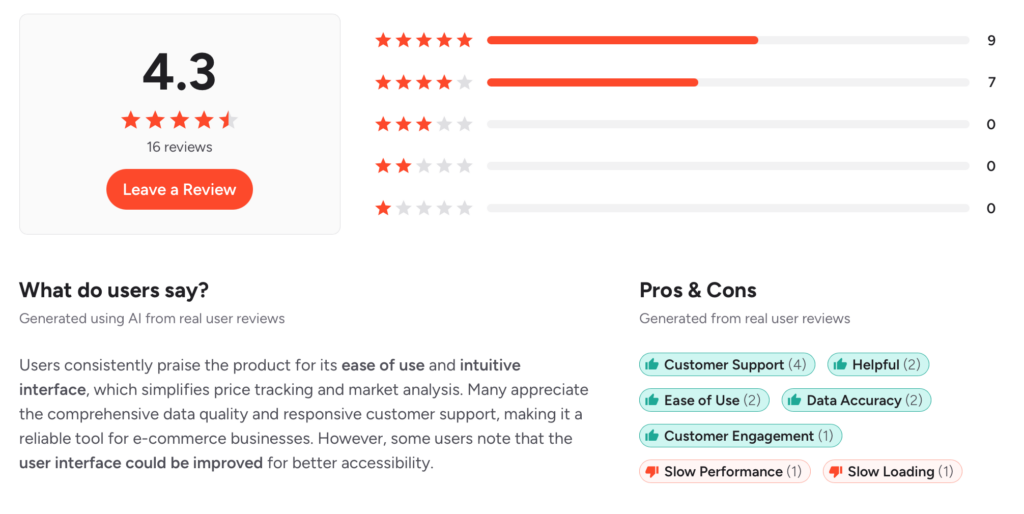
G2 Rating: 4.3 / 5 based on 16 reviews, verified October, 2026.
10. Minderest – Best for Price and Assortment Intelligence
What It Is?
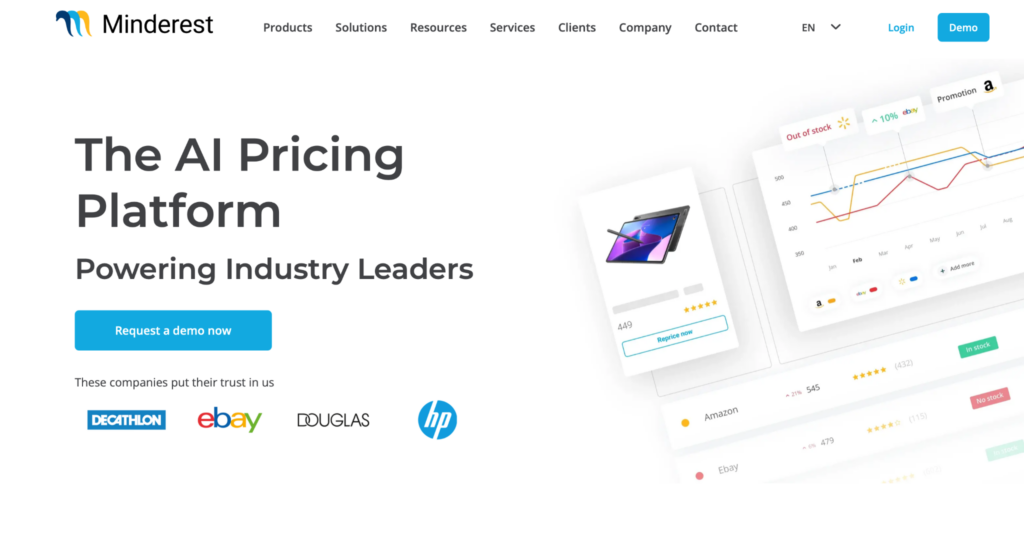
Minderest provides competitive price and assortment intelligence for retailers and brands. Its platform focuses on monitoring market conditions and comparing product availability, assortment characteristics, and pricing information. The software helps commercial teams understand competitive positioning across relevant product categories. Its emphasis on market intelligence supports pricing analysis and assortment-related decisions rather than focusing exclusively on automated optimization.
Best For:
Minderest is suitable for retailers and brands seeking detailed competitor comparisons. Organizations managing extensive product catalogs may benefit from structured market visibility. Pricing analysts, category managers, and merchandising teams can evaluate the platform when understanding competitive assortment and pricing differences is important. Its intelligence-oriented functionality may support strategic analysis across multiple product categories.
Key Capabilities:
- Competitor Price Monitoring. Tracks prices across selected competitors and products.
- Assortment Intelligence. Supports comparisons of product availability and competing catalogs.
- Competitive Benchmarking. Helps businesses evaluate their market positioning.
- Product Matching. Associates comparable products for meaningful competitive analysis.
- Market Reporting. Organizes competitor information into analytical outputs.
Strategic Strengths:
Minderest combines pricing intelligence with assortment analysis, providing a broader view of competitive market conditions. This approach can be valuable for retailers and brands that need to understand not only competitor prices but also differences in product availability and market positioning.
Considerations:
Retailers need to evaluate whether a platform’s intelligent features truly meet their requirements for automated pricing and demand-based optimization. In this context, product coverage, integration capabilities, and data accuracy should be verified using actual product samples.
Pricing: Custom pricing; request a proposal based on market coverage, assortment size, and required functionality.
G2 Rating: 4.6 / 5 based on 10 reviews, verified October, 2026.
11. Skuudle – Best for Product Matching and Market Intelligence
What It Is?
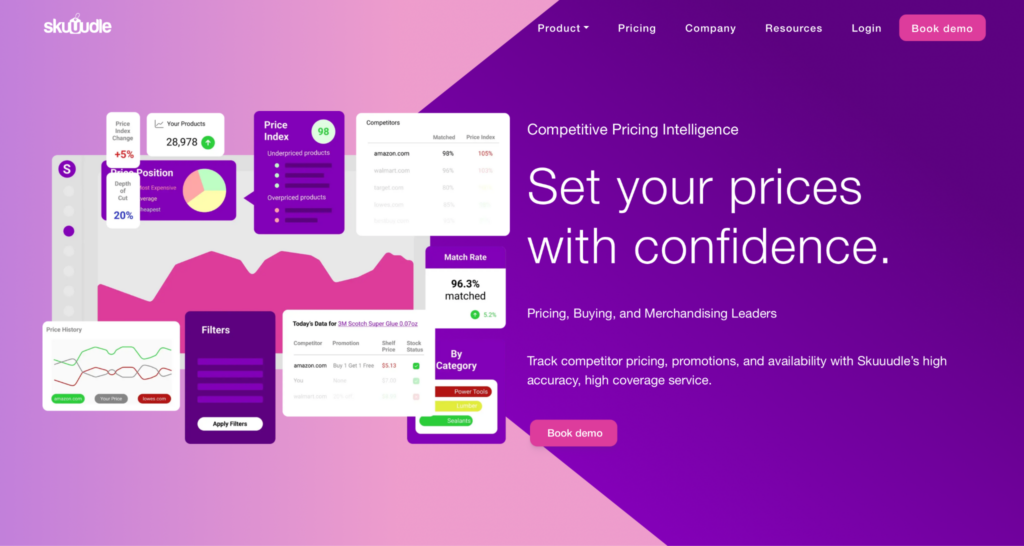
Skuudle provides competitive pricing and product intelligence solutions designed to help businesses compare products across markets. Its functionality emphasizes product matching, competitor benchmarking, and organized pricing information. The platform supports commercial analysis by helping businesses identify comparable offers and understand competitive positioning. Accurate product matching is particularly important when products have different descriptions, identifiers, or listing formats.
Best For:
Skuudle is relevant to retailers and brands requiring detailed product-level competitive intelligence. Organizations comparing extensive catalogs across competing sellers may benefit from structured matching and monitoring. Pricing analysts, merchandising teams, and e-commerce managers can evaluate Skuudle when product comparison accuracy is essential. Businesses seeking market intelligence rather than comprehensive enterprise optimization may find its specialized functionality appropriate.
Key Capabilities:
- Product Matching. Helps identify equivalent products across competing catalogs.
- Competitor Benchmarking. Supports structured comparisons of competitive pricing.
- Price Monitoring. Tracks relevant market prices and changes.
- Market Intelligence. Provides information about competitive product positioning.
- Assortment Comparisons. Supports analysis of competing product catalogs.
Strategic Strengths:
Skuudle’s emphasis on product matching and competitive benchmarking addresses a fundamental challenge in price intelligence: ensuring that comparisons involve genuinely comparable products. This specialization may be valuable for retailers and brands operating across fragmented online markets.
Considerations:
Companies should evaluate data-matching accuracy, supported markets, monitoring coverage, and data integration capabilities. Organizations aiming for automated price optimization based on demand elasticity need to determine whether they require additional functionality or the use of other platforms.
Pricing: Pricing is available through vendor consultation based on monitoring and data requirements.
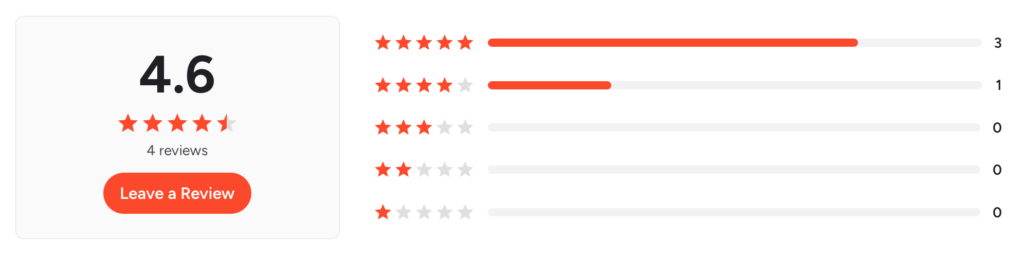
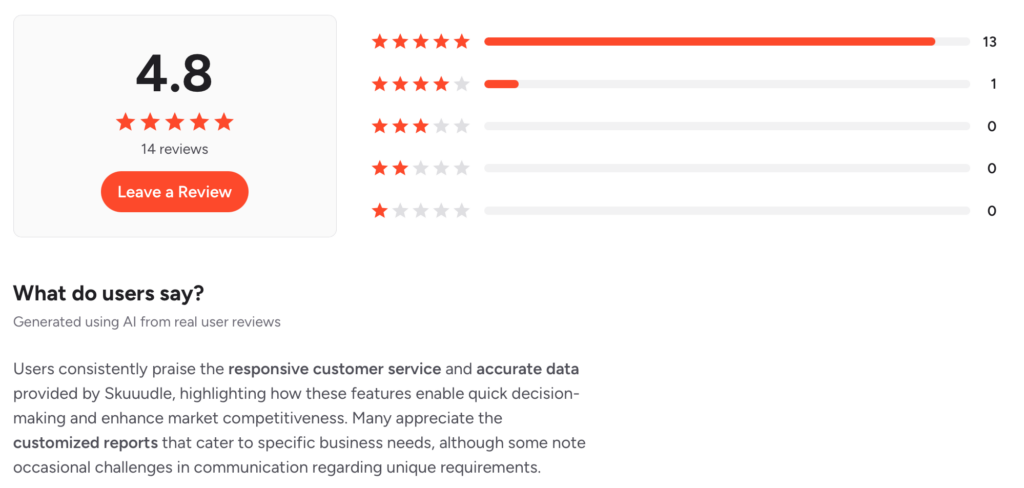
G2 Rating: 4.8 / 5 based on 14 reviews, verified October, 2026.
12. Intelligence Node – Best for AI-Driven Competitive Intelligence

What It Is?
Intelligence Node provides retail market intelligence solutions combining product matching, competitor monitoring, and pricing analytics. Its technology helps businesses organize competitive information across digital retail environments. The platform focuses on generating insights from market and product data, supporting decisions about competitive positioning and pricing opportunities. Its intelligence-oriented approach is relevant to businesses requiring detailed visibility into changing retail markets.
Best For:
Intelligence Node is suitable for retailers and brands managing extensive online product assortments and complex competitive landscapes. Businesses requiring structured product comparisons may benefit from its analytical capabilities. E-commerce executives, pricing teams, and merchandising analysts can evaluate the platform when improving market visibility and competitive decision-making. Organizations operating across multiple digital channels may find centralized intelligence particularly useful.
Key Capabilities:
- Product Matching. Supports identification of comparable products across different sellers.
- Competitor Monitoring. Provides visibility into relevant competitive pricing movements.
- Retail Market Intelligence. Organizes market information for commercial analysis.
- Pricing Analytics. Helps businesses interpret competitive pricing conditions.
- Assortment Intelligence. Supports analysis of competing product selections.
Strategic Strengths:
Intelligence Node emphasizes the analytical value of competitive retail data. By combining product matching, market monitoring, and pricing intelligence, it supports more informed commercial decisions. This approach may appeal to businesses that prioritize detailed competitive visibility across complex digital assortments.
Considerations:
Retailers should prioritize comprehensive price optimization or the analysis of market data. Factors such as precise product matching, the scope of monitoring, automation capabilities, and integration should be evaluated based on specific operational goals.
Pricing: Contact the vendor for pricing based on selected capabilities and business requirements.
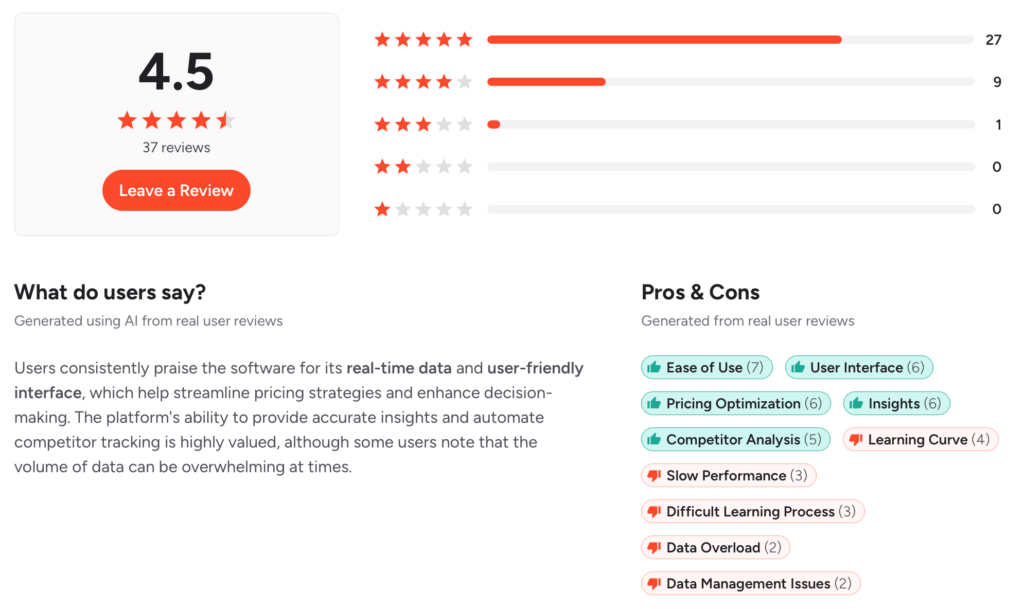
G2 Rating: 4.5 / 5 based on 37 reviews, verified October, 2026.
Why Trust Our Software Reviews?
Our comparison draws on publicly available product information, vendor documentation, customer review platforms, and relevant retail pricing use cases. We focus on how each solution addresses practical business requirements, including pricing complexity, automation, competitive intelligence, and operational compatibility, rather than relying exclusively on promotional descriptions.
The evaluation distinguishes AI-powered price optimization, competitor monitoring, automated repricing, and integrated retail planning. These categories serve different commercial objectives and should not be treated as interchangeable. Pricing transparency, scalability, integrations, and suitability for different retail models are considered alongside product functionality.
We are publishing this guide, which includes our own solution among the platforms being reviewed. Information regarding the capabilities of these solutions, as well as the limitations of competing products, is based solely on publicly available data. It is important to note that details concerning pricing and customer ratings may be subject to change.
What Are the Benefits of Using Competera Alternatives?
Exploring Competera alternatives allows retailers to compare different approaches to pricing management and optimization. The most suitable solution depends on commercial priorities, organizational maturity, available data, and operational complexity. Evaluating multiple platforms helps businesses identify functionality aligned with their specific requirements.
Better Alignment with Specific Retail Requirements
Different retail businesses face different pricing challenges. Grocery chains must consider category relationships, customer price perception, and high-frequency purchasing behavior, while e-commerce businesses may prioritize competitor monitoring and rapid repricing. Evaluating alternatives helps retailers identify software designed around their operational requirements rather than adopting functionality that offers limited practical value.
Improved Pricing Accuracy and Profitability
Advanced pricing optimization software can help retailers evaluate demand sensitivity, commercial constraints, and potential pricing outcomes. These analytical capabilities support more informed decisions than relying exclusively on historical prices or competitor movements. Businesses can prioritize margin protection while maintaining competitive positioning, although actual improvements depend on data quality and implementation effectiveness.
Greater Automation and Operational Efficiency
Pricing automation reduces repetitive activities associated with monitoring markets, preparing recommendations, and updating prices. This becomes particularly valuable when retailers manage thousands of products across multiple locations or channels. Automated workflows can improve consistency and allow commercial teams to concentrate on strategy, exceptions, and performance evaluation.
More Flexible Technology and Integration Options
Comparing different options helps companies better select software that is compatible with their existing infrastructure. Some platforms focus exclusively on enterprise-wide integration and complex approval processes, while others emphasize standard monitoring and e-commerce functionality. Choosing the right technological architecture will help your business avoid unnecessary complexity during implementation and ensure adaptability to future operational needs.
Stronger Competitive Intelligence and Strategic Control
Competitor price intelligence helps retailers understand market positioning and identify important pricing developments. When combined with appropriate analytical methods, this information can support more effective commercial decisions. Retailers should maintain strategic control over pricing rules and avoid assuming that matching competitor prices automatically improves profitability.
What are the key features of Competera’s alternatives?
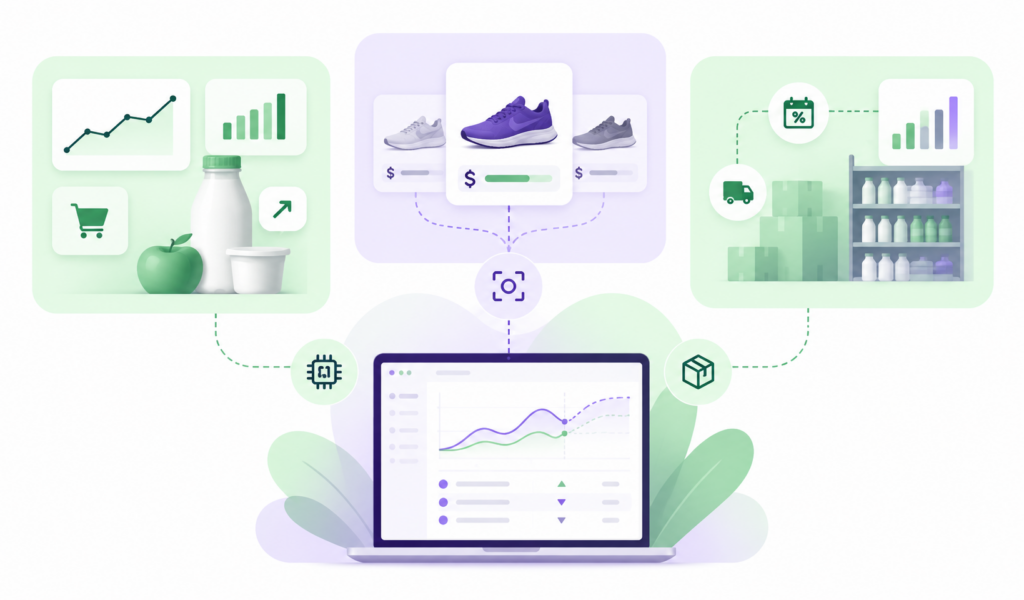
AI-powered price optimization platforms combine demand information, price elasticity, forecasting, and pricing intelligence software to support more informed retail pricing decisions. These capabilities are relevant to retailers managing complex assortments and sophisticated commercial objectives. Yieldigo, Pricefx, and Revionics represent different approaches to analytical pricing, with distinct industry positioning and operational functionality.
Tools used for competitive price analysis and dynamic pricing are primarily designed to track external prices and respond to changing market conditions. The solutions discussed in this guide offer a variety of features, including reporting, monitoring, process automation, and product comparison. Companies need to distinguish between pricing based on demand and strategic constraints, simple tracking of competitor actions, and considerations of profitability.
Integrated retail planning platforms connect commercial decisions with inventory, promotions, merchandising, and operational planning. RELEX Solutions and Blue Yonder illustrate this broader approach, which may appeal to enterprises seeking coordination across departments. Retailers should assess pricing functionality at the individual product or module level rather than assuming every enterprise planning suite includes identical optimization capabilities.
| Software category | Typical users | Key functionality |
| AI-Powered Price Optimization | Pricing directors, category managers | Elasticity modeling, optimization, scenario analysis |
| Competitive Price Intelligence | E-commerce teams, pricing analysts | Competitor monitoring, product matching, repricing |
| Integrated Retail Planning | Merchandising and supply chain leaders | Demand forecasting, promotions, inventory coordination |
How to Pick the Right Competera Alternative for Your Business?
Selecting a Competera alternative begins with defining the retailer’s commercial objectives and operational challenges. Pricing strategy, assortment complexity, available data, and organizational resources influence which software capabilities will deliver practical value. Businesses should establish whether their priority is profitability optimization, competitive intelligence, automation, or integrated planning.
A structured selection framework helps retailers compare platforms based on actual requirements rather than the total number of advertised features. Buyers should prioritize measurable business needs, implementation feasibility, and long-term strategic fit before making a final decision.
- Define Your Primary Pricing Objectives. Determine whether the business requires profitability optimization, competitor monitoring, automated repricing, or integrated planning. Prioritize capabilities that directly support commercial strategy.
- Evaluate Your Retail Business Model. Consider whether the software supports grocery, FMCG, general merchandise, e-commerce, or omnichannel operations. Examine how effectively it handles assortment size and complexity.
- Assess Data Availability and Quality. Review historical sales, product, competitor, and margin information. Determine whether existing data infrastructure can support the proposed optimization methods.
- Review Integration and Implementation Requirements. Examine compatibility with ERP, POS, e-commerce, and analytics systems. Consider onboarding resources, implementation timelines, and workflow changes.
- Compare Total Cost and Expected Business Value. Evaluate licensing, implementation, integrations, and ongoing support costs. Compare expected improvements against realistic commercial objectives.
- Request Demonstrations and Validate Real Use Cases. Ask vendors to demonstrate representative pricing scenarios using relevant business data. Assess recommendation clarity, usability, and practical decision support.
Conclusion
Retail pricing software includes several distinct categories, from advanced optimization platforms to competitor monitoring tools and integrated enterprise planning suites. The best Competera alternative depends on whether a retailer prioritizes demand-based optimization, automated repricing, competitive intelligence, or coordination across business functions.
Yieldigo is a relevant option for grocery and FMCG retailers seeking AI-supported pricing optimization, configurable strategies, and improved management of complex assortments. Its retail-oriented approach differs from broader enterprise suites and specialized competitor monitoring platforms, making operational requirements an important consideration when comparing solutions.
Frequently Asked Questions
What is the best competitor price tracking software?
The best competitor price tracking software depends on business size, monitoring requirements, and pricing objectives. Yieldigo, Price2Spy, Omnia Retail, Dealavo, and Minderest are relevant options for businesses seeking competitor monitoring and pricing intelligence. Retailers should compare market coverage, product matching accuracy, reporting functionality, and available automation before choosing a platform.
Which tool is most useful for tracking competitor pricing?
Price2Spy is worth evaluating for dedicated competitor price monitoring, while Omnia Retail combines competitive intelligence with dynamic repricing functionality. Dealavo and Minderest also provide competitive market information. The most useful solution depends on catalog size, supported markets, monitoring frequency, and whether the business needs automated price adjustments.
What are the best Competera alternatives in 2026?
Competera alternatives include Yieldigo, Pricefx, Revionics, RELEX Solutions, Omnia Retail, and Price2Spy. These platforms differ in their focus on AI price optimization, competitive intelligence, automated repricing, and retail planning. The best choice depends on business size, retail segment, pricing objectives, and technical requirements.
Which Competera alternative is best for grocery retailers?
Yieldigo is a relevant option for grocery and FMCG retailers seeking AI-supported pricing optimization across large assortments. It provides pricing strategy management, analytics, and scenario-based decision support. Retailers should also compare its capabilities with enterprise solutions such as Revionics and RELEX Solutions.
How does Yieldigo compare to Competera?
Both Yieldigo and Competera support data-driven retail pricing decisions and price optimization. Yieldigo emphasizes configurable pricing strategies and retail price management, while Competera offers AI-driven pricing optimization built around different levels of pricing sophistication. Retailers should compare the two platforms based on optimization models, integration requirements, category management, and business objectives.
Are there cheaper alternatives to Competera?
Some competitor monitoring and repricing tools offer publicly listed subscription plans, making them easier to evaluate against an initial budget. Enterprise price optimization platforms often use customized pricing based on business requirements and implementation scope. Retailers should compare total ownership costs and functionality rather than subscription prices alone.
How much does Competera pricing software cost?
Competera uses a customized pricing model rather than publishing a single fixed subscription rate. According to its official pricing information, costs depend on factors such as SKU volume, markets, channels, selected edition, add-ons, and support requirements. Businesses need to request a tailored quote to understand the expected investment.
Which Competera alternatives offer AI-powered price optimization?
Yieldigo, Pricefx, and Revionics are among the solutions worth evaluating for AI-supported price optimization. Their capabilities and optimization approaches differ, particularly in the use of demand information, price elasticity, and pricing constraints. Buyers should request product demonstrations to understand how recommendations are generated and validated.
What is the best Competera alternative for e-commerce businesses?
E-commerce businesses may consider Yieldigo, Omnia Retail, Dealavo, Price2Spy, and other competitive pricing solutions. These platforms provide different combinations of price monitoring, repricing, and market intelligence. The best fit depends on catalog size, sales channels, competitor coverage, and the level of automation required.
What should retailers look for when choosing pricing optimization software?
Retailers should evaluate optimization capabilities, data requirements, automation, integration options, and suitability for their retail segment. They should also consider implementation resources, usability, pricing transparency, and vendor support. Testing realistic pricing scenarios is an important step before making a final decision.
Is Competera suitable for small and medium-sized businesses?
Competera’s suitability depends on a retailer’s pricing complexity, available data, and budget rather than company size alone. Businesses with simpler needs may prefer dedicated competitor monitoring or automated repricing tools. Retailers requiring sophisticated demand-based optimization should compare enterprise solutions based on their operational readiness and expected business value.