
Retail food sellers face mounting pressure: they must maintain competitive prices while striving to preserve profit margins, manage a vast product assortment, and respond rapidly to ever-changing market conditions. Given the presence of thousands of stock-keeping units (SKU), fluctuations in procurement costs, and increasing consumer price sensitivity, traditional manual pricing methods are becoming less effective for retail businesses.
Modern grocery pricing software helps supermarkets overcome these challenges through AI-powered price optimization, demand forecasting, competitive pricing intelligence, and automated pricing workflows. Retailers exploring the broader market can also compare retail pricing software to understand how different platforms support pricing consistency and profitability.
In this guide, we compare the 12 best grocery pricing software solutions for 2026, exploring their key capabilities, strategic strengths, pricing, and suitability for different retail businesses to help you choose the right platform.
TL;DR
Grocery pricing software helps retailers manage thousands of product prices, respond to changing market conditions, and protect profitability. The best solutions combine analytical capabilities with practical workflows that support consistent pricing decisions across stores and digital channels. The 12 grocery pricing software solutions covered in this comparison are:
- Yieldigo – AI-powered retail pricing software that helps grocery retailers automate pricing decisions, optimize margins, and manage complex product assortments.
- Competera – AI-driven pricing optimization platform using demand insights and price elasticity to support retail pricing decisions.
- Revionics – Enterprise retail price optimization software supporting regular pricing, promotions, and markdown decisions.
- RELEX Solutions – Retail planning platform connecting pricing and promotions with forecasting and inventory decisions.
- Blue Yonder – Enterprise retail optimization technology combining pricing, markdown management, and broader retail planning capabilities.
- Pricefx – Configurable pricing platform supporting price optimization, analytics, and enterprise pricing workflows.
- dunnhumby – Customer data science and retail pricing solutions supporting customer-centric pricing and promotion decisions.
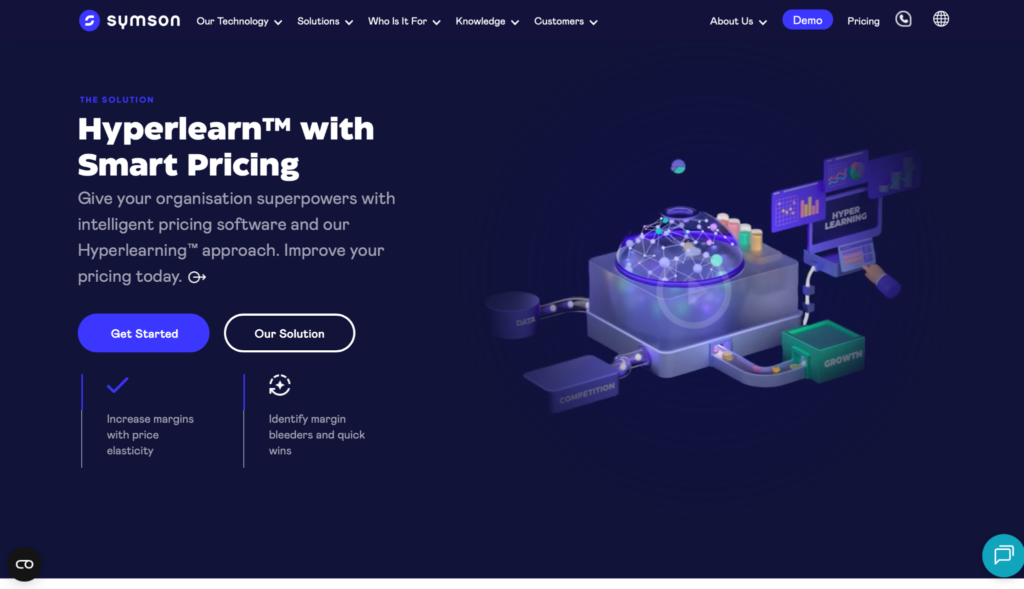
- Symson – AI-powered pricing software focused on price optimization, competitive intelligence, and automated pricing recommendations.
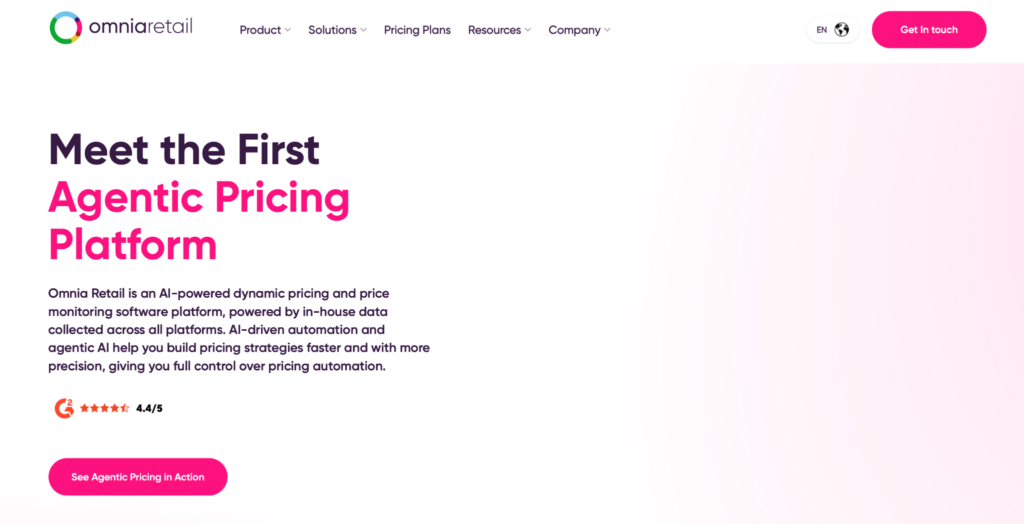
- Omnia Retail – Retail pricing automation software supporting competitor monitoring and rule-based pricing strategies.
- Pricemoov – Pricing management and optimization platform supporting centralized pricing decisions across channels.
- DemandTec – Retail price and promotion optimization technology supporting data-driven pricing and merchandising decisions.
- ClearDemand – Retail price optimization software designed to support pricing strategy, analytics, and profitability management.
How We Evaluated Grocery Pricing Software for 2026
Grocery pricing software requires different evaluation standards from general-purpose retail pricing tools. Supermarkets manage extensive assortments, frequent supplier cost changes, perishable inventory, and complex purchasing behavior. Understanding yield management pricing can provide additional context for evaluating how demand and commercial constraints influence pricing decisions.
In this comparison, we employ six criteria to provide a clear analysis of how pricing platforms address the challenges they are designed to solve. The primary objective is to identify solutions that offer scalable, reliable, and commercially effective approaches to pricing within the food industry, rather than simply comparing lists of functional features.
Key Evaluation Criteria
- AI and Price Optimization Capabilities. Demand modeling, price elasticity, predictive analytics, and scenario simulations are important for distinguishing advanced optimization from basic automated repricing.
- Grocery Industry Specialization. Platforms should accommodate perishables, private-label products, key value items, product families, and the operational complexity of supermarket assortments.
- Competitive Pricing Intelligence. Effective tools incorporate competitor pricing information without automatically encouraging unnecessary discounts or destructive price competition. A structured competitive pricing analysis helps retailers identify meaningful market gaps and protect margins.
- Automation and Operational Efficiency. Pricing rules, approval workflows, bulk updates, and exception management should reduce repetitive work while maintaining commercial control.
- Integration and Scalability. Compatibility with ERP, POS, inventory, and e-commerce systems is essential for coordinating prices across stores, categories, and sales channels.
- Usability, Support, and Customer Feedback. Implementation requirements, training, support, and verified customer feedback provide additional context when comparing platforms.
12 Best Grocery Pricing Software Solutions for 2026
The solutions described in this guide differ in their approaches to leveraging artificial intelligence, conducting competitive intelligence, and handling automation, forecasting, and enterprise-wide integration. Some focus on optimization based on demand, while others emphasize operational workflows or broader retail merchandising planning.
| Software | Best For | G2 Rating |
| Yieldigo | AI-powered grocery price optimization | 4.6/5 (28 reviews) |
| Competera | AI-driven price elasticity and optimization | 4.9/5 (14 reviews) |
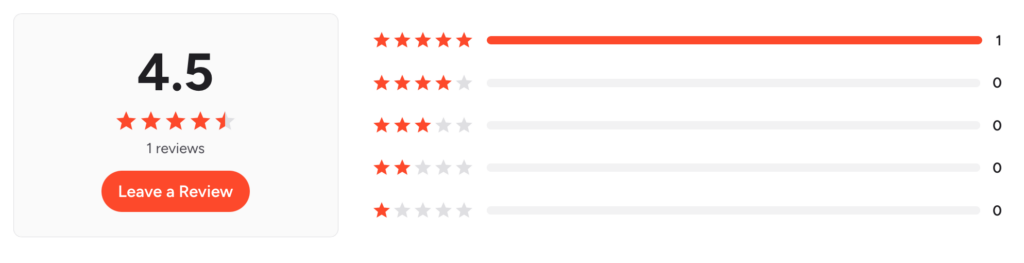
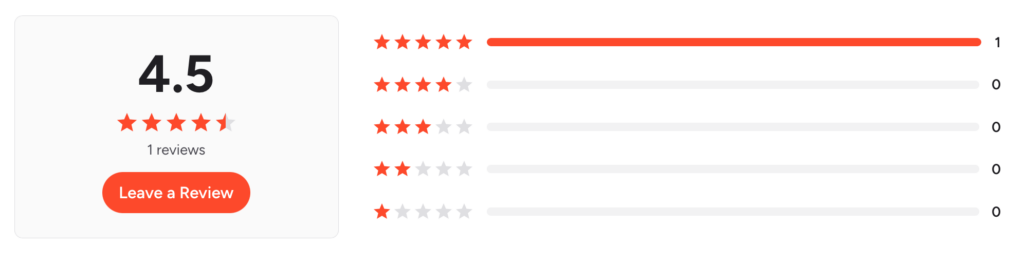
| Revionics | Enterprise FMCG price optimization | 4.5/5 (1 review) |
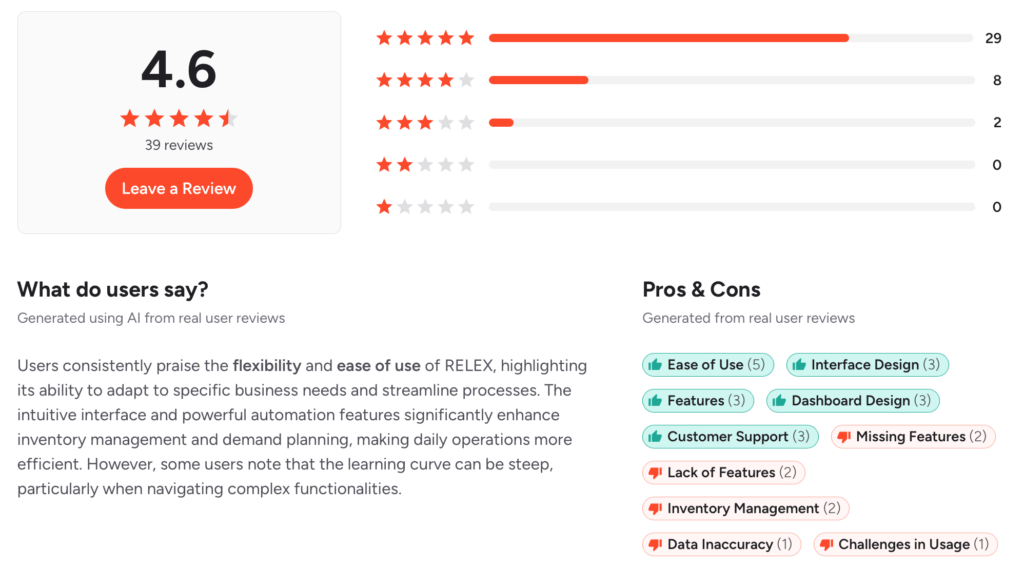
| RELEX Solutions | Pricing and inventory planning alignment | 4.6/5 (39 reviews) |
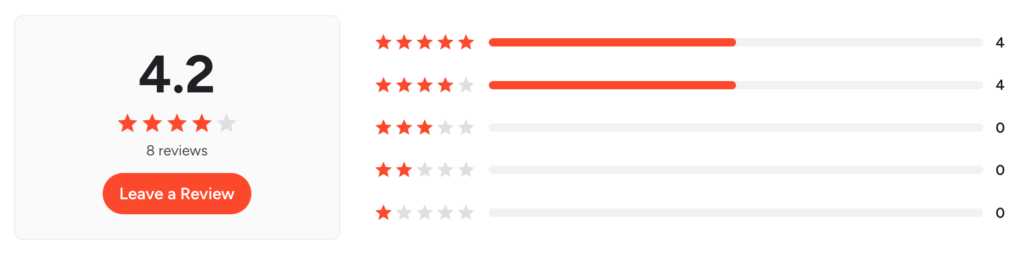
| Blue Yonder | Enterprise retail pricing and markdown management | 4.2/5 (8 reviews) |
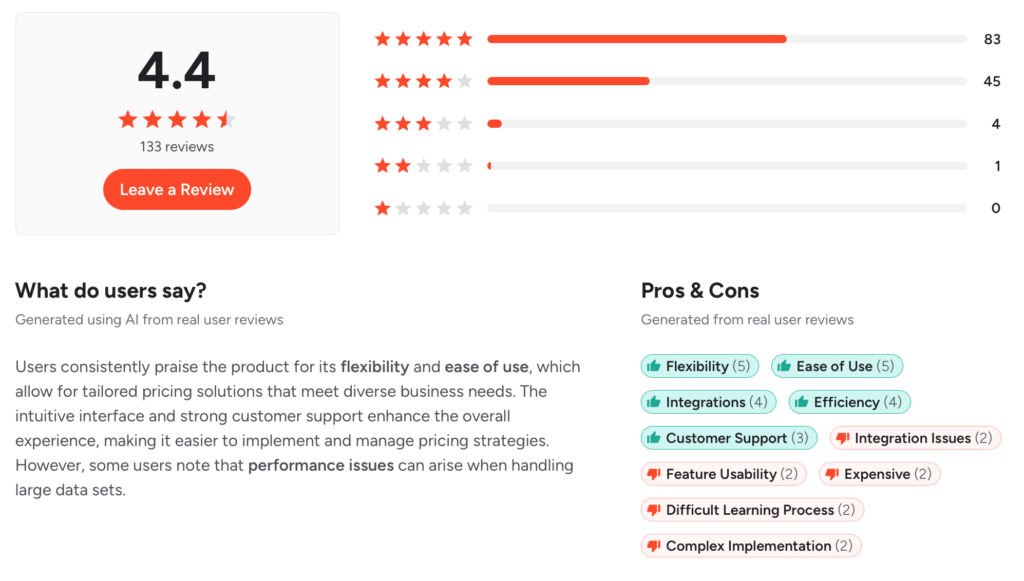
| Pricefx | Configurable enterprise pricing workflows | 4.4/5 (133 reviews) |
| dunnhumby | Customer-centric grocery pricing insights | 4.5/5 (1 review) |
| Symson | AI-supported competitive pricing | N/A |
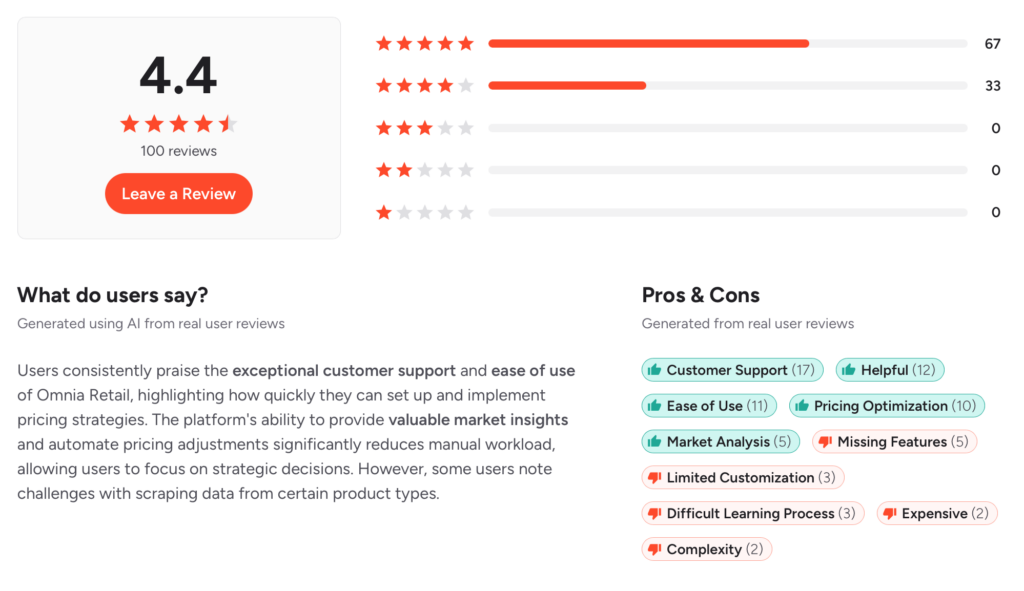
| Omnia Retail | Automated competitor-based pricing | 4.4/5 (100 reviews) |
| Pricemoov | Centralized omnichannel pricing management | N/A |
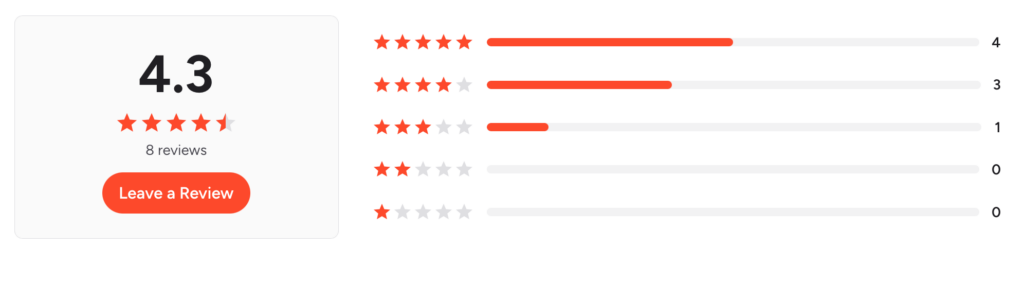
| DemandTec | Retail price and promotion optimization | 4.3/5 (8 reviews) |
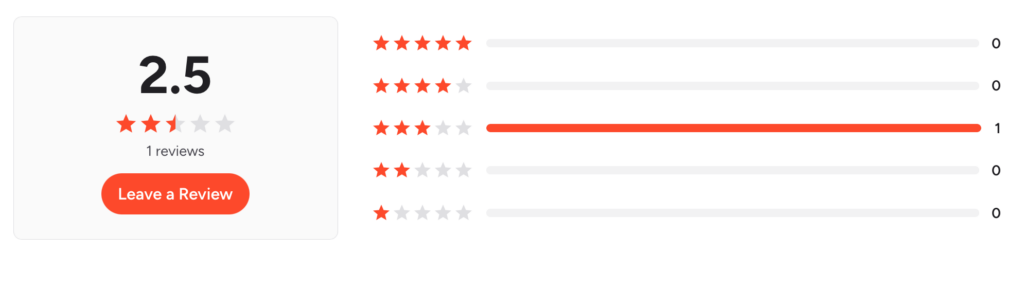
| ClearDemand | Strategic retail pricing analytics | 2.5/5 (1 review) |
1. Yieldigo – Best for AI-Powered Grocery Price Optimization
What It Is?
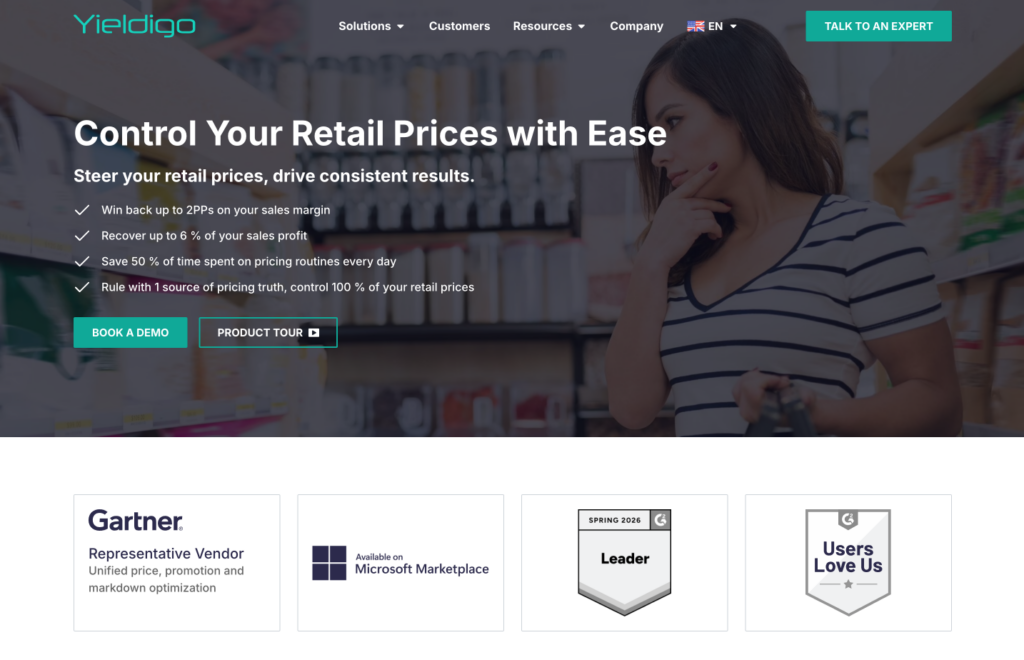
Yieldigo is an AI-powered pricing management and optimization platform designed for retailers managing extensive and complex product assortments. Its price management capabilities support grocery pricing decisions using demand patterns, competitive conditions, commercial objectives, and defined pricing rules rather than relying exclusively on spreadsheets.
This platform integrates automated pricing recommendations, competitor analysis, price modeling, and the management of interdependencies between products. For supermarkets, these tools can help strike a balance between consumer price perception, product category performance, sales volume, and profitability across thousands of individual items.
Best For:
Yieldigo is particularly relevant for mid-sized and large grocery retailers, supermarket chains, and FMCG businesses managing extensive assortments across multiple categories, stores, or pricing zones. Pricing directors, category managers, and commercial teams can use centralized workflows and scenario planning to coordinate decisions while balancing competitive positioning with margin targets.
Key Capabilities:
- AI-Powered Price Optimization. Uses analytical models and price optimization capabilities to generate recommendations based on demand behavior, commercial objectives, and business constraints.
- Price Elasticity Analysis. Evaluates how changes in product prices may influence customer demand and purchasing behavior.
- Competitive Price Intelligence. Incorporates competitor pricing information into commercial analysis and pricing decisions.
- Automated Pricing Rules. Supports category-specific conditions, pricing boundaries, and structured decision workflows.
- What-If Scenario Simulations. Allows teams to assess potential commercial outcomes before implementing price changes.
- Product Family Management. Helps maintain logical pricing relationships between related products and assortment groups.
- Promotion Performance Analysis. Uses promotion analytics to evaluate promotional outcomes, identify performance patterns, and assess potential future scenarios.
- Margin and Profitability Optimization. Balances competitive prices with revenue objectives and profitability requirements.
Strategic Strengths:
Yieldigo specializes in complex retail pricing environments where extensive assortments require frequent adjustments. Its combination of AI-supported recommendations, transparent pricing logic, simulations, and operational automation supports practical price execution and category-level strategy. Product relationship management is especially relevant when supermarkets need to preserve consistent pricing structures between brands, package sizes, and private-label alternatives.
Considerations:
For more advanced price optimization, it is essential to have reliable historical sales data, price constraints, and product information, as well as integration with existing systems. Naturally, small product-based companies with straightforward pricing requirements may not need the full range of a platform’s functionality. Implementation requirements will, of course, depend on the size of the product assortment, the state of the data, and the complexity of operational processes.
Pricing: Custom pricing; contact Yieldigo for a quote based on required modules, business scope, and implementation needs.
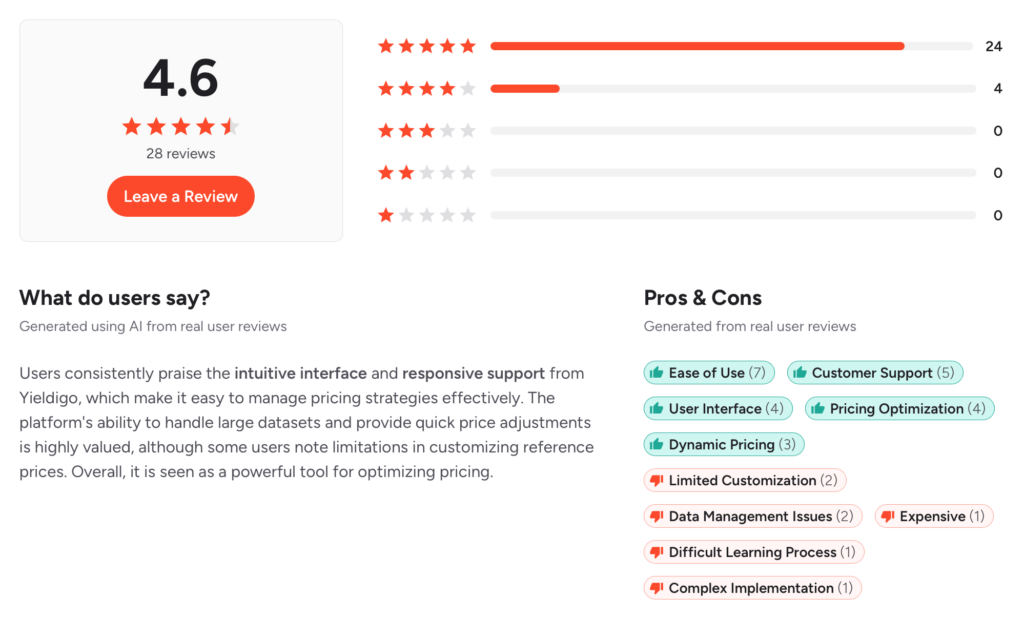
G2 Rating: 4.6 / 5 based on 28 reviews, verified October 2026.
2. Competera – Best for AI-driven price elasticity and optimization
What It Is?
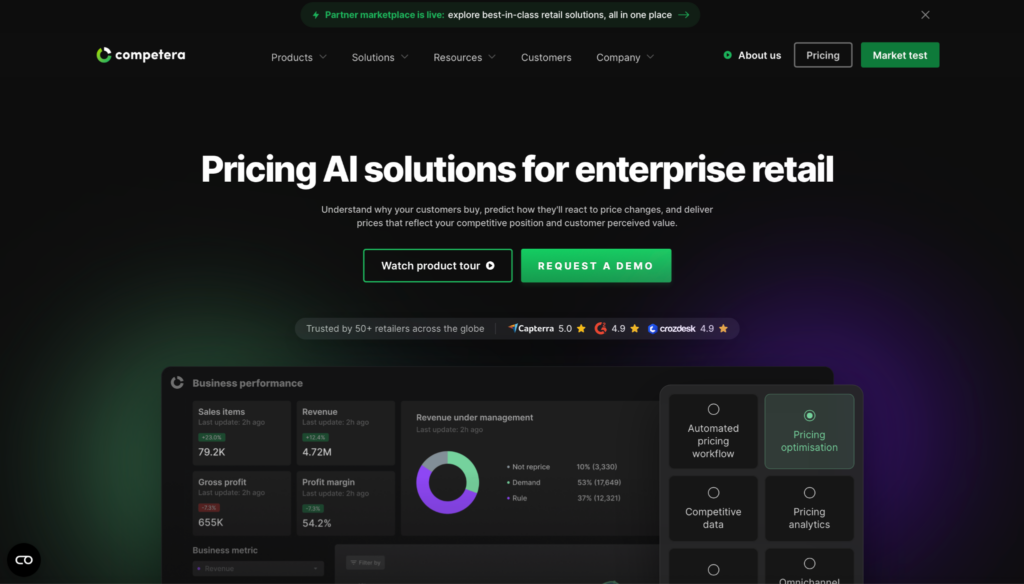
Competera is an AI-driven retail price optimization platform designed to help businesses make pricing decisions using demand modeling and price elasticity. It analyzes commercial data to recommend prices aligned with defined business objectives. Rather than relying solely on competitor matching, Competera considers how different price changes may influence customer demand and business performance.
Best For:
Competera is suited to retailers seeking demand-based pricing recommendations across extensive product catalogs and competitive markets. It is particularly relevant for pricing teams that want to incorporate elasticity analysis into everyday decisions while reducing manual adjustments.
Key Capabilities:
- AI Price Optimization. Supports data-driven pricing recommendations.
- Elasticity Modeling. Estimates customer responses to price changes.
- Demand Analysis. Uses sales patterns to inform pricing decisions.
- Competitive Intelligence. Incorporates competitor price information.
- Pricing Constraints. Accounts for defined commercial boundaries.
- Scenario Evaluation. Helps assess alternative pricing approaches.
Strategic Strengths:
Competerq’s focus on elasticity-based optimization truly helps retailers evaluate pricing, going well beyond simple competitor benchmarking. This approach is particularly useful for striking a balance between revenue, category-level profitability, and demand, factors that are driven by distinct patterns of consumer behavior.
Considerations:
Reliable recommendations depend on suitable historical data and accurate product information. Retailers should also evaluate how effectively the platform supports their specific grocery workflows and existing systems.
Pricing: Enterprise pricing should be requested directly from Competera.
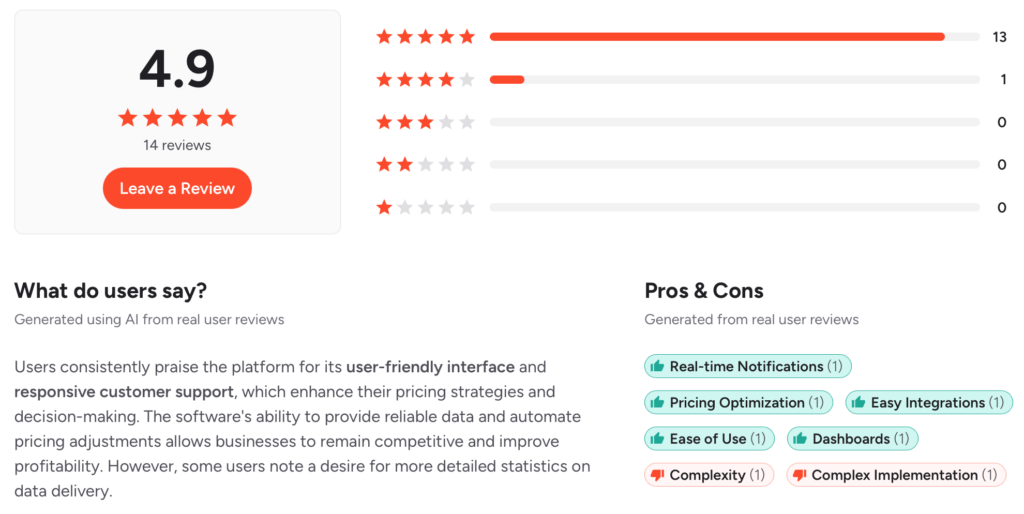
G2 Rating: 4.9 / 5 based on 14 reviews, verified October 2026.
3. Revionics – Best for enterprise FMCG price optimization
What It Is?
Revionics provides retail price optimization technology supporting regular pricing, promotional decisions, and markdown strategies. Its analytical approach helps enterprise retailers evaluate pricing opportunities across extensive assortments. The software considers demand behavior and commercial objectives, enabling retailers to develop more structured pricing strategies.
Best For:
Revionics is suitable for large retailers and FMCG businesses managing complex pricing decisions across multiple product categories and locations. It is particularly relevant for organizations seeking coordinated regular-price, promotional, and markdown optimization.
Key Capabilities:
- Regular Price Optimization. Supports everyday pricing decisions.
- Promotion Optimization. Analyzes promotional pricing opportunities.
- Markdown Optimization. Supports discount and clearance decisions.
- Demand Modeling. Evaluates expected purchasing behavior.
- Price Elasticity Analysis. Assesses price sensitivity.
- Enterprise Analytics. Supports extensive retail assortments.
Strategic Strengths:
Revionics brings regular pricing, promotional decisions, and markdown optimization into a broader analytical framework. Retailers developing a markdown pricing strategy can benefit from coordinating discount decisions with inventory conditions and profitability objectives.
Considerations:
Implementing an enterprise-level solution may require significant data preparation, coordination between commercial and technical teams, and planning for the integration itself. Retailers should carefully evaluate the platform against their specific operational requirements.
Pricing: Enterprise pricing is available through vendor consultation; public standardized subscription rates are not confirmed.
G2 Rating: 4.5 / 5 based on 1 review, verified October 2026.
4. RELEX Solutions – Best for pricing and inventory planning alignment
What It Is?
RELEX Solutions provides retail planning technology connecting forecasting, inventory management, pricing, and promotional decisions. Its broader planning approach helps retailers consider operational conditions alongside commercial objectives. For grocery businesses, coordinating prices with demand forecasts and stock availability can be particularly valuable when managing fast-moving and perishable products.
Best For:
RELEX Solutions is ideal for supermarket chains and large retailers seeking greater integration of commercial planning and inventory management operations. This solution is especially relevant for organizations in which pricing and promotions must take into account inventory replenishment processes, product availability, and demand forecasts.
Key Capabilities:
- Demand Forecasting. Supports predictions of future product demand.
- Pricing Planning. Connects pricing decisions with retail planning.
- Promotion Planning. Coordinates promotional activities.
- Inventory Visibility. Incorporates stock-related information.
- Retail Analytics. Supports operational and commercial analysis.
- Integrated Planning. Connects multiple retail planning functions.
Strategic Strengths:
RELEX Solutions emphasizes the relationship between commercial decisions and operational execution. Aligning pricing and promotional planning with retail demand forecasting can help grocery retailers manage product availability and reduce conflicts between sales objectives and supply constraints.
Considerations:
Organizations primarily seeking standalone price optimization should evaluate whether they require the broader planning capabilities. Integration complexity and implementation scope depend on existing infrastructure.
Pricing: Custom enterprise pricing; request a proposal covering the relevant modules and implementation requirements.
G2 Rating: 4.6 / 5 based on 39 reviews, verified October 2026.
5. Blue Yonder – Best for enterprise retail pricing and markdown management
What It Is?
Blue Yonder provides enterprise retail technology covering pricing, markdown management, forecasting, and broader planning processes. Its solutions help large retailers coordinate commercial decisions with operational requirements. Its planning-oriented approach can support pricing strategies across complex assortments, particularly when inventory and markdown decisions are closely connected.
Best For:
Blue Yonder’s solutions are well-suited for large retail companies that manage chains of stores, complex pricing processes or valuations, and extensive product catalogs. They are particularly appropriate for businesses that aim to align their pricing strategy with broader merchandising objectives and supply chain planning.
Key Capabilities:
- Price Optimization. Supports analytical pricing decisions.
- Markdown Management. Supports markdown optimization and structured clearance pricing decisions to help retailers manage inventory and profitability.
- Demand Forecasting. Incorporates expected sales patterns.
- Retail Planning. Connects commercial and operational processes.
- Inventory Alignment. Supports stock-aware decision-making.
- Enterprise Integration. Works within broader retail technology environments.
Strategic Strengths:
Blue Yonder’s broader retail planning capabilities make it relevant for organizations that need pricing decisions coordinated with inventory, forecasting, and merchandising. This integrated approach can support consistent commercial execution across large retail networks.
Considerations:
The scope of enterprise functionality may introduce implementation complexity. Retailers should confirm which pricing modules and integrations are included in a proposed deployment.
Pricing: Contact Blue Yonder for customized pricing information.
G2 Rating: 4.2 / 5 based on 8 reviews, verified October 2026.
6. Pricefx – Best for configurable enterprise pricing workflows
What It Is?
Pricefx is a configurable pricing platform offering price management, optimization, analytics, and workflow capabilities. It helps organizations structure pricing processes around defined commercial rules and objectives. Its flexibility supports businesses with complex pricing requirements, although grocery retailers should assess the suitability of specific functionality for supermarket operations.
Best For:
Pricefx is suitable for enterprises requiring configurable pricing processes, structured approvals, and centralized commercial control. It may appeal to retailers seeking flexibility in how pricing workflows, business rules, and analytical processes are implemented.
Key Capabilities:
- Price Optimization. Supports analytical pricing decisions.
- Pricing Analytics. Provides visibility into pricing performance.
- Workflow Configuration. Supports customized pricing processes.
- Approval Management. Structures pricing authorization.
- Business Rules. Applies defined commercial conditions.
- System Integration. Connects pricing workflows with enterprise data.
Strategic Strengths:
Pricefx’s configurable approach allows organizations to adapt pricing processes to specific commercial requirements. Enterprises comparing pricing analytics software should evaluate how effectively each platform supports reporting, workflow customization, and commercial decision-making.
Considerations:
The mere fact that a system can be adjusted does not mean it has been specifically adapted for retail products. Supermarket operators should certainly verify that a given solution supports the perishable goods segment and allows for frequent price adjustments, both at the level of individual stock-keeping units (SKU) and for entire product groups.
Pricing: Custom enterprise pricing; request a quote based on selected functionality, integrations, and implementation scope.
G2 Rating: 4.4 / 5 based on 133 reviews, verified October 2026.
7. dunnhumby – Best for customer-centric grocery pricing insights

What It Is?
dunnhumby provides customer data science and retail analytics solutions that help retailers understand purchasing behavior and make informed commercial decisions. Its capabilities support pricing, promotions, and customer-focused retail strategies.
By examining customer purchasing patterns, retailers can better understand how pricing influences shopper behavior across categories.
Best For:
dunnhumby is relevant for grocery retailers with access to substantial customer and transaction data. It is especially useful for commercial teams seeking to connect pricing decisions with customer insights, loyalty information, and purchasing behavior.
Key Capabilities:
- Customer Analytics. Examines purchasing patterns and shopper behavior.
- Pricing Insights. Supports customer-informed pricing decisions.
- Promotion Analysis. Evaluates promotional effectiveness.
- Category Intelligence. Provides insights into category performance.
- Customer Segmentation. Identifies differences between shopper groups.
- Retail Data Science. Applies analytical methods to commercial data.
Strategic Strengths:
dunnhumby’s customer-centric approach helps retailers evaluate pricing through the perspective of shopper behavior. Integrating these insights with promotion management processes can support more relevant promotional strategies and long-term category performance.
Considerations:
The value of customer analytics depends on having access to reliable data on transactions and customers. Retailers should certainly ensure that any proposed solution includes specific features for implementing pricing policies that are essential to their operations.
Pricing: Commercial pricing depends on the selected services and contractual arrangements.
G2 Rating: 4.5 / 5 based on 1 review, verified October 2026.
8. Symson – AI-powered pricing software focused on price optimization, competitive intelligence, and automated pricing recommendations.
What It Is?
Symson provides AI-supported pricing technology designed to help businesses optimize prices using market information, commercial data, and automated recommendations. The platform combines analytical pricing capabilities with competitor intelligence to support structured decisions in changing market conditions.
Best For:
Symson is well-suited for retailers looking to enhance their analysis of competitor pricing and automate certain aspects of their own pricing processes. This solution is particularly relevant for companies operating in markets where competitors’ prices change frequently.
Key Capabilities:
- AI Pricing Recommendations. Supports analytical price optimization.
- Competitor Monitoring. Tracks relevant market price information.
- Dynamic Pricing. Supports adjustments to changing conditions.
- Pricing Analytics. Evaluates commercial pricing performance.
- Automation Rules. Structures repetitive pricing activities.
- Market Intelligence. Provides competitive pricing insights.
Strategic Strengths:
Symson combines competitive information with analytical pricing recommendations. Retailers comparing pricing intelligence software should assess how effectively each platform transforms market data into actionable pricing decisions.
Considerations:
Retailers should verify the platform’s ability to manage grocery-specific requirements, including perishables, extensive product families, and complex supermarket pricing structures.
Pricing: Contact Symson for current subscription or enterprise pricing.
G2 Rating: NA
9. Omnia Retail – Best for automated competitor-based pricing
What It Is?
Omnia Retail provides pricing automation and competitive intelligence technology for retailers and e-commerce businesses. Its software supports competitor monitoring and rule-based pricing decisions. The platform helps businesses apply defined pricing strategies while responding to relevant market changes across their product catalogs.
Best For:
Omnia Retail is well-suited for retailers that place a strong emphasis on monitoring competitors and automating price adjustments across digital sales channels. This solution is particularly relevant for omnichannel businesses that need to maintain consistent pricing rules while also being able to quickly adapt prices in response to competitors’ actions.
Key Capabilities:
- Competitor Price Monitoring. Tracks relevant market prices.
- Dynamic Pricing Automation. Supports automated price adjustments.
- Rule-Based Pricing. Applies defined commercial conditions.
- Market Intelligence. Provides competitive positioning information.
- Pricing Analytics. Evaluates pricing performance.
- Channel Integration. Supports connected retail workflows.
Strategic Strengths:
Omnia Retail combines competitor intelligence with practical automation. Its approach reflects the broader capabilities of dynamic pricing software, helping retailers respond to market changes through predefined rules while maintaining commercial control.
Considerations:
Retailers requiring advanced grocery demand modeling should verify the scope of elasticity analysis, category optimization, and product relationship management available in their selected configuration.
Pricing: Contact Omnia Retail for current pricing and implementation details.
G2 Rating: 4.4 / 5 based on 100 reviews, verified October, 2026.
10. Pricemoov – Best for centralized omnichannel pricing management
What It Is?
Pricemoov is a pricing management and optimization platform that supports centralized commercial decisions across products and channels. It helps businesses structure pricing processes using analytical information and defined strategies. Its approach is relevant for retailers seeking coordinated price management across physical stores and digital operations.
Best For:
Pricemoov is suitable for retailers requiring centralized pricing workflows across multiple channels or business units. It may be particularly useful for commercial teams seeking stronger consistency between pricing policies and everyday execution.
Key Capabilities:
- Centralized Price Management. Coordinates pricing processes.
- Price Optimization. Supports analytical price decisions.
- Pricing Rules. Applies commercial policies.
- Competitive Analysis. Incorporates market pricing information.
- Workflow Management. Structures pricing operations.
- Omnichannel Coordination. Supports pricing across channels.
Strategic Strengths:
Pricemoov emphasizes centralized pricing control, making it relevant for organizations managing different pricing policies across channels. Structured workflows can help reduce inconsistencies and support coordinated commercial execution.
Considerations:
Retailers should assess grocery-specific analytical capabilities and confirm integration requirements before implementation, particularly when managing extensive assortments across multiple locations.
Pricing: Pricemoov provides pricing information through direct commercial consultation.
G2 Rating: NA
11. DemandTec – Best for retail price and promotion optimization
What It Is?
DemandTec provides retail price and promotion optimization technology designed to support data-driven merchandising decisions. Its analytical capabilities help retailers evaluate pricing strategies and promotional opportunities. The software focuses on applying demand information and commercial analysis to pricing and promotional planning.
Best For:
DemandTec solutions are relevant for grocery retailers and large-format retail chains that aim to achieve coordinated optimization of prices and promotions. They are particularly well-suited for merchandising teams that need to understand exactly how pricing decisions and promotional activities will impact commercial performance.
Key Capabilities:
- Price Optimization. Supports data-driven regular pricing.
- Promotion Optimization. Evaluates promotional decisions.
- Demand Analysis. Incorporates purchasing behavior.
- Pricing Analytics. Provides commercial performance insights.
- Scenario Planning. Supports evaluation of pricing alternatives.
- Merchandising Support. Connects pricing with commercial planning.
Strategic Strengths:
DemandTec’s combination of price and promotion optimization supports retailers seeking greater coordination between everyday pricing and promotional strategies. Businesses evaluating promotion management software should consider how promotional planning affects category demand, margins, and merchandising performance.
Considerations:
Implementation may require extensive sales and promotional data. Retailers should evaluate the availability of current integrations, analytical capabilities, and implementation support.
Pricing: Contact DemandTec for enterprise pricing and implementation details.
G2 Rating: 4.3 / 5 based on 8 reviews, verified October, 2026.
12. ClearDemand – Best for strategic retail pricing analytics
What It Is?
ClearDemand provides retail price optimization technology supporting pricing strategy, analytics, and profitability management. Its analytical approach helps retailers evaluate price decisions against commercial objectives. The platform is relevant for businesses seeking more structured pricing strategies across complex product assortments.
Best For:
The ClearDemand solution is well-suited for retailers looking to strengthen the analytical foundation for their pricing decisions and develop a consistent commercial pricing policy for the future. This solution is particularly relevant for organizations that focus on pricing strategy, as well as on product category performance and profitability analysis.
Key Capabilities:
- Retail Price Optimization. Supports structured pricing recommendations.
- Pricing Analytics. Evaluates commercial performance.
- Demand Analysis. Consider customer purchasing behavior.
- Competitive Positioning. Supports market-based pricing decisions.
- Category Pricing. Helps coordinate pricing across product groups.
- Profitability Analysis. Evaluates pricing against financial objectives.
Strategic Strengths:
ClearDemand focuses on analytical pricing decisions and commercial strategy. Its positioning makes it relevant for retailers seeking to improve pricing discipline and understand how product-level decisions influence broader profitability objectives.
Considerations:
Retailers should confirm current product availability, implementation support, integration options, and grocery-specific capabilities before selecting the platform.
Pricing: Contact the provider to confirm current commercial availability and pricing arrangements.
G2 Rating: 2.5 / 5 based on 1 review, verified October, 2026.
Why Trust Our Software Reviews?
Grocery pricing software should be evaluated against practical supermarket challenges rather than marketing claims. These include protecting margins, managing extensive assortments, responding to competitors, and maintaining pricing consistency across stores and online channels.
In this comparative analysis, we took into account publicly available product information, descriptions of functional capabilities, commercial pricing data, and independent reviews, such as those found on the G2 platform. The primary focus is on automation, the specifics of retail and product-related price elasticity, as well as requirements for integration and scalability.
Vendor descriptions are not equivalent to independently verified performance. Product capabilities, implementation considerations, and differences between software categories should be examined transparently. This comparison does not represent independent hands-on testing of all twelve platforms.
What Are the Benefits of Grocery Pricing Software for Retailers?
Modern software for price management in grocery retail replaces fragmented, manual processes with more structured, data-driven solutions. By integrating price analytics, operational control, and automation, retailers can easily and effectively manage large product assortments and align commercial strategies across various store locations.
Improved Profit Margins and Revenue Performance
Grocery price optimization helps identify opportunities to improve profitability without increasing prices uniformly. Price elasticity analysis distinguishes sensitive products from those offering greater pricing flexibility. For example, a supermarket may maintain competitive prices on frequently purchased staples while adjusting less sensitive products within defined margin boundaries. The objective is to balance sales volume, gross margin, and customer price perception rather than maximize individual product prices.
Faster and More Accurate Pricing Decisions
Automated pricing recommendations reduce repetitive spreadsheet analysis and manual SKU-level adjustments. Adopting automated pricing optimization helps retailers incorporate updated costs, competitor information, and demand signals into structured workflows while preserving human oversight. Approval rules and exception management preserve human oversight. This is particularly valuable for retailers managing thousands of products across multiple stores, where manual coordination can create delays and inconsistencies.
Stronger Competitive Positioning
Competitive pricing intelligence helps supermarkets understand market positioning and identify meaningful price gaps. Key value items often influence customers’ overall perception of affordability. However, matching every competitor price can unnecessarily reduce profitability. Combining competitor information with elasticity analysis, margin targets, and category objectives supports more selective pricing decisions.
Better Category and Product-Level Pricing Strategies
Effective grocery pricing considers relationships between products rather than treating every SKU independently. Strategies such as multiple unit pricing can also influence purchasing behavior, making category-level analysis essential for evaluating overall profitability. For example, changing the price of a branded product may influence demand for its private-label equivalent. Category-level analysis helps retailers evaluate these interactions and maintain commercially logical price relationships.
Greater Scalability and Pricing Consistency
Centralized pricing platforms enable retailers to implement a unified commercial policy across their expanding retail networks. By utilizing pricing zones, automated rules, and controlled exceptions, these platforms provide a high degree of local flexibility without compromising the company’s overall strategy. Integration with operational systems can also reduce discrepancies between headquarters, stores, and digital channels, allowing pricing teams to concentrate on strategic decisions.
Most Common Types of Grocery Pricing Software for Retailers
AI-powered price optimization platforms
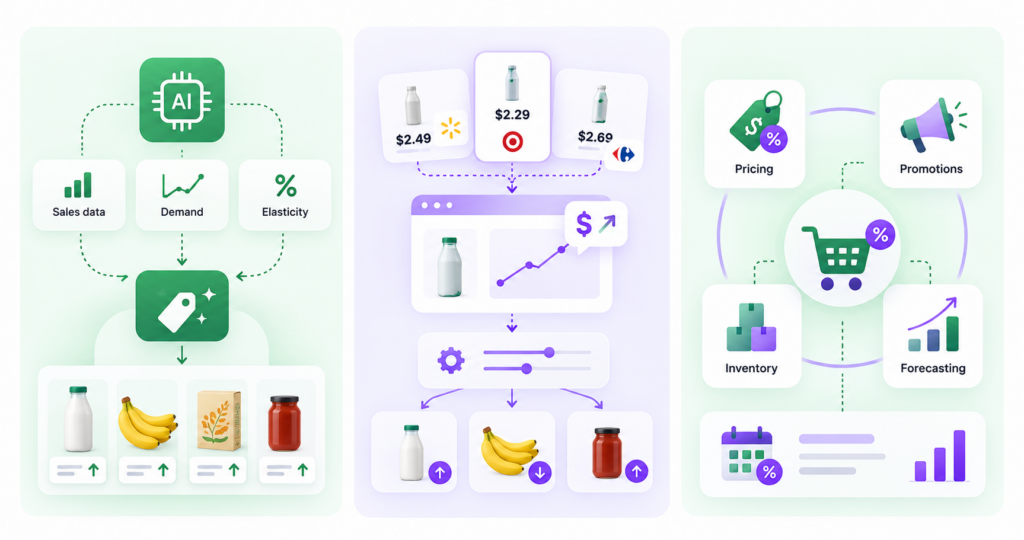
AI-powered price optimization platforms analyze historical sales, demand, elasticity, and commercial constraints to recommend prices. These solutions are particularly relevant for supermarkets managing large assortments and multiple profitability objectives.
Competitive Price Monitoring and Dynamic Pricing Software
Competitive monitoring and dynamic pricing tools emphasize competitor prices, market gaps, and automated adjustments. Rule-based repricing follows predefined conditions, whereas demand-based optimization evaluates expected customer responses and commercial outcomes.
Integrated Retail Pricing and Promotion Management Platforms
Integrated retail pricing and promotion platforms connect everyday pricing with promotional planning, markdown management, forecasting, and inventory decisions. Some solutions also support multibuy management to coordinate quantity-based offers with broader promotional strategies.
Key Features to Consider When Picking the Right Grocery Pricing Solution as a Retailer
- AI-Powered Price Optimization and Price Elasticity. Look for software that analyzes demand, historical sales, and price elasticity rather than simply matching competitor prices. Advanced predictive pricing analytics can help retailers anticipate customer responses and evaluate potential commercial outcomes before implementing price changes.
- Competitive Pricing Intelligence. Effective solutions should provide reliable competitor data and identify relevant price gaps. Retailers should also assess how competitive information influences recommendations without triggering unnecessary discounts.
- Grocery-Specific Category and Product Management. Supermarkets need tools that accommodate perishables, private labels, key value items, package-size relationships, and complex assortments. Category-level analysis can help preserve logical pricing structures.
- Pricing Automation and Workflow Control. Automated recommendations, bulk updates, approval workflows, and exception handling reduce manual effort. Pricing teams should retain visibility into proposed changes and control over execution.
- Integration, Scalability, and Reporting. Evaluate compatibility with POS, ERP, inventory, and e-commerce systems. The platform should support multiple locations, pricing zones, and channels while providing reporting that connects pricing decisions with commercial results.
How to Pick the Right Grocery Pricing Software for Your Business?
Choosing grocery pricing software requires understanding the retailer’s business model, assortment complexity, competitive environment, and commercial objectives. A regional supermarket chain, national grocery retailer, and online grocery business may require different capabilities.
A structured selection process should always involve teams responsible for pricing, merchandising, IT, finance, and operations. Clearly defined requirements, realistic expectations regarding implementation, and measurable success criteria help in selecting solutions that align with both strategic priorities and day-to-day workflows.
Six Factors to Consider Before Choosing
1. Define Your Pricing Objectives
Identify your main priorities: improving margins, strengthening competitive positioning, increasing sales, or reducing manual work. Match these goals with relevant software capabilities. Next step: Choose two or three measurable KPIs, such as gross margin improvement, pricing accuracy, or time saved.
2. Assess Your Grocery Assortment and Complexity
Consider your SKU volume, store network, pricing zones, and grocery-specific challenges, including perishables, private-label products, and frequent cost changes. Next step: List your operational requirements and use them to shortlist platforms that can handle your assortment complexity.
3. Evaluate AI and Analytical Capabilities
Compare platforms offering demand forecasting, price elasticity analysis, and AI-powered recommendations. Retailers exploring Price2Spy alternatives should distinguish advanced demand-based optimization from basic competitor monitoring and rule-based repricing.
4. Check Integration With Existing Systems
Ensure the software can connect with your ERP, POS, inventory management, and e-commerce systems to maintain accurate data and consistent pricing. Next step: Involve your IT team and request integration requirements, estimated timelines, and implementation details.
5. Compare Total Cost and Expected ROI
Evaluate the costs associated with licensing, integration, training, support, and implementation, and weigh them against the potential gains in profitability and operational efficiency. The next step is to request detailed commercial proposals and, subsequently, compare the total expenditure against the expected business outcomes.
6. Request a Demo or Pilot Project
Test shortlisted solutions using representative product categories and realistic pricing scenarios. When evaluating Prisync competitors or other pricing platforms, assess usability, recommendation transparency, and operational suitability before making a final decision. Next step: Evaluate pilot results against your KPIs and gather feedback from commercial and technical teams before making your final decision.
Conclusion
Grocery pricing software is increasingly important for retailers facing competitive markets, complex assortments, and profitability pressures. AI, automation, and demand-based analysis can support more consistent commercial decisions.
Choosing the most suitable platforms depends on the complexity of pricing, strategic priorities, business scale, and integration requirements. Retailers should always evaluate factors such as specialization within a specific product segment, scalability, implementation specifics, and analytical capabilities, rather than simply counting the number of available features.
For supermarket chains seeking AI-powered price optimization, pricing automation, and greater commercial control, Yieldigo is an option worth evaluating. Explore its capabilities or request a product demonstration to assess suitability for your grocery pricing strategy.
Frequently Asked Questions
What is grocery pricing software?
Grocery pricing software helps supermarkets analyze, manage, and optimize product prices across extensive assortments. It combines information such as historical sales, product costs, competitor prices, and demand patterns. Advanced optimization platforms use predictive analytics and price elasticity modeling to recommend commercially effective prices, while simpler solutions primarily support price tracking and management.
How does grocery pricing software work?
Grocery pricing software collects information from sales systems, product databases, competitor monitoring services, and other retail infrastructure. Analytical models evaluate demand, pricing constraints, and commercial objectives to generate recommendations. Pricing teams can review proposed changes through approval workflows before implementation. Integrations and performance monitoring help maintain consistency and evaluate results.
How much does grocery pricing software cost?
Grocery pricing software costs vary according to the provider, retailer size, number of products, required functionality, and implementation complexity. Some providers offer subscription-based licensing, while enterprise platforms generally use customized quotations. Retailers should request proposals covering licensing, data integration, implementation, training, maintenance, and ongoing support rather than comparing subscription fees alone.
How can AI improve grocery pricing strategies?
AI helps grocery retailers analyze extensive datasets and identify relationships between prices, customer demand, and profitability. Predictive models can estimate customer responses to price changes and recommend adjustments within defined commercial constraints. However, effective AI pricing still requires reliable data, clear business objectives, and oversight from experienced commercial teams.
What is price elasticity in grocery retail?
Price elasticity measures how product demand responds to changes in price. Highly price-sensitive products may experience substantial demand changes following relatively small price adjustments. Other products may demonstrate more stable purchasing patterns. Understanding these differences helps supermarkets evaluate trade-offs between sales volume, revenue, competitive positioning, and gross margins.
Can grocery pricing software increase profit margins?
Grocery pricing software can identify opportunities to improve margins through more effective price positioning, demand analysis, and category-level optimization. It can also help retailers avoid unnecessary discounts and evaluate the profitability of different pricing scenarios. Actual financial results depend on data quality, implementation effectiveness, market conditions, and the retailer’s commercial strategy.
What data is needed for grocery price optimization?
Important inputs include historical sales, product costs, existing prices, product hierarchies, and promotional records. Competitor pricing, inventory information, and store-level demand data can provide additional context. Reliable product identifiers, accurate transaction records, and consistent data structures are essential for generating meaningful recommendations and reducing pricing errors.
How does grocery pricing software handle competitor prices?
Competitive pricing intelligence identifies differences between a retailer’s prices and those of relevant competitors. Advanced platforms can combine this information with price elasticity, profitability targets, and pricing rules to recommend appropriate adjustments. Effective grocery pricing does not necessarily involve matching the lowest competitor price; decisions should reflect customer expectations and commercial objectives.
Can grocery pricing software integrate with POS and ERP systems?
Many enterprise grocery pricing platforms support integrations or structured data exchange with POS, ERP, inventory management, and e-commerce systems. These connections allow retailers to synchronize product information, analyze sales data, and distribute approved pricing changes. Integration capabilities vary between providers, so retailers should verify compatibility, data requirements, and implementation responsibilities before purchasing.