
Pricing decisions have become too complex to manage through spreadsheets, static reports, and intuition alone. Retailers and e-commerce businesses now operate across thousands, or millions, of SKUs, multiple channels, changing competitor prices, shifting demand patterns, promotions, inventory constraints, and increasingly price-sensitive customers. Choosing the right pricing software can help businesses bring these signals together and turn them into more consistent commercial decisions.
The best pricing analytics software goes beyond dashboards and historical reporting. Modern platforms combine competitive intelligence, price elasticity analysis, machine learning, forecasting, scenario simulation, dynamic pricing, and automated workflows. The result is a pricing function that can move from simply reporting past performance to predicting the likely impact of future decisions and continuously improving revenue and margin performance.
TL;DR:
- Yieldigo
- Competera
- Pricefx
- Quicklizard
- Omnia Retail
- Intelligence Node
- Revionics
- Minderest
- Wiser Solutions
- Prisync
- Price2Spy
- SymphonyAI Retail/CPG
Best Pricing Analytics Software for 2026
| Software | Best For | Core Focus | G2 Rating |
| Yieldigo | Retailers with complex pricing environments | AI pricing analytics & optimization | 4.6 / 5 |
| Competera | Enterprise retail | Contextual AI pricing | 4.9 / 5 |
| Pricefx | Large enterprises | End-to-end price management | 4.4 / 5 |
| Quicklizard | Omnichannel retailers | Dynamic pricing automation | 4.7 / 5 |
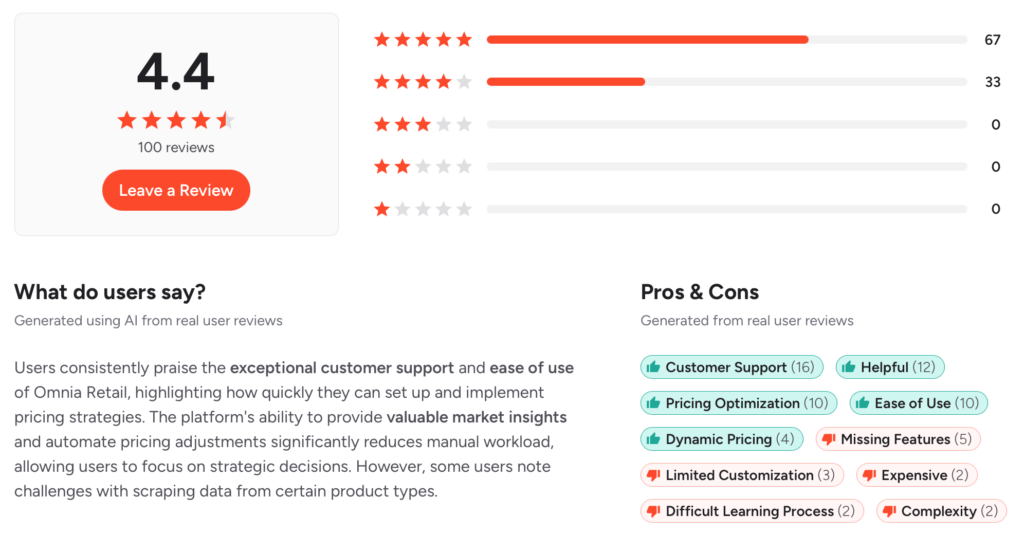
| Omnia Retail | Retailers & D2C brands | Dynamic pricing & market intelligence | 4.4 / 5 |
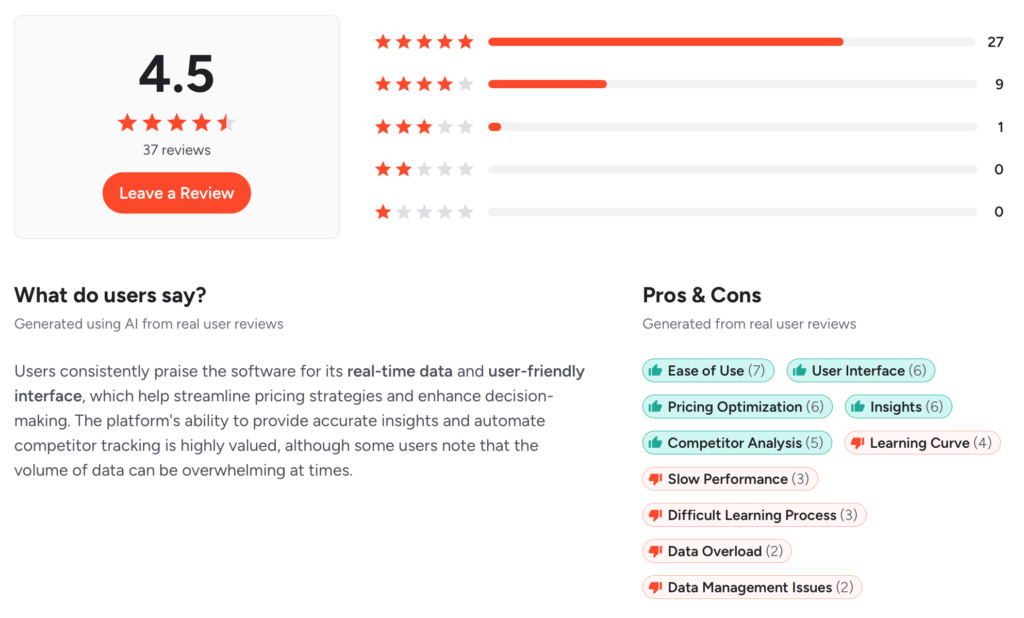
| Intelligence Node | Retailers & brands | Competitive intelligence | 4.5 / 5 |
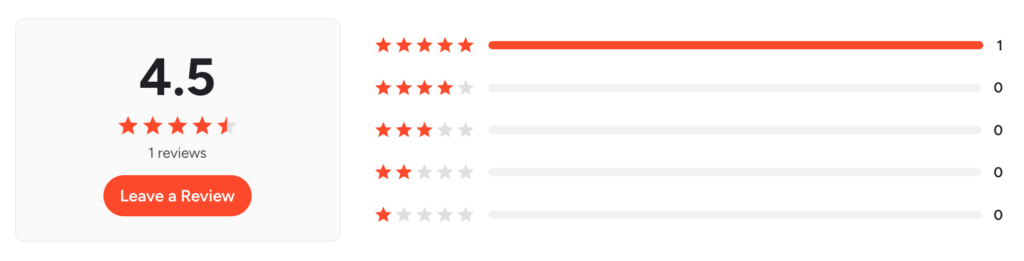
| Revionics | Large retailers | Price, promotion & markdown optimization | 4.5 / 5 |
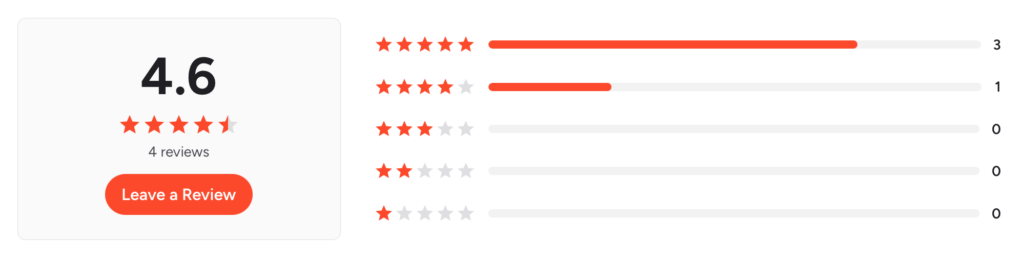
| Minderest | Global retailers & manufacturers | Price intelligence | 4.6 / 5 |
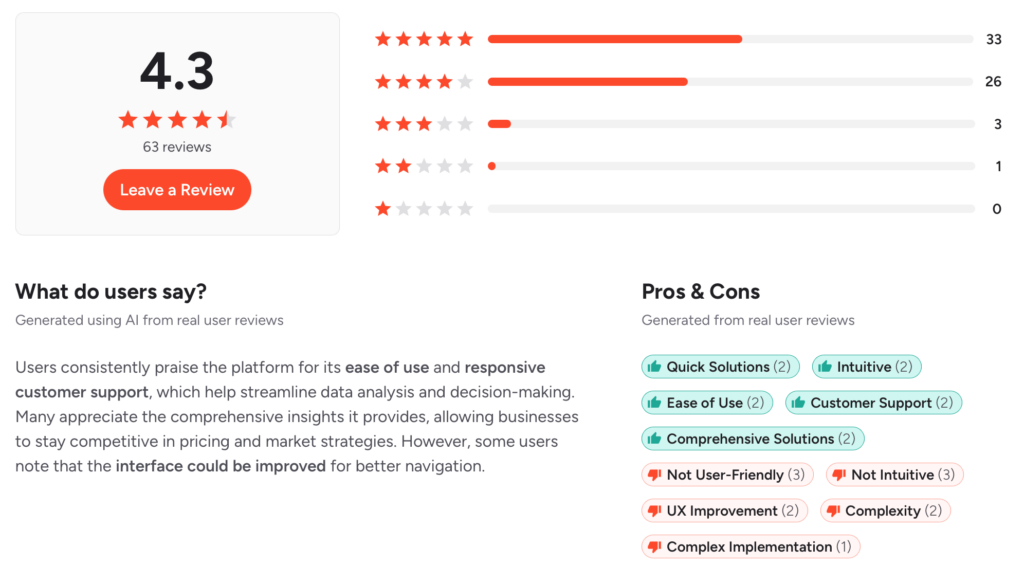
| Wiser Solutions | Retailers & brands | Competitive price intelligence | 4.3 / 5 |
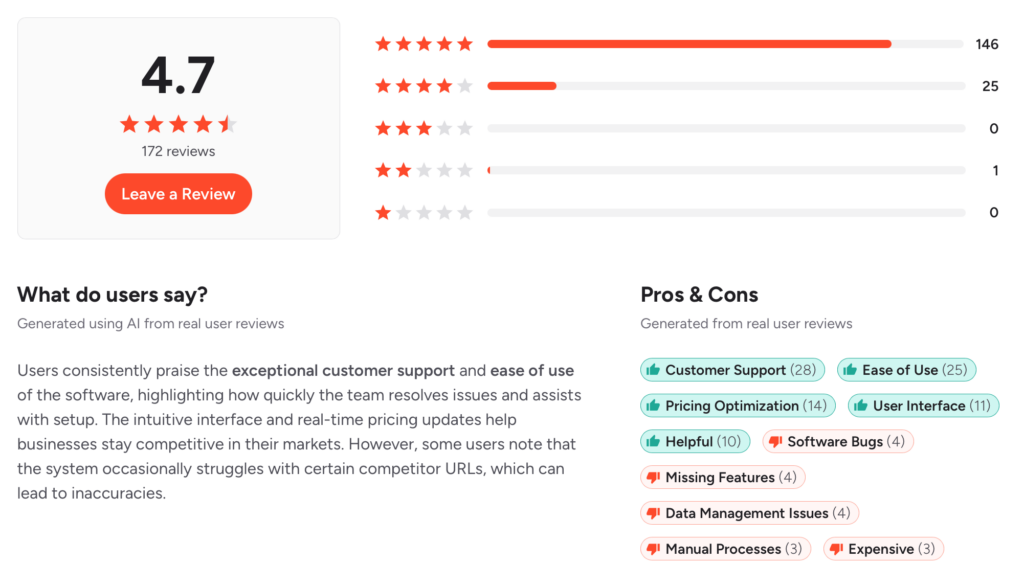
| Prisync | E-commerce businesses | Competitor price tracking | 4.7 / 5 |
| Price2Spy | E-commerce & retail teams | Monitoring & repricing | 4.8 / 5 |
| SymphonyAI Retail/CPG | Enterprise retail & CPG | Integrated retail analytics | 4.2 / 5 |
Yieldigo – Best for AI-Powered Retail Pricing Analytics and Optimization
What It Is?
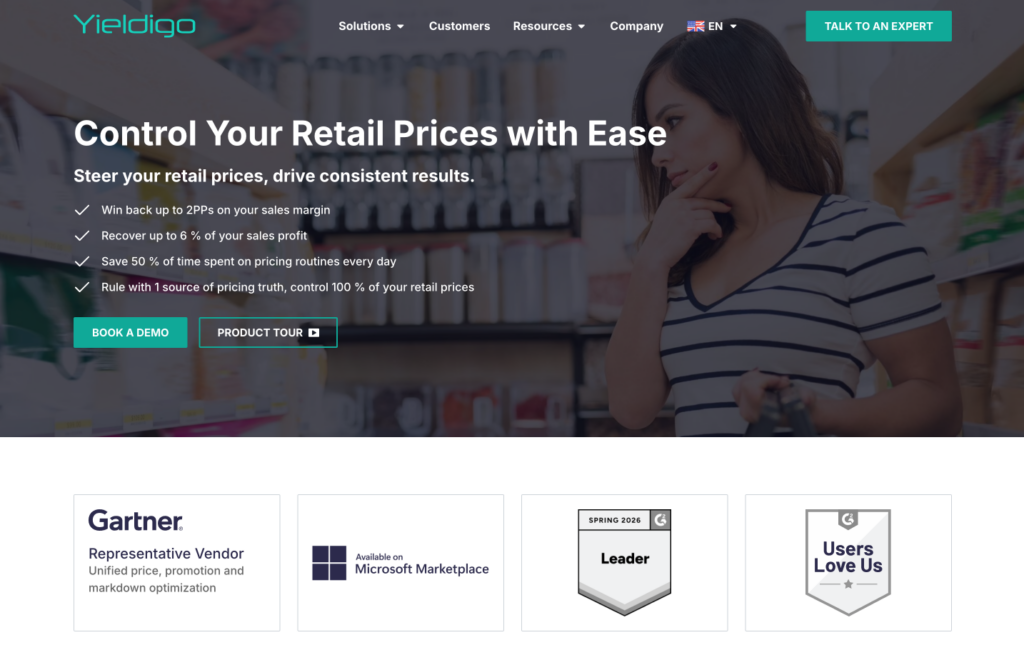
Yieldigo is an AI-powered retail price management and optimization platform designed for professional retailers and ecommerce businesses managing complex assortments, markets, stores, channels, and price lists. It is created to turn complex retail data into actionable pricing decisions. Rather than looking at individual products in isolation, its ML/AI engine can account for SKU elasticity, cross-elasticity, cannibalization, halo effects, competitive positioning, margins, sales volumes, and other commercial variables when supporting pricing decisions. The platform is particularly relevant for retailers managing large assortments, multiple stores, price lists, regions, banners, customer segments, or channels.
Yieldigo describes its product as supporting price management, price optimization and what-if analysis, promotion planning, markdown optimization, competitive pricing, and automated workflows. Pricing teams can analyze current performance, build pricing rules, optimize prices, and use what-if capabilities to understand the potential commercial impact of different pricing decisions before execution. These capabilities also support broader yield management strategies by helping retailers balance demand, margins, and commercial objectives.
Best For:
Yieldigo is particularly well suited to grocery, FMCG, pharmacy, wholesale, and other high-SKU retail environments where pricing teams must simultaneously manage profitability, competitive positioning, customer price perception, and complex product relationships.
It is also a strong fit for businesses moving beyond spreadsheet-based or purely rule-based pricing. Organizations that want pricing analytics to directly support daily price recommendations and execution, not simply generate another reporting dashboard, are likely to get the most value from the platform.
Key Capabilities:
- Price optimization. Uses advanced analytics and AI to support price decisions based on business objectives, demand behavior, and commercial constraints.
- Elasticity and cross-elasticity analysis. Helps teams understand how demand for one SKU can change when its own price or the price of related products changes.
- What-if simulations. Allows pricing teams to evaluate potential pricing scenarios before applying changes to live assortments.
- Competitive pricing analytics. Tracks market position and competitor price indices while allowing competitive information to become one input within a broader pricing strategy.
- Automated pricing workflows. Helps businesses operationalize pricing recommendations across large assortments, regions, channels, and price lists.
Strategic Strengths:
Yieldigo’s main strategic advantage is the combination of analytics and execution within a retail-specific pricing environment. Pricing decisions can incorporate product relationships, elasticity, competition, margin requirements, assortment hierarchy, and business rules instead of optimizing every SKU independently. That portfolio-level perspective is particularly valuable in grocery and FMCG, where changing the price of one product can influence demand for substitutes, complementary products, and the wider customer basket.
Considerations:
Yieldigo is built around sophisticated retail pricing use cases, so businesses looking only for basic competitor monitoring may not need its full analytical depth. Its value is likely to be greatest when an organization has sufficient transactional data and a pricing team ready to incorporate optimization into recurring commercial workflows.
Pricing: Custom pricing; contact Yieldigo for a quote.
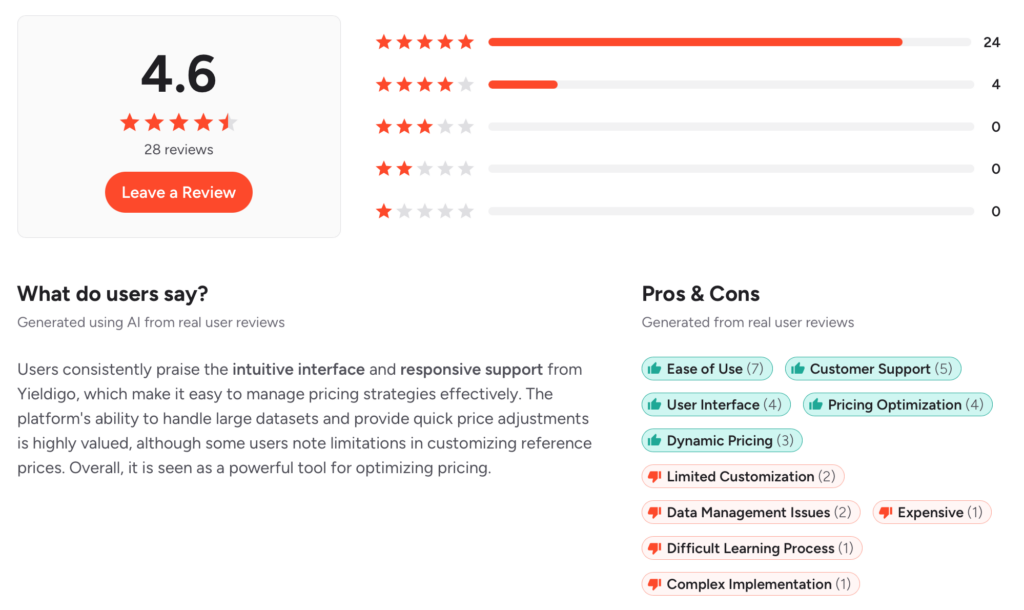
G2 Rating: 4.6 / 5 based on 28 reviews as of October 1, 2026.
Competera – Best for Enterprise AI Pricing Optimization
What It Is?
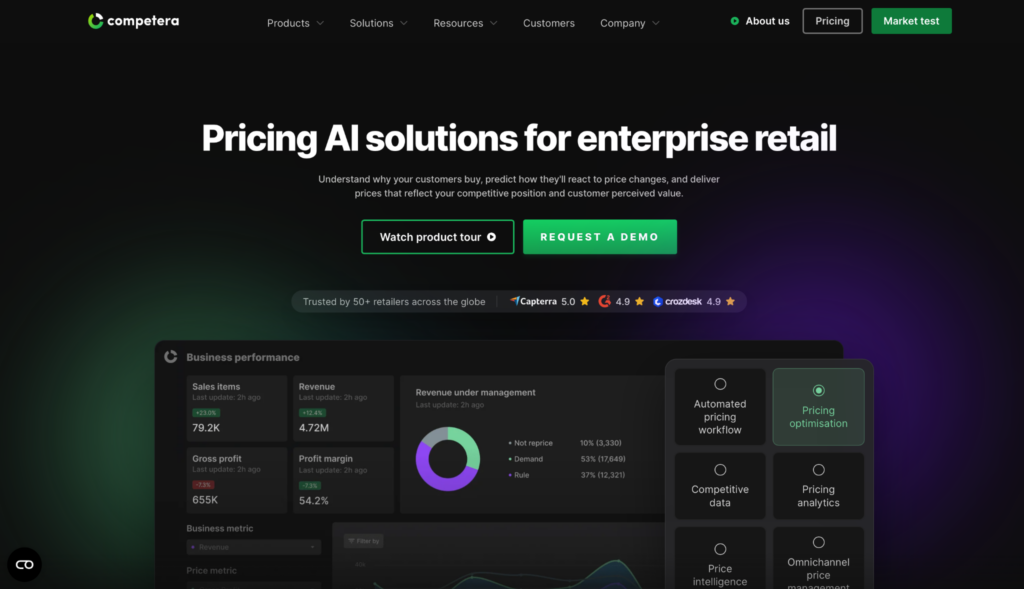
Competera approaches pricing through two main layers: Competitive Data and its AI Pricing Platform. Its current platform structure supports both price-led optimization based on elasticity and more advanced contextual optimization that considers more than 20 demand-driving factors.
Its analytics capabilities extend from competitor monitoring and product matching to demand modeling, business metric forecasting, what-if simulation, promotion and markdown optimization, and portfolio-level pricing decisions. The platform is designed to move retailers from reactive competitor matching toward predictive pricing.
Best For:
Competera is best suited to mid-market and enterprise retailers managing complex assortments across stores, markets, and channels. It is particularly relevant when pricing teams need to automate decisions while retaining rules, guardrails, approvals, and human oversight.
Businesses with mature pricing functions and substantial historical data can use its more advanced contextual modeling, while companies earlier in their pricing maturity can begin with competitive data or elasticity-driven optimization.
Key Capabilities:
- Contextual AI optimization. Models numerous demand drivers when generating price recommendations.
- Competitive intelligence. Collects competitor pricing data and supports AI-powered exact, similar, and variant product matching.
- What-if simulations. Forecasts the potential revenue and margin impact of pricing strategies before implementation.
- Pricing automation. Combines automated recommendations with business rules, guardrails, approvals, and execution workflows.
- Promotion and markdown optimization. Extends optimization beyond base pricing into promotional and inventory-driven pricing decisions.
Strategic Strengths:
Competera’s strength is its ability to combine competitive intelligence with demand-driven optimization. Instead of treating competitor prices as the only signal, it incorporates elasticity, product relationships, commercial objectives, and broader contextual factors into pricing recommendations.
Considerations:
Advanced contextual optimization requires significantly more historical information than basic rule-based repricing. Competera states that its Contextual AI edition requires approximately two years of historical data, making data readiness an important implementation consideration.
Pricing: Pricing Platform is custom-quoted; Competitive Data offers usage-based pricing, with published Starter pricing including a $1,080/month platform fee plus data-point usage.
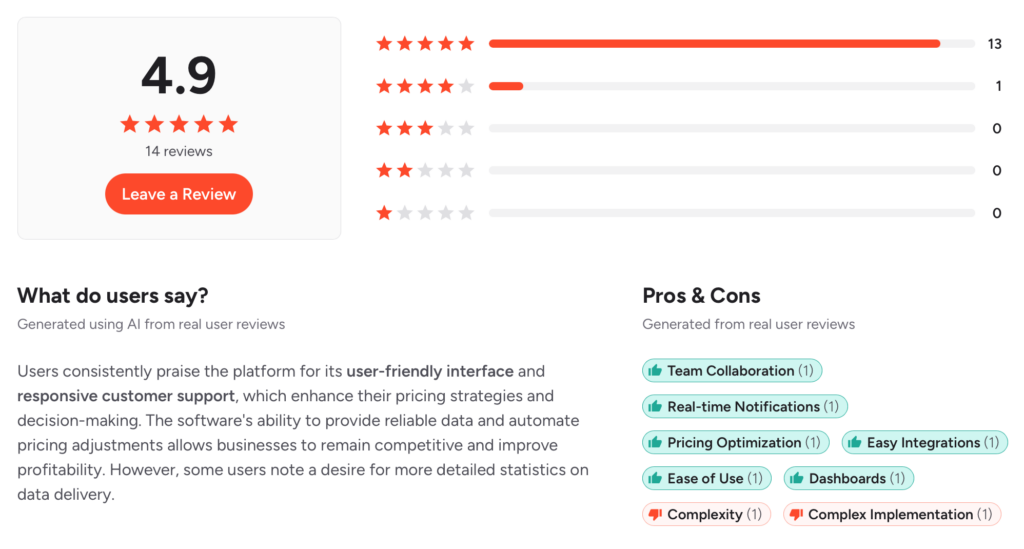
G2 Rating: 4.9 / 5 based on 14 reviews as of October 1, 2026.
Pricefx – Best for End-to-End Enterprise Price Management
What It Is?
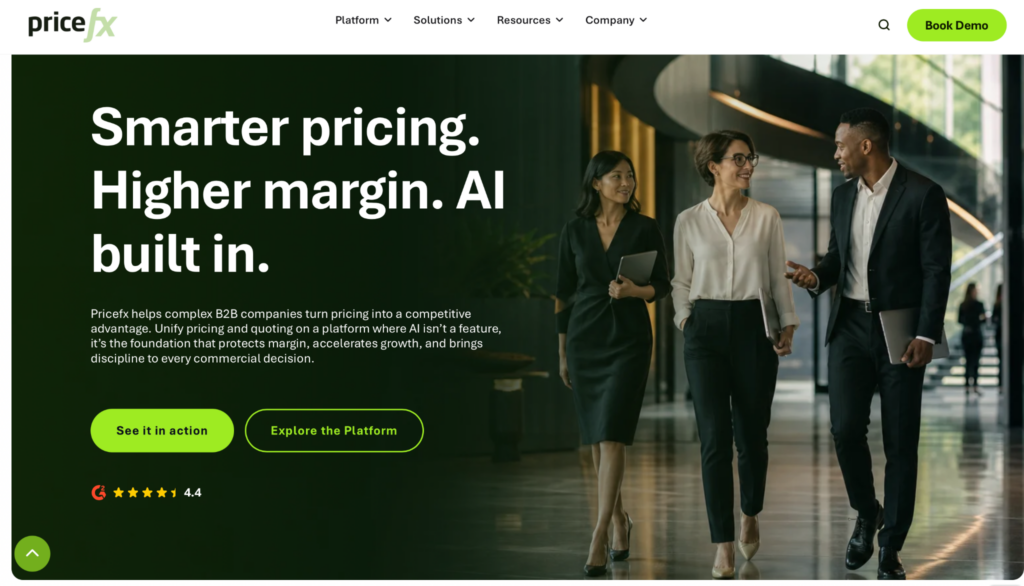
Pricefx provides a broad pricing management environment rather than a standalone analytics tool. Organizations can use it to analyze pricing performance, build and execute pricing strategies, manage price lists, support quoting processes, and connect pricing with broader commercial workflows. Its positioning makes it particularly relevant to enterprises where pricing extends beyond retail shelf prices into customer-specific agreements, quotes, rebates, and B2B commercial processes.
Best For:
Pricefx is best suited to medium and large enterprises that want pricing analytics integrated with operational price management. It is especially relevant for B2B organizations, manufacturers, distributors, and enterprises with complex price-setting processes. Companies already working with ERP and CRM environments can also benefit from connecting pricing analytics with downstream commercial systems.
Key Capabilities:
- Pricing analytics. Dashboards and analysis help teams identify price performance, margin opportunities, and exceptions.
- Price optimization. Supports algorithmic price recommendations aligned with commercial objectives.
- Price management. Centralizes price lists, rules, approvals, and workflows.
- CPQ capabilities. Connects pricing intelligence with configure-price-quote processes.
- Integration ecosystem. Supports integration with enterprise systems and commercial data sources.
Strategic Strengths:
Pricefx stands out for breadth. Rather than solving only competitive intelligence or retail repricing, it can become an enterprise pricing infrastructure spanning analytics, optimization, management, quoting, and rebate processes.
Considerations:
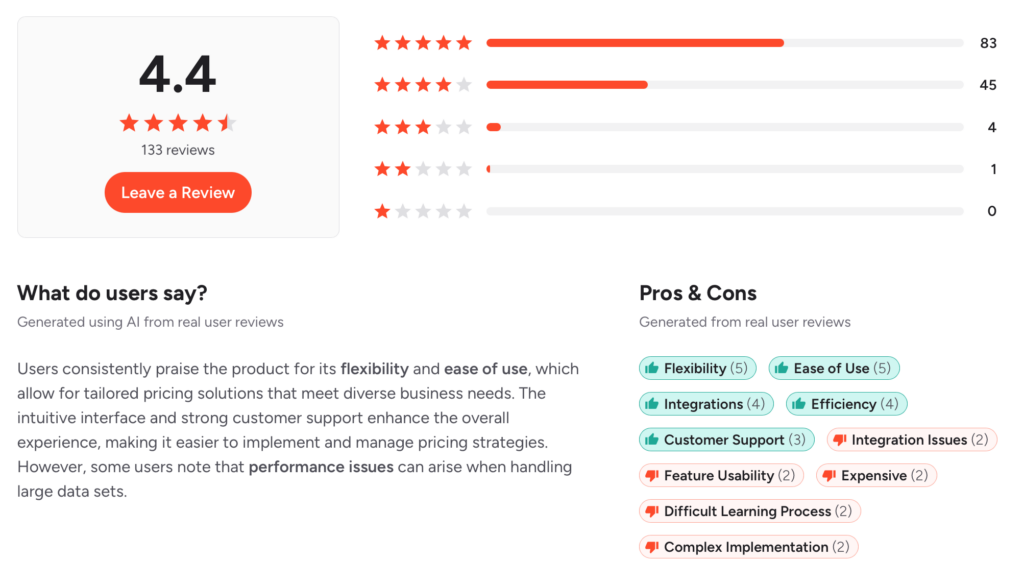
That breadth can also mean more configuration and implementation work than lighter pricing analytics tools. G2 reviewers have cited initial setup, large-data performance, and UI/UX as areas that can require attention.
Pricing: Custom pricing.
G2 Rating: 4.4 / 5 based on 133 reviews as of October 1, 2026.
Quicklizard – Best for Real-Time Dynamic Pricing Automation
What It Is?
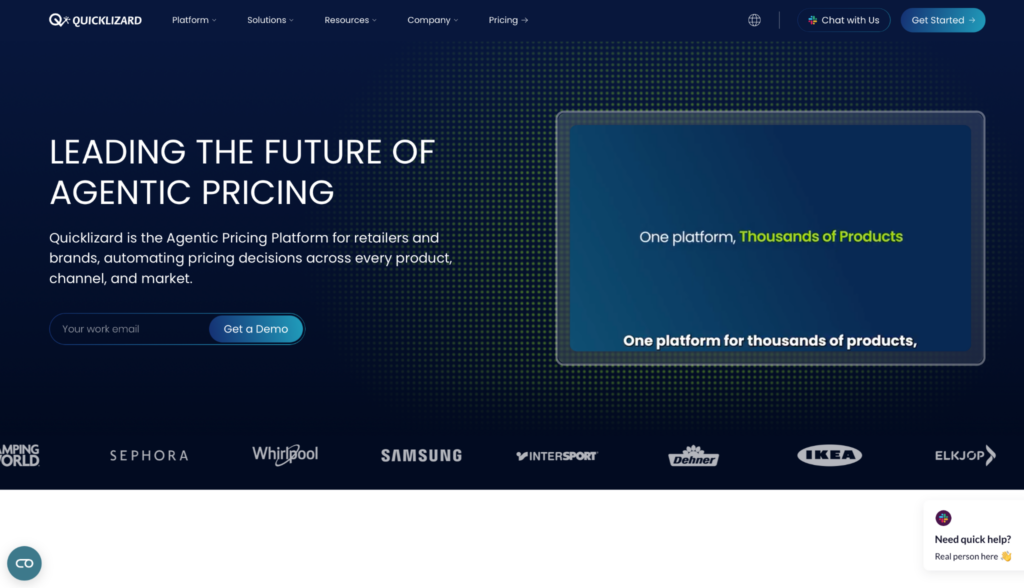
Quicklizard combines internal transaction data with market and competitor signals to create a centralized pricing environment. Its platform supports AI-driven optimization alongside configurable business rules, commercial policies, margin floors, and approval workflows. The system is designed to shorten the distance between analysis and execution. Pricing teams can monitor changing conditions, receive optimized recommendations, and automate execution while retaining human control over strategy and exceptions.
Best For:
Quicklizard is particularly suitable for omnichannel retailers and brands with large assortments and frequent pricing changes. Businesses operating simultaneously across e-commerce, marketplaces, and physical stores can use the platform to coordinate pricing decisions at scale. It also fits organizations seeking more automation without handing complete control to an opaque pricing model.
Key Capabilities:
- AI price optimization. Generates pricing recommendations using internal and external signals.
- Dynamic pricing. Responds to competitor activity, demand, inventory, cost, and other changes.
- Business rules and guardrails. Allows teams to define commercial constraints around automated decisions.
- Pricing intelligence. Centralizes market and competitor signals for analysis.
- Omnichannel execution. Supports pricing across online, marketplace, and physical retail environments.
Strategic Strengths:
Quicklizard’s hybrid approach combines machine-learning optimization with rules and human governance. This can make automation more practical for enterprises that need both algorithmic speed and clearly defined commercial controls.
Considerations:
Advanced pricing automation still requires data preparation, strategy design, and onboarding. Quicklizard indicates that fast pilots can typically run in four to eight weeks and require transaction history plus catalog, inventory, promotion, and competitor information.
Pricing: Custom pricing based on assortment size, pricing cadence, channels, and selected plan.
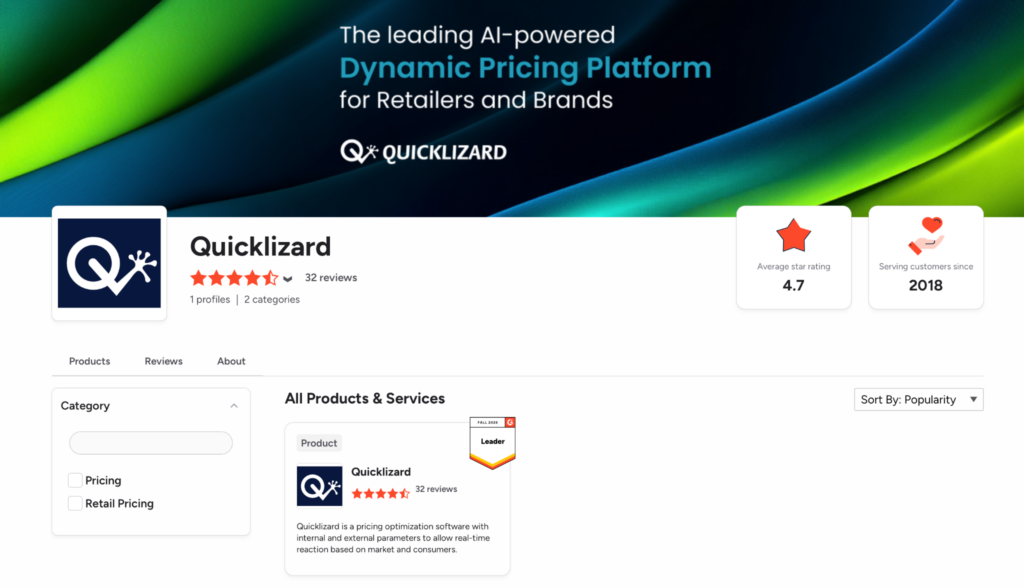
G2 Rating: 4.7 / 5 based on 32 reviews as of October 1, 2026.
Omnia Retail – Best for Transparent Automated Retail Pricing
What It Is?
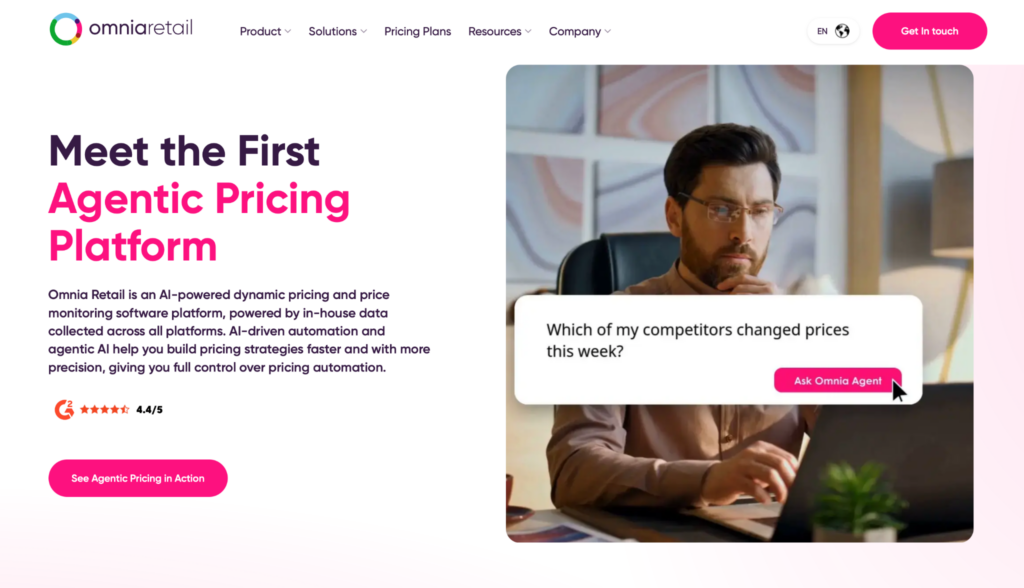
Omnia connects internal commercial information with competitor and marketplace pricing data. Teams can build automated pricing strategies using its Pricing Strategy Tree, configure rules without coding, and use AI-driven insights to identify competitor movements and margin risks. The platform emphasizes transparency: businesses define their pricing logic and guardrails while automation executes the strategy. It can work across assortments ranging from hundreds to millions of products.
Best For:
Omnia is well suited to e-commerce retailers, omnichannel businesses, and D2C brands that want competitor intelligence and dynamic pricing within the same system. It can serve both smaller operations seeking structured automation and enterprise pricing teams operating multiple shops, regions, or channels.
Key Capabilities:
- AI price monitoring. Tracks competitor and marketplace prices.
- Dynamic pricing. Automatically applies strategies as market conditions change.
- Pricing Strategy Tree. Provides a visual no-code environment for building pricing logic.
- KPI tracking. Connects pricing activity with revenue, margin, and performance indicators.
- Pricing automation controls. Supports approvals, safeguards, versioning, and rollback.
Strategic Strengths:
Omnia’s emphasis on explainability is valuable for teams that want automation without losing visibility into how prices are calculated. The combination of market monitoring and strategy execution also reduces the need to move information manually between separate pricing tools.
Considerations:
The platform can become sophisticated as pricing strategies grow more complex, and smaller organizations should assess whether they need the full dynamic pricing environment rather than monitoring alone.
Pricing: SMB solutions start at €399/month; enterprise plans are custom priced.
G2 Rating: 4.4 / 5 as of October 1, 2026.
Intelligence Node – Best for Competitive Pricing Intelligence
What It Is?
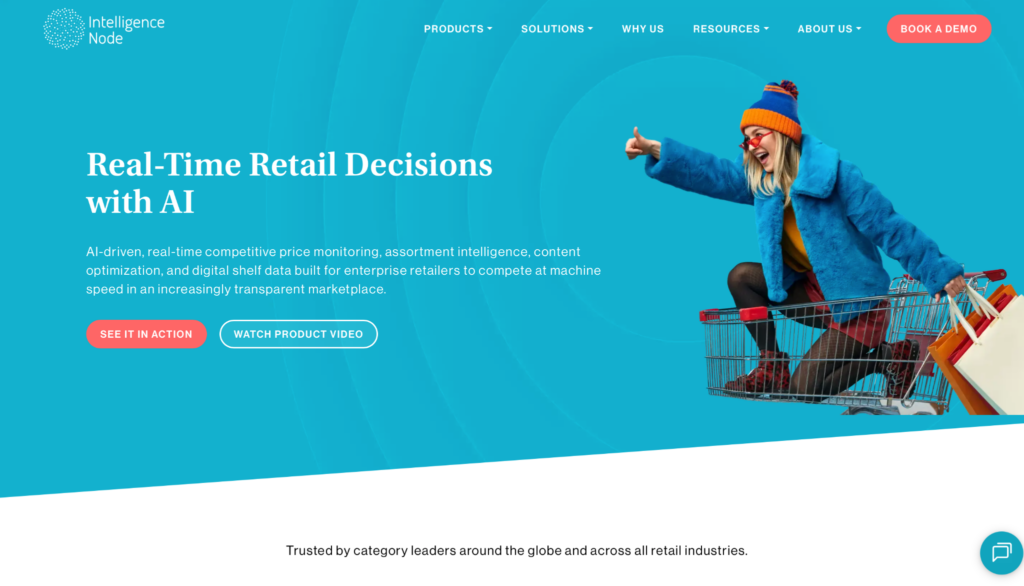
The platform monitors competitor prices and product information and uses product matching technology to compare identical and similar products across retailers and marketplaces. It combines monitoring with historical pricing, competitive benchmarking, optimization, and dynamic pricing capabilities. Intelligence Node places particular emphasis on data speed and product matching. Its pricing solutions support competitor monitoring, price intelligence, price optimization, dynamic pricing, and price comparison within a broader retail intelligence ecosystem.
Best For:
It is best suited to retailers and brands that need high-volume competitive data across many SKUs, marketplaces, geographies, or competitors. It can also be useful when competitive positioning is a major input into pricing strategy and teams require detailed market visibility before changing prices.
Key Capabilities:
- Competitor price monitoring. Tracks price and availability movements across competing sellers.
- Product matching. Matches exact and similar products for meaningful comparisons.
- Historical pricing. Helps teams analyze price movements and market behavior over time.
- Price optimization. Converts competitive and internal signals into pricing recommendations.
- Dynamic pricing. Supports rule-based price adjustments using competitive and margin constraints.
Strategic Strengths:
Intelligence Node is particularly strong in competitive data and product matching. This makes it valuable when pricing analytics depends on accurately understanding how an assortment compares with competitors rather than simply collecting raw web prices.
Considerations:
The depth and volume of competitive information can create a learning curve. G2 reviewers have noted that large amounts of data can sometimes feel overwhelming, particularly for new users.
Pricing: Custom subscription pricing; Intelligence Node states that minimum projects start at approximately $5,000/month.
G2 Rating: 4.5 / 5 based on 37 reviews as of October 1, 2026.
Revionics – Best for Retail Price, Promotion, and Markdown Optimization
What It Is?
Revionics applies analytics and machine learning to help retailers evaluate and optimize pricing decisions across the product lifecycle. Rather than concentrating solely on competitor monitoring, its scope includes regular pricing, promotional decisions, and markdown strategy. This gives retailers a broader analytical framework for balancing demand, margin, competitive position, and inventory throughout different stages of a product’s lifecycle.
Best For:
Revionics is primarily suited to established retailers that require pricing optimization across large assortments. It is especially relevant when base pricing cannot be managed separately from promotions and markdowns and teams want those decisions to operate within a coordinated analytical framework.
Key Capabilities:
- Base-price optimization. Supports regular pricing decisions using analytics and demand modeling.
- Promotion optimization. Helps evaluate promotional pricing opportunities and performance.
- Markdown optimization. Supports inventory-driven price reductions and sell-through objectives.
- Scenario analysis. Allows teams to assess potential commercial outcomes before implementation.
- Retail analytics. Provides pricing teams with visibility into performance and opportunities.
Strategic Strengths:
Revionics’ principal advantage is its deep specialization in retail pricing and its ability to connect everyday price decisions with promotions and markdowns.
Considerations:
Businesses looking for lightweight competitor monitoring may find a specialized price-tracking platform easier to deploy. Revionics is better aligned with organizations seeking broader retail pricing optimization.
Pricing: Custom quote.
G2 Rating: 4.5 / 5 as of October 1, 2026.
Minderest – Best for Large-Scale Competitor Price Intelligence
What It Is?
Minderest focuses on collecting and analyzing competitor prices, promotions, assortment, and stock information across e-commerce sites, marketplaces, comparison platforms, countries, languages, and currencies. Its ecosystem also includes AI-driven dynamic pricing through Reactev, allowing businesses to move from monitoring market changes to responding through automated pricing. Minderest says its platform tracks billions of price points and supports competitor price monitoring, MAP/MSRP monitoring, price intelligence, catalog intelligence, and dynamic pricing.
Best For:
Minderest is best for retailers, manufacturers, and global brands that require broad competitive visibility across many markets. It is particularly useful when accurate market data is the foundation of the pricing process and businesses need to monitor not just prices but promotions, stock availability, marketplaces, and distributors.
Key Capabilities:
- Competitor monitoring. Tracks prices and stock across global digital channels.
- Price intelligence. Converts collected pricing data into market-positioning analytics.
- Promotion analytics. Identifies and analyzes competitor promotional activity and helps teams understand promotional market dynamics.
- Product matching. Supports comparisons across identical, similar, and private-label products.
- Dynamic pricing. Connects intelligence with automated optimization through the wider Minderest ecosystem.
Strategic Strengths:
Minderest’s major advantage is the scale and breadth of its competitive data capabilities. Its ability to monitor international markets, multiple currencies, languages, promotions, and assortment information makes it useful for global pricing operations.
Considerations:
Organizations primarily interested in internal elasticity modeling rather than competitive intelligence should compare Minderest’s optimization capabilities carefully with platforms centered more heavily on demand modeling.
Pricing: Custom quote.
G2 Rating: 4.6 / 5 based on 4 reviews as of October 1, 2026.
Wiser Solutions – Best for Competitive Price Monitoring and Execution
What It Is?
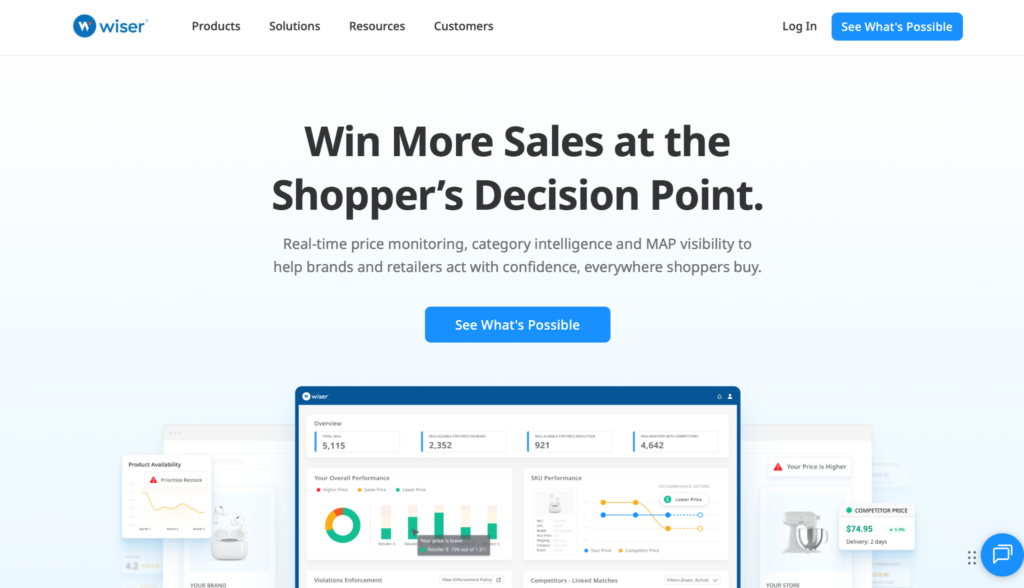
Wiser Price Intelligence monitors competitor pricing at SKU level and turns market movements into actionable pricing information. The platform combines product matching, market monitoring, alerts, dashboards, APIs, and configurable recommendations. Data can be delivered through dashboards, CSV files, APIs, or integrations, making Wiser useful both as a user-facing analytics platform and as a competitive-data layer feeding other systems.
Best For:
Wiser is particularly suitable for retailers and brands whose pricing strategy depends heavily on competitor positioning and rapid market visibility. It can also work well for lean pricing teams seeking to reduce manual competitive research and integrate price intelligence into existing workflows.
Key Capabilities:
- SKU-level competitor tracking. Monitors price movements across competitors and marketplaces.
- Automated product matching. Reduces manual mapping between internal and competitor catalogs.
- Alerts and analytics. Highlights market movements and pricing opportunities.
- Flexible data delivery. Provides information through dashboards, reports, APIs, and integrations.
- Enterprise controls. Includes governance features for larger pricing organizations.
Strategic Strengths:
Wiser combines competitive visibility with practical execution workflows. Its flexible delivery options make it easier to integrate market intelligence with the tools and processes a pricing organization already uses.
Considerations:
Companies seeking deep demand-elasticity modeling and portfolio-level optimization should determine whether Wiser’s competitive-intelligence orientation provides enough optimization depth for their requirements.
Pricing: Custom quote.
G2 Rating: 4.3 / 5 as of October 1, 2026.
Prisync – Best for Accessible E-Commerce Competitor Price Tracking
What It Is?
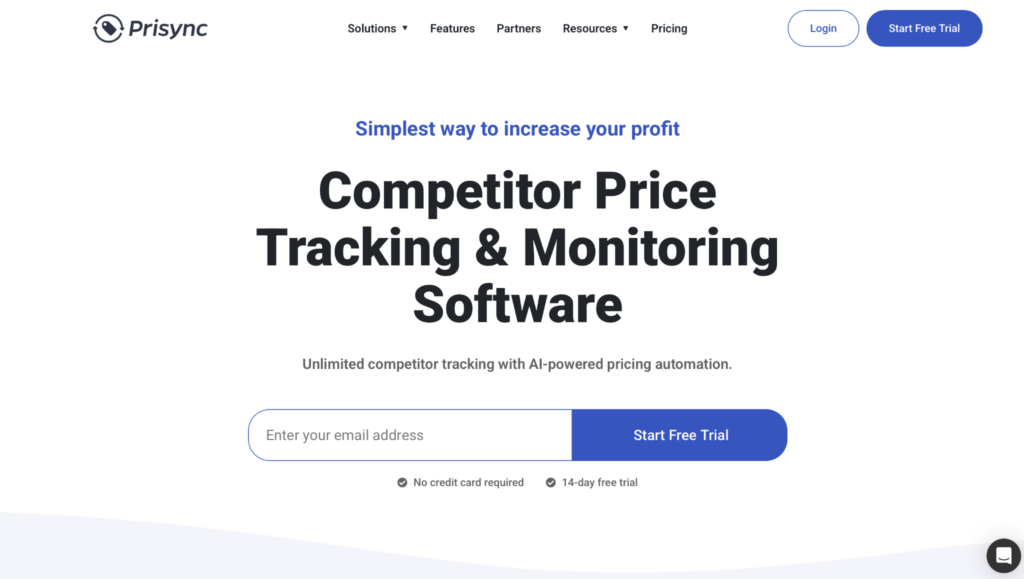
Prisync collects competitor price and stock information and presents it through dashboards, reports, alerts, and pricing analytics. Businesses can monitor changes without manually checking competitor websites. The platform also supports dynamic pricing functionality, helping merchants connect competitor information with automated price adjustments.
Best For:
Prisync is a strong option for small and mid-sized e-commerce companies that want structured competitor monitoring without immediately implementing a complex enterprise pricing transformation. It is also useful for teams moving away from spreadsheets and manual competitor checks for the first time.
Key Capabilities:
- Competitor price tracking. Automatically monitors rival product prices.
- Stock monitoring. Tracks competitor availability alongside price.
- Price-change alerts. Notifies teams when relevant market movements occur.
- Historical analytics. Helps identify competitive pricing patterns over time.
- Dynamic pricing. Supports automated adjustments based on defined strategies.
Strategic Strengths:
Prisync’s relative simplicity makes sophisticated competitor monitoring more accessible. It offers a practical entry point into pricing analytics for e-commerce teams that do not require a full enterprise optimization platform.
Considerations:
Large retailers needing advanced cross-elasticity modeling, complex store clustering, or portfolio-level optimization may eventually require a more specialized enterprise pricing engine. Businesses evaluating the market can also compare Prisync alternatives to determine which approach better matches their pricing complexity.
Pricing: Multiple subscription plans are available, depending on monitoring and dynamic-pricing requirements.
G2 Rating: 4.7 / 5 based on 172 reviews as of October 1, 2026.
Price2Spy – Best for Flexible Price Monitoring and Repricing
What It Is?
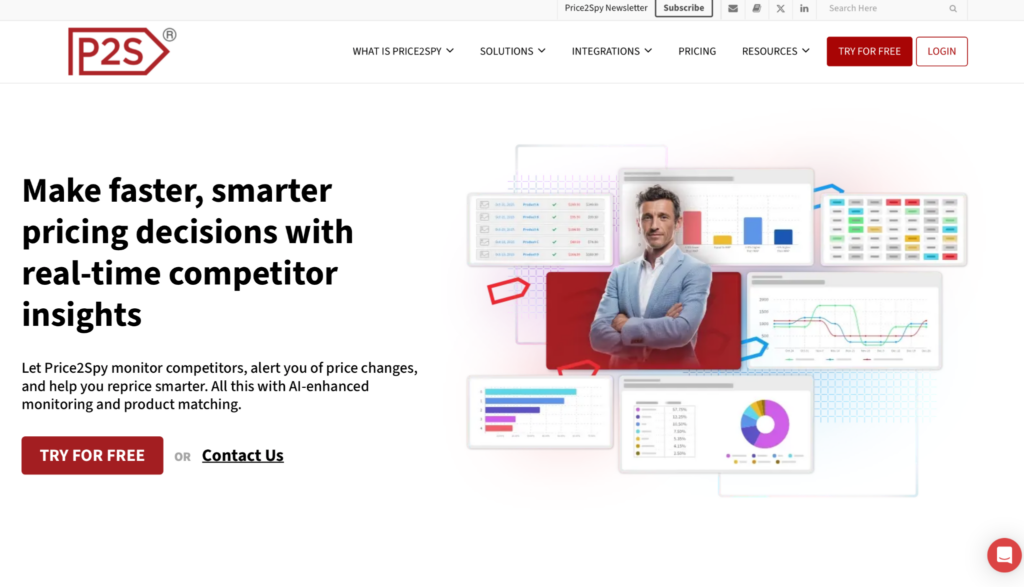
The platform collects competitor pricing information and allows businesses to analyze changes through reports, dashboards, and historical data. Users can then apply repricing rules to translate market intelligence into price changes. Price2Spy offers different tiers ranging from basic monitoring to enterprise-oriented functionality with APIs, more frequent checks, user management, and custom reporting.
Best For:
Price2Spy works well for e-commerce companies and brands that need dependable competitive monitoring with the flexibility to build more advanced processes over time. Its modular structure can be attractive for organizations that want to start with monitoring and later add repricing, integrations, or more sophisticated reporting.
Key Capabilities:
- Price monitoring. Tracks competitor prices across online channels.
- Market analytics. Provides reports and dashboards for interpreting pricing data.
- Automated repricing. Uses configurable rules to support price changes.
- Historical reports. Shows how prices and competitive conditions change over time.
- API and integrations. Enables pricing information to feed external systems.
Strategic Strengths:
Price2Spy offers a wide range of competitive-pricing functionality without requiring every business to adopt the same configuration. Its combination of monitoring, analytics, alerts, and optional repricing supports gradual pricing maturity.
Considerations:
Its core strength is competitive monitoring rather than advanced demand-driven optimization. Businesses seeking sophisticated elasticity or basket-level modeling may need a more specialized optimization platform and may want to evaluate Price2Spy alternatives.
Pricing: Tiered plans are available; Premium pricing is provided on request.
G2 Rating: 4.8 / 5 as of October 1, 2026.
SymphonyAI Retail/CPG – Best for Pricing Analytics Within Broader Retail Intelligence

What It Is?
Unlike standalone pricing analytics software, SymphonyAI places pricing within a wider retail and CPG decision-making environment. Its capabilities cover pricing and margin management alongside assortment optimization, promotion management, merchandising, store intelligence, and other commercial functions. This integrated approach allows organizations to analyze pricing alongside the broader factors influencing category and retail performance.
Best For:
SymphonyAI is best suited to large retailers and CPG organizations that want pricing analytics connected to merchandising, assortment, promotions, and other enterprise retail decisions. It can be particularly relevant where pricing teams already operate as part of a broader category-management or commercial-planning organization.
Key Capabilities:
- Pricing and margin management. Uses data-driven analysis to support profitability.
- Promotion optimization. Helps evaluate promotional performance and improve promotional ROI.
- Assortment optimization. Connects product selection with demand and category objectives.
- Competitive analysis. Identifies relevant competitor movements.
- AI-driven retail insights. Brings pricing into a broader retail decision framework.
Strategic Strengths:
The key advantage is integration. Pricing does not operate independently from assortment, promotion, shelf, inventory, and category decisions, and SymphonyAI provides a wider analytical environment for connecting those functions.
Considerations:
Companies specifically seeking a dedicated pricing cockpit may prefer a specialized pricing platform. SymphonyAI becomes more compelling when the business case extends beyond pricing into broader retail and CPG intelligence.
Pricing: Custom enterprise pricing.
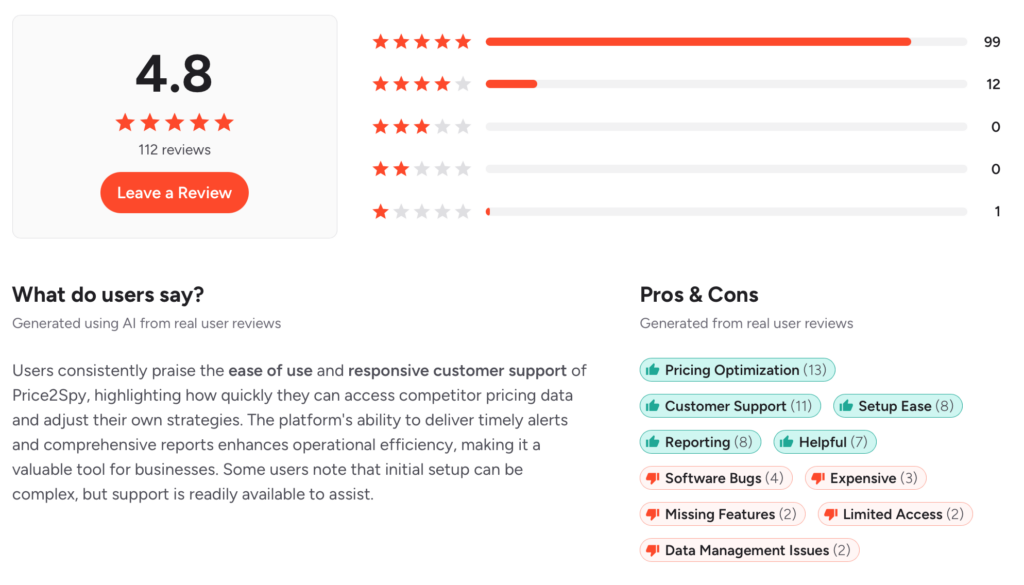
G2 Rating: 4.2 / 5 based on 12 reviews as of October 1, 2026.
Why Trust Our Pricing Software Reviews?
We evaluate pricing analytics software from the perspective of the teams that actually need to turn pricing data into commercial decisions. That means looking beyond feature lists and asking whether a platform can help businesses understand demand, monitor competitive conditions, model pricing outcomes, protect margins, and execute decisions across real operational environments.
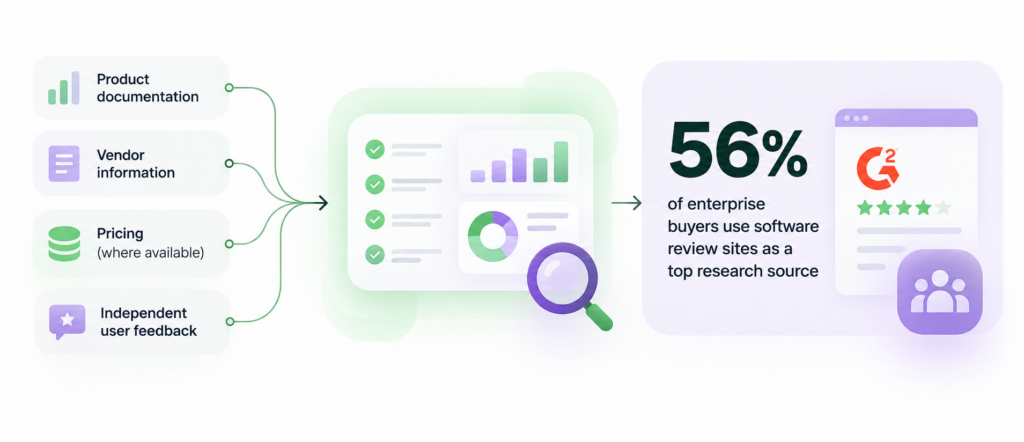
Our assessment considers publicly available product documentation, vendor feature information, published pricing where available, and independent user feedback. Independent reviews have become an increasingly important part of software evaluation: G2’s 2025 Buyer Behavior Report found that 56% of enterprise buyers use software review sites as a top research source. For customer sentiment, we therefore reference current G2 ratings rather than assigning proprietary scores that could imply a level of precision the available evidence does not support.
We also recognize that pricing software categories overlap. A competitor-monitoring platform, an enterprise price-management suite, and an AI optimization engine may all qualify as pricing analytics software while solving very different problems. For that reason, this guide focuses on what each platform is designed to do, where it is strongest, and what buyers should consider before selecting it.
How We Evaluated Pricing Analytics Software for 2026
The best pricing analytics software should do more than visualize historical sales. We looked for platforms that can convert pricing, demand, competitive, and commercial information into insights that teams can realistically use. Our evaluation focused on several areas:
Pricing analytics depth
We considered whether the platform goes beyond basic reporting to help users understand elasticity, price position, margins, product relationships, historical trends, or other decision-driving metrics. More sophisticated platforms may also incorporate predictive analytics and demand modeling.
Optimization capabilities
We examined whether analytics can translate into recommended actions. This includes price optimization, what-if modeling, dynamic pricing, automated repricing, promotion optimization, and markdown decisions.
Competitive intelligence
Competitor information has become an important pricing input, particularly in e-commerce. Effective competitive analysis can include monitoring frequency, product matching, assortment intelligence, historical competitor information, and the ability to incorporate market data into pricing decisions.
Automation and execution
Insight has limited value if teams cannot act on it efficiently. We assessed capabilities such as pricing workflows, approvals, pricing automation, rules, guardrails, integrations, APIs, and exception management.
Scalability
Pricing thousands or millions of SKUs across stores, regions, countries, and channels creates fundamentally different requirements from managing a small online catalog. We considered how well each platform addresses its intended scale.
What Are the Benefits of Pricing Analytics Software?
- Better pricing decisions. Pricing analytics replaces isolated spreadsheet analysis with a structured view of demand, competition, costs, margins, and performance. Teams can understand why certain prices perform differently and identify opportunities that manual analysis may miss. This makes pricing decisions more consistent across products and categories. It also gives pricing managers stronger evidence when communicating decisions internally.
- Improved margins. A business does not necessarily need to increase every price to improve margin. Analytics can also help teams evaluate promotional mechanics such as multibuy offers and understand how they affect volume, margin, and customer purchasing behavior. Strategies such as multiple pricing can also be evaluated alongside broader revenue, volume, and margin objectives.
- Faster response to market changes. Competitor prices, demand, costs, and inventory conditions can change faster than manual pricing cycles. Pricing software can continuously collect information and flag important movements. Dynamic pricing platforms can go further by generating or executing updated prices within predefined guardrails. This reduces the delay between a market change and the business response.
- Reduced manual work. Pricing teams often spend substantial time gathering competitor data, updating spreadsheets, checking exceptions, and preparing recurring reports. Automation can transfer much of this operational workload to software. Analysts can then spend more time on strategy, category performance, experimentation, and commercial decision-making.
- More effective forecasting and scenario planning. Advanced pricing analytics platforms can estimate what may happen when prices change before the changes reach customers. Teams can compare scenarios involving revenue, volume, margin, inventory, or competitive position. While forecasts always contain uncertainty, scenario modeling creates a more disciplined way to evaluate pricing alternatives.
Most Common Types of Pricing Analytics Software
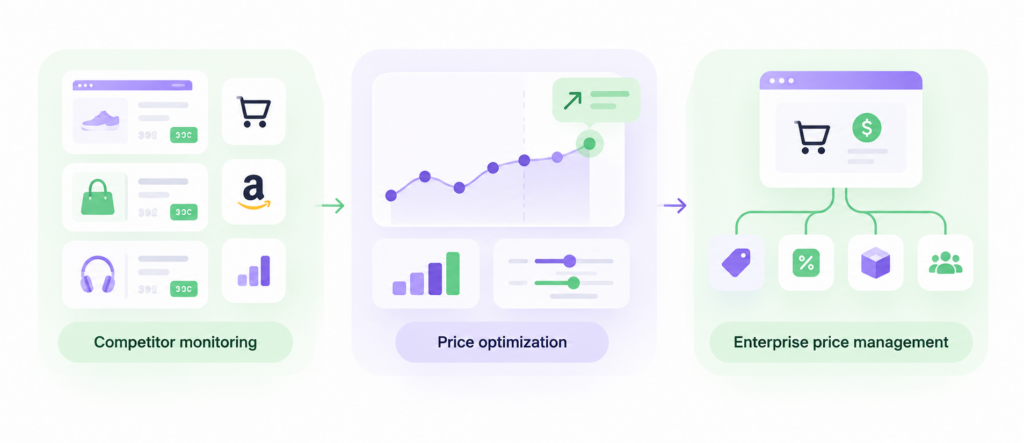
Pricing analytics software covers several overlapping categories. Pricing intelligence and competitor-monitoring platforms primarily collect external market information. They monitor competitor prices, promotions, availability, marketplaces, and sometimes assortments, helping businesses understand their competitive position.
Price optimization platforms go further by modeling how customers and demand may respond to pricing decisions. They may analyze elasticity, cross-product effects, seasonality, competition, inventory, and commercial objectives before recommending a price. Some platforms also incorporate dynamic pricing to respond more quickly to changing market conditions.
Finally, enterprise price-management suites combine analytics with operational workflows. These platforms can manage price lists, approvals, rules, simulations, integrations, and execution across complex organizations. In practice, the boundaries continue to blur: many leading vendors now combine competitive intelligence, optimization, management, and automation within a single pricing ecosystem.
How to Pick the Right Pricing Analytics Software for Your Business
The right pricing platform depends less on the longest feature list and more on the pricing decisions your business actually needs to improve. Before comparing vendors, define whether your biggest problem is competitor visibility, manual pricing, margin leakage, inconsistent execution, weak forecasting, promotion performance, or an inability to model customer response. Then evaluate potential platforms against the operational reality of your business:
Define your primary pricing use case
A company that needs competitor monitoring has different requirements from a grocery retailer trying to optimize prices across 100,000 SKUs. Establish the decisions the software needs to improve before evaluating advanced functionality.
Assess your data readiness
AI optimization depends on data quality and history. Determine what transaction, cost, inventory, promotion, competitor, and product information you can reliably provide and how easily it can be integrated.
Evaluate analytical depth
Ask whether you need descriptive reporting, competitor benchmarking, elasticity modeling, predictive optimization, or all of the above. Buying analytical complexity that your team cannot use creates unnecessary implementation costs.
Consider product relationships
In many retail categories, products do not behave independently. If substitutions, complementary products, private labels, KVIs, cannibalization, or basket effects matter to your business, evaluate how each platform models those relationships.
Look at execution, not only recommendations
Determine how prices move from an analytical recommendation into ERP, POS, e-commerce, marketplace, or store systems. Approval workflows, APIs, automated execution, and exception handling can be just as important as the algorithm itself.
Check transparency and control
Pricing affects revenue, customer perception, and profitability. Teams should understand why important recommendations are generated and be able to apply rules, margin floors, strategic constraints, and manual overrides.
Compare total implementation requirements
Software price is only part of the investment. Data integration, configuration, internal resources, training, consulting, and ongoing governance can significantly affect total cost and time to value.
Conclusion
Pricing analytics software has evolved from a reporting tool into a core commercial decision system. Modern platforms can combine internal transaction data, competitor intelligence, elasticity, inventory, promotions, and machine learning to help businesses understand not only what happened to pricing performance, but also what they should consider doing next. The commercial impact can be substantial: McKinsey reports that dynamic pricing solutions have helped retailers achieve 2 – 5% sales growth and 5 – 10% margin growth.
The right solution depends on the complexity of the pricing environment. Retailers that require advanced AI optimization and portfolio-level decision-making may prioritize platforms such as Yieldigo or Competera, while businesses centered on competitor monitoring may focus more heavily on Intelligence Node, Minderest, Wiser, Prisync, or Price2Spy. The key is to select software that matches the organization’s pricing maturity, data readiness, operational scale, and commercial objectives rather than simply choosing the platform with the largest feature list.
Frequently Asked Questions
What is pricing analytics software?
Pricing analytics software helps businesses collect, analyze, and interpret information that affects pricing decisions. Depending on the platform, this can include sales history, demand, costs, margins, competitor prices, inventory, promotions, and customer behavior. More advanced tools also use AI and machine learning to forecast outcomes and recommend optimized prices.
What does pricing analytics software do?
It gives pricing teams visibility into how prices affect revenue, margin, demand, and competitive position. Platforms may provide dashboards, elasticity analysis, competitor monitoring, forecasting, scenario modeling, price recommendations, and automated execution. The exact capabilities vary significantly between basic price-monitoring tools and enterprise optimization platforms.
What is the difference between pricing analytics and price optimization?
Pricing analytics focuses on understanding pricing data and performance, while price optimization uses that information to identify prices expected to best support specific objectives. Analytics might reveal that demand for a category is highly price sensitive; optimization uses that insight alongside other variables to recommend an appropriate price. Many modern platforms combine both functions.
What is the difference between pricing analytics and competitive price monitoring?
Competitive price monitoring focuses primarily on external market prices and competitor behavior. Pricing analytics has a broader scope and may also analyze internal demand, elasticity, costs, margins, promotions, product relationships, and business objectives. Competitive data can therefore be one important input into a larger pricing analytics process.
Can pricing analytics software improve profit margins?
It can help businesses identify opportunities to improve margins by finding underpriced products, unnecessary discounts, inefficient pricing rules, or areas where demand can support different prices. Optimization software can also evaluate margin alongside revenue and volume objectives. Actual results depend on data quality, strategy, execution, market conditions, and how effectively recommendations are implemented.
Does pricing analytics software use AI?
Many modern pricing platforms use machine learning or AI for demand forecasting, elasticity modeling, product matching, anomaly detection, optimization, or automated recommendations. However, vendors use the term “AI” for very different capabilities. Buyers should therefore evaluate what models actually do, what data they require, and how recommendations can be explained and controlled.
Is pricing analytics software only for retailers?
No. Pricing analytics is used by retailers, e-commerce businesses, manufacturers, distributors, wholesalers, SaaS companies, and other organizations. However, platforms are often designed for specific pricing environments. Retail-focused software, for example, may emphasize SKU-level optimization, competitive prices, promotions, markdowns, and assortment relationships.
How much does pricing analytics software cost?
Costs vary widely according to the number of SKUs, competitors, markets, stores, channels, users, modules, data refresh frequency, and optimization requirements. Some e-commerce tools offer standard monthly subscriptions, while enterprise platforms typically provide custom quotes. Implementation, integration, consulting, and data requirements should also be considered when calculating total cost.
What data is needed for pricing analytics software?
Basic competitor-monitoring platforms may require little more than product catalogs and competitor information. Advanced optimization systems can require transaction history, historical prices, costs, promotions, inventory, product hierarchies, competitor data, and other demand signals. The quality and length of historical data can directly influence the sophistication of the models a business can deploy.
What should I look for in pricing analytics software?
Start with the pricing problem you need to solve and evaluate platforms based on analytical depth, optimization capabilities, competitive intelligence, automation, integrations, scalability, transparency, and data requirements. Retailers with complex assortments should also examine elasticity modeling, product relationships, scenario simulations, promotion and markdown functionality, and support for multiple stores or channels. A successful platform should fit both your pricing strategy today and the level of pricing maturity you expect to reach in the future.